Omani Head Scarf For Men






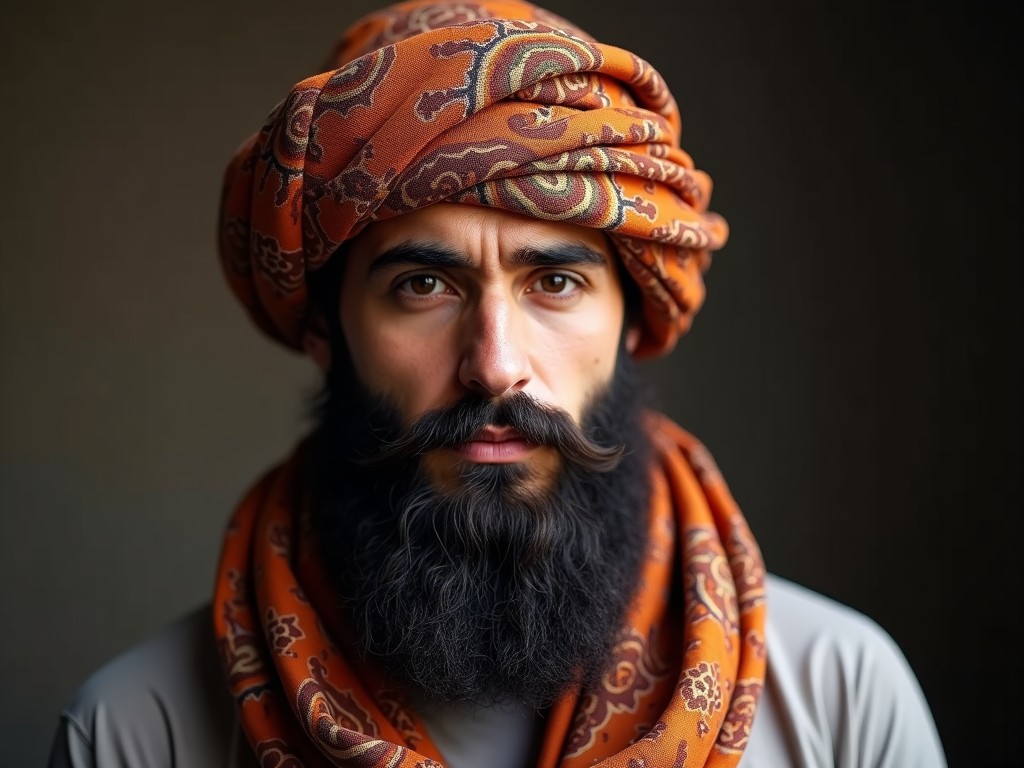
Omani Head Scarf For Men
The Omani head scarf for men, commonly referred to as the kumma or ghutra depending on regional variation, is a traditional garment with specific technical attributes relevant to industrial
Omani Head Scarf for Men: Technical Specifications and Industrial Applications
The Omani head scarf for men, commonly referred to as the kumma or ghutra depending on regional variation, is a traditional garment with specific technical attributes relevant to industrial procurement in protective workwear, cultural uniform supply, and specialty textile manufacturing. This document outlines the material construction, dimensional standards, functional properties, and compliance considerations for bulk sourcing.
Material Composition and Construction
Industrial-grade Omani head scarves are typically constructed from 100% combed cotton or cotton-polyester blends (65/35 or 50/50) to balance breathability, moisture absorption, and dimensional stability. The base fabric is a plain weave with a thread count ranging from 120 to 180 ends per inch (epi) in both warp and weft directions, ensuring sufficient opacity without excessive weight. Finishing processes include mercerization for improved luster and tensile strength, and sanforization to limit residual shrinkage to under 3% after five wash cycles at 60°C.
For high-use environments such as industrial facilities or security uniforms, scarves may incorporate antimicrobial finishes (e.g., zinc pyrithione-based) or flame-retardant treatments compliant with ISO 14116 Index 1, though such treatments require reapplication after repeated laundering. Edge construction features a double-fold hem with 3-thread overlock stitching at 8–10 stitches per cm to prevent fraying under mechanical stress.
Dimensional Standards and Tolerances
The standard dimensions for an Omani men’s head scarf are 110 cm × 110 cm (±2 cm tolerance) when laid flat, allowing for multiple wrapping styles including the traditional efrah fold. Custom lengths ranging from 90 cm to 130 cm are available upon request, with width held constant to maintain proportional drape. Hem width is standardized at 1.2 cm (±0.2 cm) to ensure clean folding and minimal bulk at the temples and neck.
Weight specifications fall between 110–140 g/m² for standard cotton versions, increasing to 160–190 g/m² for blended or treated variants. These values are measured per ISO 3801:1977 using conditioned specimens (20°C, 65% RH). Thickness, measured via ISO 5084, averages 0.35–0.45 mm, influencing both thermal insulation and foldability—critical factors in layered uniform systems.
Functional Properties and Performance Characteristics
The hygroscopic nature of cotton enables moisture regain of 7–8% at standard atmospheric conditions, facilitating sweat absorption during prolonged wear. Air permeability, tested per ISO 9237, ranges from 80 to 120 mm/s, providing adequate ventilation without compromising opacity. These properties make the scarf suitable for use in hot, dry climates where thermal regulation is a priority in workwear design.
Colorfastness is a critical industrial parameter. Reactive-dyed fabrics achieve ISO 105-B02 lightfastness ratings of 4–5 and ISO 105-C06 washfastness of 4–5 after 20 cycles. Pigment-dyed alternatives offer lower cost but reduced washfastness (typically 3–4), limiting suitability for high-frequency laundering. Dye lot consistency is maintained within ΔE < 1.5 CIELAB units for bulk orders exceeding 500 units to ensure visual uniformity across shipments.
Comparison Table: Material Variants
| Property | 100% Combed Cotton | 65/35 Cotton-Polyester | 50/50 Cotton-Polyester |
|---|---|---|---|
| Weight (g/m²) | 110–140 | 130–160 | 150–180 |
| Moisture Regain (%) | 7–8 | 4–5 | 4–5 |
| Air Permeability (mm/s) | 100–120 | 80–100 | 70–90 |
| Shrinkage (3 washes @ 60°C) | <3% | <2% | <2% |
| Tensile Strength (Warp/Weft, N) | 450/400 | 500/450 | 480/430 |
Note: Values represent typical ranges for industrial specifications. Actual performance may vary based on yarn count, finish, and laundering conditions. Custom treatments (e.g., UV protection, insect resistance) are available upon request and subject to minimum order quantities.
Applications in Industrial and Occupational Settings
Beyond cultural attire, Omani head scarves are integrated into industrial uniform systems where head coverage is required for hygiene, safety, or identification purposes. In food processing facilities, they serve as hair containment under safety nets or bump caps, meeting FDA 21 CFR Part 110 guidelines for worker attire. In pharmaceutical environments, low-linting cotton variants reduce particulate shedding compared to synthetic alternatives.
Security and facilities management teams utilize scarves as part of standardized uniforms in regions where traditional dress aligns with operational dress codes. The fabric’s breathability reduces heat stress during outdoor patrols, while its opacity ensures consistent appearance under varying lighting conditions. For electrical maintenance crews operating in low-voltage environments, untreated cotton provides inherent resistance to static buildup compared to synthetic fibers.
Customization options include embroidered logos (max 8 cm width) on one corner, woven stripes (1–3 cm) along the edges, or custom dye matching to corporate Pantone specifications. These modifications are applied post-production and do not compromise the fabric’s core performance properties when executed within recommended thread tension and temperature limits.
Quality Control and Inspection Protocol
Incoming fabric undergoes 4-point inspection per ASTM D5430, with defect points assigned based on size and length: holes (>3 mm) = 4 points, runs (>150 mm) = 3 points, stains (>50 mm) = 2 points, thin places = 1 point. Acceptable quality level (AQL) is set at 2.5 for major defects and 4.0 for minor defects. Finished goods are inspected for dimensional accuracy, hem integrity, and color consistency under D65 lighting.
Packaging for bulk orders uses polyethylene liners inside corrugated cartons (300 × 200 × 150 mm) to prevent moisture ingress during transit. Each carton contains 50–100 units folded to 30 × 30 × 5 cm, with interleaving tissue paper to reduce abrasion. Cartons are sealed with pressure-sensitive tape and strapped for palletization. Export shipments include desiccant packets (1 unit per carton) and are marked with handling instructions: “Keep Dry, Avoid Direct Sunlight.”
Lead time for standard orders is 4–6 weeks after sample approval and deposit receipt. Express production (2–3 weeks) is available for orders under 2,000 units with applicable rush fees. Samples are provided upon request, with freight collect or prepaid options depending on destination and order history.
Call to Action
For technical inquiries, sample requests, or formal quotations, contact our industrial textiles team. Provide detailed specifications including required quantity, material preference, finish requirements, and delivery timeline to ensure accurate pricing and lead time confirmation.
Products
Related Products
News
Related News

2026-11-02
Cotton Voile Scarf Manufacturing and Performance Analysis how to make a cotton voile scarfCreating a professional-grade cotton voile scarf requires a precise balance of textile engineering and artisanal finishing. Unlike standard cotton weaves, voile is defined by its p···

2026-10-28
chiffon hijab Technical Production and Performance AnalysisSelecting the right fabric for a hijab involves a delicate balance between modesty, breathability, and aesthetic drape. For many women in Southeast Asia and the Middle East, the ma···

2026-10-26
custom silk scarf textile manufacturing and performance analysisSelecting a high-quality scarf is no longer just about color matching; it is an exercise in understanding how textile weight, drape, and print scale interact with individual facial···
