Oem Saudi Male Head Scarf






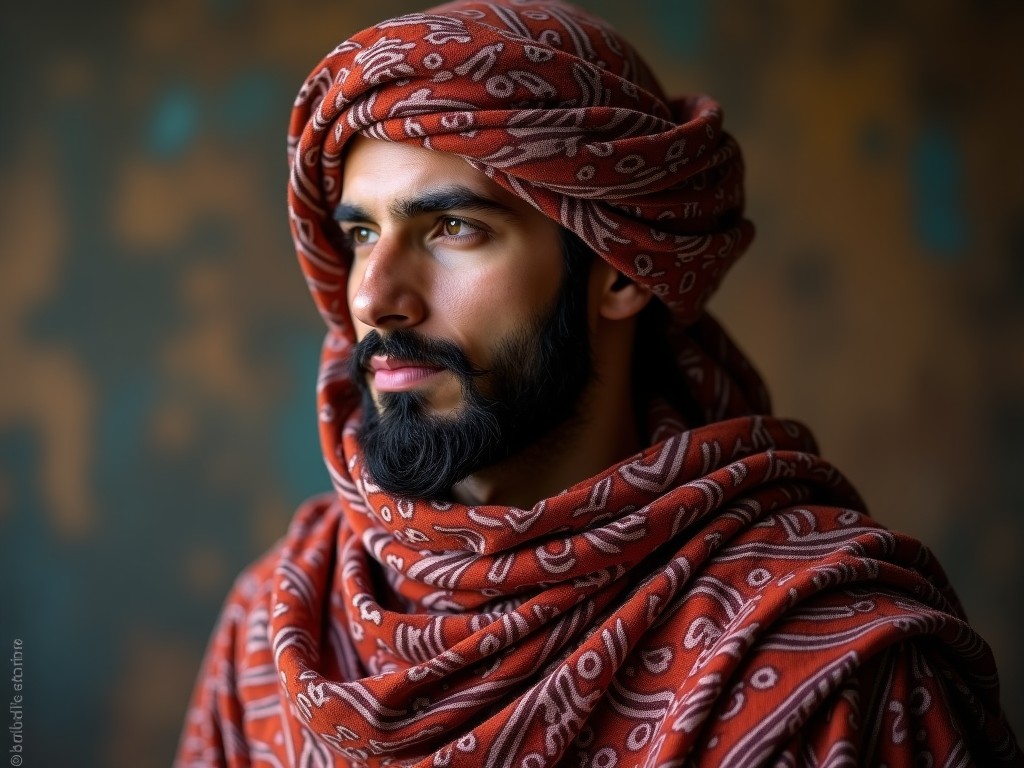
Oem Saudi Male Head Scarf
Industrial buyers sourcing OEM Saudi male head scarves require precise technical data to ensure cultural appropriateness, material performance, and supply chain reliability. This guide details the
OEM Saudi Male Head Scarf (Ghutra/Shemagh) – Technical Specification Guide
Industrial buyers sourcing OEM Saudi male head scarves require precise technical data to ensure cultural appropriateness, material performance, and supply chain reliability. This guide details the engineering characteristics, manufacturing parameters, and quality control protocols essential for procurement decisions. Information is structured to support specification development, supplier evaluation, and risk mitigation in bulk procurement scenarios.
Material Composition and Thread Engineering
The base fabric for authentic Saudi male head scarves is typically 100% combed cotton, selected for its moisture absorption capacity (8–10% regain at 65% RH) and dimensional stability after repeated washing. Yarn count ranges from 20s to 40s Ne, with 30s Ne being the most common for balanced drape and durability. Thread density is engineered to 120–140 ends per inch (EPI) and 80–100 picks per inch (PPI), creating a tight plain weave that resists snagging while maintaining breathability. Synthetic blends (e.g., 65/35 cotton/polyester) are available upon request for enhanced wrinkle resistance, though they reduce moisture vapor transmission rate by approximately 15–20% compared to pure cotton.
Dyeing processes use reactive or vat dyes for colorfastness, with typical wash fastness ratings of 4–5 (ISO 105-C06) and light fastness of 4–6 (ISO 105-B02). Indigo-dyed variants (traditional black/white patterns) undergo sulfur bottoming followed by indigo top-dyeing to achieve characteristic depth and fade resistance. Fabric weight is standardized at 120–160 gsm, measured under ASTM D3776 conditions, ensuring sufficient mass for proper folding and retention of shape during wear without excessive bulk.
Dimensional Standards and Pattern Specifications
Standard finished dimensions for OEM Saudi male head scarves are 110 cm × 110 cm (±2 cm tolerance), measured after relaxation under 0.5 kgf tension for 24 hours per ASTM D4964. This square format enables the traditional folding techniques (e.g., double triangle, single fold) required for secure headwear. Hemming is performed with a 3 mm double-fold blind stitch, using polyester-wrapped cotton core thread to prevent fraying while maintaining flexibility. Stitch density is maintained at 8–10 stitches per cm to ensure hem integrity under tensile loads exceeding 5 N.
Pattern registration follows strict geometric tolerances: the characteristic checkerboard or striped design must maintain ±1.5 mm alignment repeatability across the fabric width. For black/white checks, the standard module is 5 mm × 5 mm, though 4 mm and 6 mm variants are available for regional preferences. Pattern repeat is verified using digital image analysis with sub-pixel resolution to ensure symmetry along both warp and weft axes. Custom patterns (e.g., corporate logos, tribal motifs) require jacquard capability and are subject to minimum order quantities of 500 units due to loom setup constraints.
Manufacturing Process Controls
Fabric inspection occurs at three critical stages: greige state (ISO 8232-2 for defects), post-dyeing (AATCC 172 for color uniformity), and finished goods (4-point system per ASTM D5430). Defect thresholds are set at ≤40 penalty points per 100 square yards for first-quality goods. Common defects monitored include barre (±5% reflectance variation), mispick (>2 consecutive missing picks), and dye streaks (>15 mm length). Fabric width is controlled to 112–115 cm pre-shrinkage to account for 5–7% relaxation during sanforization.
Sanforization (compressive shrinkage) is applied to limit residual shrinkage to ≤2% after 5 home launderings (AATCC 135). This process uses a rubber belt stretcher set to 18–22% overfeed, calibrated monthly using dial indicators. Color matching is performed under D65 daylight simulators (CIE 1931) with ΔEab ≤ 1.5 tolerance for solid shades and ≤ 2.0 for patterned goods. pH of finished fabric is maintained between 5.0 and 7.5 (AATCC 81) to prevent skin irritation during prolonged wear.
Quality Assurance and Testing Protocols
Batch testing includes dimensional stability (AATCC 135), colorfastness to crocking (AATCC 8, dry/wet ≥ 3–4), and tensile strength (ASTM D5034, warp/weft ≥ 180 N). Bursting strength is tested per ASTM D3786, with minimum values of 200 kPa for 120 gsm fabric and 280 kPa for 160 gsm variants. Pilling resistance is evaluated after 5,000 Martindale cycles (ASTM D4970), targeting grade 3–4 or better. All test reports are generated by ISO 17025-accredited laboratories and include uncertainty budgets for traceability.
Packaging for industrial OEM shipments uses polyethylene liners (50 µm thickness) inside corrugated cartons (EB flute, 150 gsm linerboard) to prevent moisture ingress and abrasion. Each carton contains 50 units, folded to 25 cm × 25 cm × 3 cm dimensions, with a gross weight of 8–10 kg depending on fabric density. Cartons are marked with ISO-compliant labels including SKU, dye lot, quantity, and care instructions (machine wash 40°C, tumble dry low, iron medium heat). UV stabilizers are not typically added, as indoor storage is assumed; however, light-resistant packaging is available for extended transit exposure.
Customization Parameters and MOQ Logic
Customization options are governed by textile manufacturing economics. Yarn count changes require recone ing and affect loom efficiency, making deviations from 30s Ne economical only above 1,000 units. Dye lot minimization is constrained by vat size (typically 500–1,000 kg fabric), so solid colors below 300 kg may incur surcharges. Pattern modifications (e.g., altered check size) necessitate new weaving drafts and are feasible only with jacquard looms, increasing MOQ to 500–1,000 units based on pattern complexity. Embroidery or printing adds 7–10 days to lead time and requires vector artwork (AI/EPS) at 300 DPI minimum.
Lead time for standard goods is 25–35 days from PO receipt, inclusive of fabric sourcing (10–15 days), dyeing (5–7 days), cutting and sewing (5–7 days), and finishing/packaging (3–5 days). Expedited options reduce this to 18–22 days via parallel processing and air freight for critical samples, though ocean freight remains standard for bulk orders. Sample approval requires lab-dipped swatches (5 cm × 5 cm) for color and 20 cm × 20 cm fabric samples for hand feel and drape evaluation, typically delivered within 5–7 days of request.
| Parameter | Typical Range | Test Standard |
|---|---|---|
| Fabric Weight | 120–160 gsm | ASTM D3776 |
| Thread Count (EPI × PPI) | 120–140 × 80–100 | ASTM D3775 |
| Dimensional Stability | ≤2% after 5 washes | AATCC 135 |
| Colorfastness to Wash | 4–5 (ISO 105-C06) | ISO 105-C06 |
| Tensile Strength (Warp/Weft) | ≥180 N | ASTM D5034 |
| Bursting Strength | 200–280 kPa | ASTM D3786 |
Applications in Industrial and Institutional Procurement
OEM Saudi male head scarves are procured not only for retail distribution but also for uniform programs in sectors where cultural attire is mandated or preferred. These include hospitality (hotel staff in GCC regions), aviation (ground crew and cabin crew identity), healthcare (male personnel in Saudi Arabian hospitals), and security services (uniformed guards in government and private facilities). In these contexts, the scarf functions as both a cultural identifier and a functional garment component, requiring consistency in color, foldability, and resistance to deformation during extended wear.
Procurement specifications often reference the scarf’s ability to maintain crisp folds after repeated laundering, which depends on the fabric’s bending rigidity (measured via ASTM D1388) and recovery angle. Typical bending length for 30s Ne cotton is 1.8–2.2 cm, allowing sharp creases without memory-induced distortion. Absorbency is also critical in high-temperature environments; the fabric’s wettability (contact angle < 30°) ensures sweat management without saturation buildup. These performance traits directly impact wearer comfort and uniform longevity, reducing replacement frequency and lifecycle costs.
Distributors and OEM buyers benefit from standardized packaging that supports automated handling. The uniform folded dimensions (25 cm³) enable efficient palletization (typically 48 cartons per pallet, 1.2 m × 1.0 m base) and warehouse stacking. Carton compression strength is tested to withstand 800 N bottom load (ASTM D642), preventing collapse during transit. These logistical characteristics reduce damage rates and streamline inventory management in high-volume supply chains.
Certifications and Compliance Notes
While no single global certification exists specifically for Saudi head scarves, compliant manufacturing aligns with broader textile standards. Facilities typically hold ISO 9001 for quality management and ISO 14001 for environmental management. Oeko-Tex Standard 100 certification is available upon request, confirming absence of harmful substances (e.g., formaldehyde < 75 ppm, pentachlorophenol < 0.05 ppm). For food-contact adjacent environments (e.g., hospital catering staff), additional compliance with FDA 21 CFR 177.2600 for cotton textiles may be specified, though this is uncommon for headwear.
Social compliance is increasingly relevant in OEM procurement. Buyers often require adherence to ILO core conventions or SMETA audit results, particularly regarding working hours, wages, and health and safety in cutting and sewing operations. Traceability systems (e.g., batch-to-loom tracking) are available for auditable supply chains, adding 2–3 days to lead time. Fabric origin documentation (e.g., cotton source, ginning location) can be provided upon request to support ESG reporting or country-of-origin marking requirements.
Procurement Guidance and Technical Support
Effective sourcing begins with a detailed technical package including: target fabric weight, yarn count, pattern specifications (check/stripe size and color ratio), dimensional tolerance, and required certifications. Buyers should specify whether sanforization is mandatory, as this affects shrinkage behavior and lead time. Color standards must be defined using Pantone+ or CIELAB values with defined illuminant (D65) and observer (2°), as visual matching under store lighting often leads to rejection despite instrumental compliance.
Request for quotation (RFQ) should include annual volume forecasts to enable accurate pricing and capacity planning. Tooling costs (e.g., for custom jacquard patterns) are amortized over order volume and disclosed upfront. Sample approval cycles typically require two iterations: first for color and hand feel, second for finished product dimensional stability after washing. Lead time quotes assume PO receipt with approved samples; delays in feedback extend timelines proportionally. For first-time buyers, initiating with a trial order of 200–500 units is recommended to validate supplier capability before scaling.
To initiate a technical consultation or request a formal quotation for OEM Saudi male head scarves, please use the contact form available at /contactus. Provide your technical requirements, expected annual volume, and target timeline for a detailed response including MOQ, lead time, and pricing basis. All inquiries are reviewed by textile engineers with direct experience in Middle Eastern apparel manufacturing and export logistics.
Products
Related Products
News
Related News

2026-11-02
Cotton Voile Scarf Manufacturing and Performance Analysis how to make a cotton voile scarfCreating a professional-grade cotton voile scarf requires a precise balance of textile engineering and artisanal finishing. Unlike standard cotton weaves, voile is defined by its p···

2026-10-28
chiffon hijab Technical Production and Performance AnalysisSelecting the right fabric for a hijab involves a delicate balance between modesty, breathability, and aesthetic drape. For many women in Southeast Asia and the Middle East, the ma···

2026-10-26
custom silk scarf textile manufacturing and performance analysisSelecting a high-quality scarf is no longer just about color matching; it is an exercise in understanding how textile weight, drape, and print scale interact with individual facial···
