Oem Muslim Scarf Men White






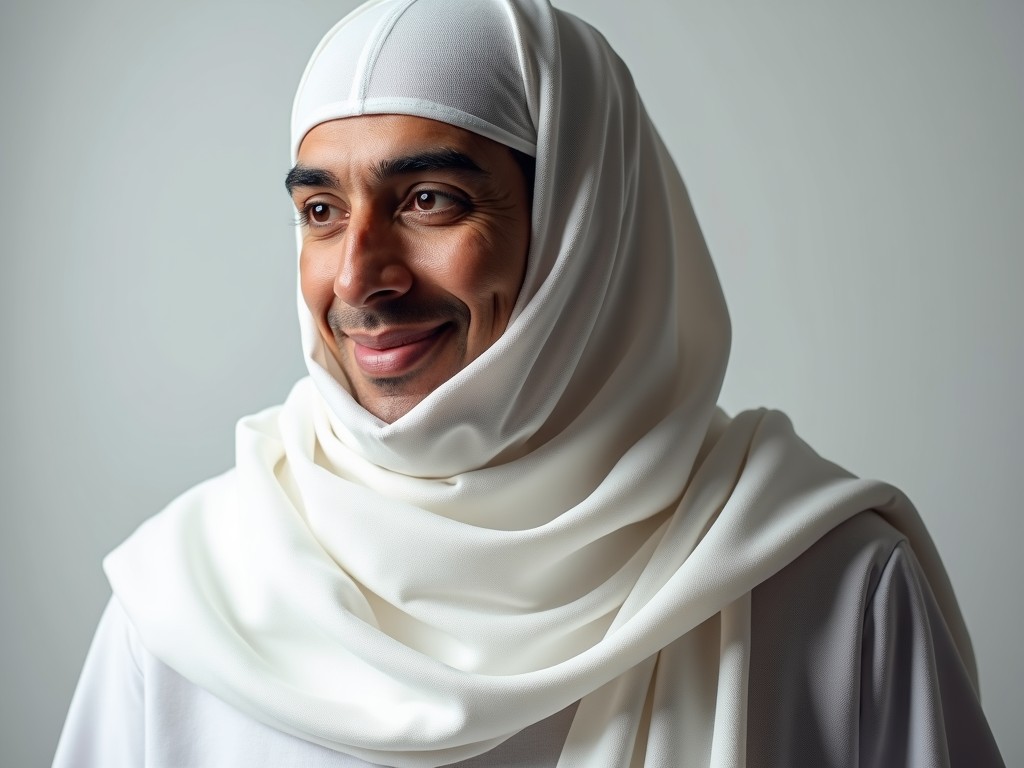
Oem Muslim Scarf Men White
This product page details the technical specifications, material properties, and manufacturing considerations for OEM-produced white Muslim scarves designed for men. The information is intended to
OEM Muslim Scarf for Men – White
This product page details the technical specifications, material properties, and manufacturing considerations for OEM-produced white Muslim scarves designed for men. The information is intended to assist procurement engineers, textile buyers, and product developers in evaluating suitability for private-label or bulk supply applications.
The scarf is engineered for daily wear, religious observance, and professional environments where modesty, comfort, and dimensional stability are priorities. Construction focuses on minimizing shrinkage, maintaining opacity, and ensuring consistent colorfastness under repeated washing cycles.
White is selected as the base color due to its high reflectance, neutrality in ceremonial contexts, and compatibility with dyeing or printing for custom branding. The following sections outline the material composition, dimensional standards, and quality control parameters that define this product.
Material Composition and Construction
The scarf is constructed from 100% combed cotton yarn with a thread count of 60s/2, resulting in a plain weave fabric weighing approximately 120 gsm. This specification balances breathability with sufficient opacity to prevent translucency under direct light.
Combed cotton removes short fibers and impurities, reducing pilling and improving surface smoothness. The 60s/2 yarn count indicates two strands of 60-count cotton twisted together, providing enhanced tensile strength compared to single-ply alternatives while maintaining softness.
The fabric undergoes mercerization to increase luster, improve dye affinity, and enhance dimensional stability. This treatment reduces longitudinal shrinkage to under 3% after five wash cycles at 40°C, a critical parameter for maintaining consistent dimensions in consumer use.
Standard Dimensions and Tolerances
The standard finished dimensions for the OEM Muslim scarf are 180 cm in length and 70 cm in width, with a tolerance of ±2 cm in each direction. These dimensions are optimized for full coverage when worn in common styles, allowing sufficient fabric for wrapping without excess bulk.
Width tolerance is controlled during the cutting process using laser-guided blades to ensure straight edges and minimal fraying. Length tolerance accounts for potential draw-in during weaving and post-treatment relaxation. Hemming is performed with a 3-mm double-fold stitch using polyester thread to prevent unraveling.
Custom dimensions are available upon request, subject to minimum order quantities and potential adjustments in yarn consumption. Buyers requiring non-standard sizes should provide detailed specifications including intended wearing style and fabric drape expectations.
Colorfastness and Opacity Standards
The white scarf meets ISO 105-B02 standards for lightfastness, achieving a rating of 4 or higher after 20 hours of xenon arc exposure. This ensures minimal yellowing or graying when exposed to indoor lighting or indirect sunlight during storage and use.
Opacity is measured using a reflectance ratio test, where the fabric must maintain a minimum reflectance of 85% when backed by a black standard. This threshold ensures the scarf remains non-translucent under typical indoor lighting conditions, a key requirement for modesty compliance.
Wash fastness is validated per ISO 105-C06, with color change and staining ratings of 4–5 after 10 cycles at 40°C. These results indicate resistance to fading and minimal dye transfer, supporting long-term aesthetic consistency in white variants.
Manufacturing Considerations for OEM Orders
OEM production begins with yarn sourcing from certified suppliers who provide traceability documentation for fiber origin and spinning parameters. Fabric is knitted or woven to specification before undergoing scouring, bleaching, and mercerizing in controlled batches.
Cutting is performed using automated spreaders and rotary cutters to ensure dimensional accuracy across layers. Each bundle is labeled with lot numbers, cut date, and operator ID for traceability. Sewing is done via lockstitch machines with tension monitoring to prevent puckering or thread breakage.
Final inspection includes visual checks for stains, holes, and misaligned hems, along with random sampling for dimensional verification and pilling resistance. Products are folded to a standard size and packed in polybags with desiccant to control humidity during transit.
Typical Applications and Use Cases
This scarf is commonly specified for private-label brands targeting Muslim consumers in Southeast Asia, the Middle East, and Europe. Its neutral color and standardized dimensions make it suitable for inclusion in multi-product religious apparel lines, including prayer garments and formal wear.
In institutional settings such as airports, hospitals, and government offices, the white scarf is often selected for staff uniform programs where modesty guidelines require head covering. The fabric’s breathability and ease of maintenance support extended wear during shifts.
Distributors frequently request this item for bulk replenishment due to its consistent demand cycle and low return rate when specifications are met. The product’s simplicity reduces complexity in forecasting and inventory management compared to patterned or colored variants.
Quality Control and Inspection Parameters
Quality assurance follows AQL 2.5 standards for major defects and AQL 4.0 for minor defects, inspected at the final packaging stage. Major defects include holes, tears, misaligned seams, and significant staining; minor defects include slight thread pulls, small neps, and minor shade variation within acceptable limits.
Each batch undergoes dimensional auditing on 10% of units, measuring length and width at three points. Fabric weight is verified per square meter using a precision scale, with acceptance criteria set at 120 gsm ±5%. pilling resistance is assessed via Martindale testing after 1,000 cycles, with a target grade of 3 or better.
Color consistency is monitored using a spectrophotometer under D65 lighting, with ΔE values kept below 1.5 compared to the approved master batch. These controls ensure uniformity across large OEM runs and support repeatability for reorders.
Packaging and Logistics
Standard packaging consists of individual polybags (50 µm thickness) with a perforated header for easy opening, containing one folded scarf. Each bag is labeled with a barcode, size identifier, and care instructions in multiple languages as required by the destination market.
Cartons are constructed from single-wall corrugated cardboard, dimensioned to hold 100 units per box (50 cm × 30 cm × 20 cm), with a gross weight not exceeding 8 kg. Internal padding is minimized to reduce material use while maintaining stackability and corner protection.
For export shipments, cartons are strapped with PET bands and stretch-wrapped to prevent moisture ingress. Palletization follows ISPM 15 standards for wooden pallets, or plastic pallets are used for hygienic requirements. Lead time for production is typically 25–35 days after sample approval, depending on order volume and fabric availability.
To request a quotation, provide technical specifications, or discuss customization options for OEM Muslim scarves in white, please contact our technical sales team. Include details on required dimensions, fabric weight preferences, packaging needs, and target annual volume to facilitate accurate pricing and lead time estimation.
Request OEM QuotationProducts
Related Products
News
Related News

2026-11-02
Cotton Voile Scarf Manufacturing and Performance Analysis how to make a cotton voile scarfCreating a professional-grade cotton voile scarf requires a precise balance of textile engineering and artisanal finishing. Unlike standard cotton weaves, voile is defined by its p···

2026-10-28
chiffon hijab Technical Production and Performance AnalysisSelecting the right fabric for a hijab involves a delicate balance between modesty, breathability, and aesthetic drape. For many women in Southeast Asia and the Middle East, the ma···

2026-10-26
custom silk scarf textile manufacturing and performance analysisSelecting a high-quality scarf is no longer just about color matching; it is an exercise in understanding how textile weight, drape, and print scale interact with individual facial···
