Oem Men Designer Head Scarf






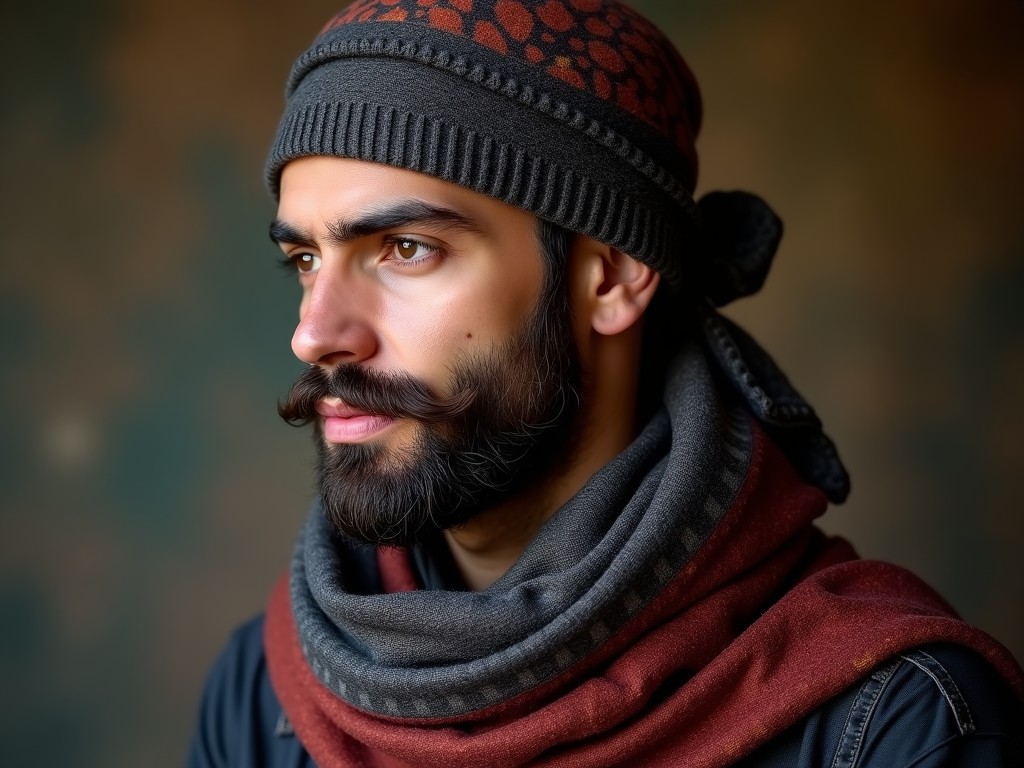
Oem Men Designer Head Scarf
An OEM men designer head scarf is a custom-manufactured textile accessory designed for bulk supply to fashion brands, retailers, and distributors seeking private-label headwear solutions. These
OEM Men Designer Head Scarf
An OEM men designer head scarf is a custom-manufactured textile accessory designed for bulk supply to fashion brands, retailers, and distributors seeking private-label headwear solutions. These scarves are produced according to client specifications, allowing full control over dimensions, fabric composition, weave structure, edge finishing, and branding integration. Unlike retail-standard products, OEM versions are engineered for scalability, consistency across large production runs, and compatibility with automated cutting and sewing lines. The focus is on technical repeatability rather than seasonal trends, ensuring that each unit meets predefined quality tolerances for industrial buyers.
Material selection is driven by performance requirements rather than aesthetic preference alone. Commonly used fabrics include 100% cotton voile for breathability in warm climates, polyester-viscose blends for wrinkle resistance and drape stability, and modal-enhanced weaves for improved softness and moisture management. Thread count typically ranges from 80 to 120 ends per inch (EPI) in the warp and 60 to 90 picks per inch (PPI) in the weft, depending on the desired balance between lightness and structural integrity. Fabric weight is generally maintained between 80 and 130 GSM to ensure comfort during extended wear without compromising shape retention.
Edge finishing is a critical technical consideration in OEM head scarf production, directly affecting fray resistance, laundering durability, and perceived quality. Options include narrow rolled hems (2–3 mm width) formed via automated hemming machines for lightweight fabrics, overlock stitching with 3–4 thread coverage for medium-weight blends, and fused thermal bonding for synthetic materials where stitch visibility must be minimized. Each method is selected based on fabric type, end-use environment, and required wash cycle resistance—typically validated through 10–20 home laundering cycles at 40°C per ISO 6330 standards.
Customization extends beyond fabric and finish to include precise dimensional control, pattern repeat alignment, and branding integration. Standard dimensions for men’s head scarves range from 140–180 cm in length and 25–35 cm in width, though custom lengths up to 220 cm are available for specific styling or cultural applications. Pattern repeats are engineered to maintain continuity across seams when applicable, with tolerances held to ±2 mm during cutting and sewing. Branding elements such as woven labels, printed tags, or ultrasonic logos are positioned according to client-specified coordinates, often placed at one end or along the selvage to avoid interference with draping.
Quality control in OEM production is process-oriented, relying on in-line checks and statistical sampling rather than final inspection alone. Key control points include fabric width verification (±1 mm tolerance), tension monitoring during cutting to prevent skew, stitch density validation (8–12 stitches per cm for seams), and dimensional stability testing after simulated washing. Colorfastness is assessed using ISO 105-B02 for light exposure and ISO 105-C06 for wash resistance, with minimum ratings of 3–4 on the gray scale typically required for export markets. All measurements are documented in batch-specific technical files accessible to clients upon request.
| Parameter | Typical Range | Customization Availability |
|---|---|---|
| Fabric Weight | 80–130 GSM | Yes, per yarn count and weave |
| Length | 140–220 cm | Yes, in 5 cm increments |
| Width | 25–35 cm | Yes, ±2 mm tolerance |
| Thread Count (Warp x Weft) | 80–120 EPI × 60–90 PPI | Yes, based on fabric construction |
| Edge Finish | Rolled hem, overlock, thermal bond | Yes, material-dependent |
| Colorfastness (Wash/Light) | ISO 105-C06: 3–4, ISO 105-B02: 3–4 | Tested per batch |
Applications for OEM men designer head scarves span multiple sectors where consistent, private-label headwear is required. In the fashion industry, they support seasonal collections for brands needing reliable supply without in-house manufacturing capacity. In hospitality and aviation, they serve as uniform accessories for male staff, where color consistency and laundering stability are critical for brand image. Cultural and religious apparel distributors utilize OEM production to meet specific dimensional and modesty requirements across regional markets. Each application benefits from the ability to specify exact technical parameters, reducing the risk of variability that can occur with off-the-shelf sourcing.
To initiate an OEM project, clients must provide technical specifications including fabric type (or yarn composition), target weight, dimensions, color references (Pantone or textile swatch), edge finish preference, branding details, and intended care instructions. Quantities typically start at 1,000 units per SKU to align with efficient loom and cutting line utilization. Lead times range from 4 to 8 weeks after sample approval, depending on fabric sourcing complexity and customization depth. Samples are produced using lab-dip color matching and submitted for physical evaluation before full production clearance.
Products
Related Products
News
Related News

2026-11-02
Cotton Voile Scarf Manufacturing and Performance Analysis how to make a cotton voile scarfCreating a professional-grade cotton voile scarf requires a precise balance of textile engineering and artisanal finishing. Unlike standard cotton weaves, voile is defined by its p···

2026-10-28
chiffon hijab Technical Production and Performance AnalysisSelecting the right fabric for a hijab involves a delicate balance between modesty, breathability, and aesthetic drape. For many women in Southeast Asia and the Middle East, the ma···

2026-10-26
custom silk scarf textile manufacturing and performance analysisSelecting a high-quality scarf is no longer just about color matching; it is an exercise in understanding how textile weight, drape, and print scale interact with individual facial···
