New Design Arabic Yashmagh Scarf






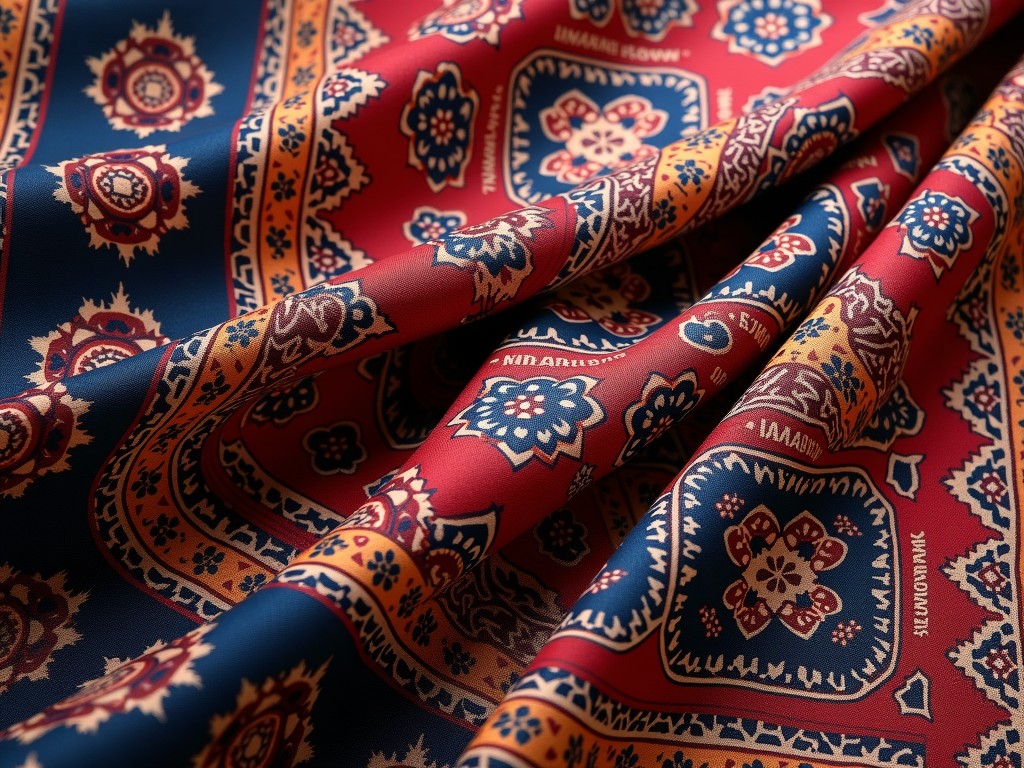
New Design Arabic Yashmagh Scarf
The Arabic Yashmagh, also known as a shemagh or keffiyeh, is a traditional headscarf worn across the Middle East for protection against sun, wind, and sand. This new design version maintains cultural
New Design Arabic Yashmagh Scarf
The Arabic Yashmagh, also known as a shemagh or keffiyeh, is a traditional headscarf worn across the Middle East for protection against sun, wind, and sand. This new design version maintains cultural authenticity while incorporating updated textile engineering for improved durability, moisture management, and wear resistance in demanding environments. Industrial buyers sourcing for uniform programs, protective gear kits, or regional workwear solutions benefit from understanding how material construction and finishing processes directly impact performance and longevity.
Material Composition and Weave Structure
This Yashmagh is constructed from 100% combed cotton yarn with a thread count of 40s/2, woven in a 3/1 twill pattern to balance breathability with tensile strength. The combed cotton process removes short fibers, resulting in a smoother surface that reduces pilling and improves resistance to abrasion during extended wear. Unlike lower-grade carded cotton, this construction maintains dimensional stability after repeated washing cycles, critical for industrial laundering standards.
The fabric weight is specified at 210 gsm (±10%), providing sufficient mass to resist wind lift while remaining lightweight enough for prolonged use in high-temperature environments. Edge selvages are reinforced with a double-lock stitch to prevent fraying, a common failure point in scarves subjected to frequent folding, tying, and environmental exposure.
Colorfastness and Dye Performance
The traditional red and white or black and white checkered pattern is achieved through reactive dyeing, which forms a covalent bond between dye molecules and cotton cellulose. This method ensures superior wash fastness (rating 4-5 on the ISO 105-C06 scale) and resistance to fading from UV exposure, critical for outdoor use in arid climates. Unlike direct or vat dyes used in lower-cost alternatives, reactive dyeing minimizes bleed during washing, preserving pattern clarity over time.
Color consistency is maintained through spectrophotometer-controlled dye batches, with delta E values kept below 1.5 between production lots. This level of precision is essential for bulk orders where visual uniformity across hundreds of units impacts professional appearance in security, hospitality, or industrial workforces.
Dimensions and Customization Options
Standard dimensions are 110 cm × 110 cm (±2 cm), providing adequate coverage for multiple wrapping styles while minimizing excess fabric that could snag on equipment. Tolerances are tightly controlled during cutting to ensure pattern alignment at the corners, a detail often overlooked in mass-produced variants that affects both aesthetics and folding efficiency.
Customization is available for thread count (30s/2 to 60s/2), weave density (up to 4/1 twill), and edge finishing (overlock, hemmed, or fringe-tied). Pattern scale and color ratios can be adjusted within traditional parameters upon request, though significant deviations from the classic checkerboard may affect cultural appropriateness in certain regions.
Performance in Environmental Conditions
The hygroscopic nature of cotton allows the fabric to absorb up to 8–10% of its weight in moisture without feeling damp, aiding in evaporative cooling during physical exertion. In dry heat, this property helps manage sweat accumulation, while in wind-blown sand conditions, the tight twill weave resists particulate penetration better than loose plain weaves.
Flammability testing shows the untreated cotton fabric has a burn rate of approximately 55 mm/min under vertical flame exposure (ASTM D6413), consistent with natural cellulose fibers. For applications requiring flame resistance, FR-treated versions are available upon request, using phosphorus-based additives that maintain fabric flexibility while achieving self-extinguishing properties.
Quality Control and Inspection Protocol
Each roll undergoes 4-point inspection per ASTM D5430, with defect points assigned for holes, breaks, thin places, and smudges. Acceptable quality level (AQL) is set at 2.5 for major defects and 4.0 for minor defects. Final inspected scarves are checked for dimensional accuracy, pattern symmetry, edge integrity, and color uniformity under 6500K daylight simulation lighting.
Packaging is done in folded bundles of 25 units, wrapped in polyethylene film and placed in corrugated cartons with burst strength of 275 kPa. Each carton includes a desiccant pack to mitigate moisture ingress during transit, particularly important for sea freight to humid regions. Labeling includes batch number, material composition, care instructions, and country of origin for traceability.
| Parameter | Typical Value | Test Standard |
|---|---|---|
| Fabric Weight | 210 gsm (±10%) | ASTM D3776 |
| Thread Count | 40s/2 | ASTM D1907 |
| Weave Pattern | 3/1 Twill | Visual / ASTM D3775 |
| Colorfastness to Washing | 4-5 (ISO Gray Scale) | ISO 105-C06 |
| Tensile Strength (Warp) | ≥28 N/tex | ASTM D5034 |
| Dimensional Change (After 5 Washes) | ≤3% | ASTM D4970 |
Applications in Industrial and Occupational Settings
Beyond traditional use, this Yashmagh is specified in industrial uniforms for workers in oil and gas, construction, and logistics operations across the Gulf region, where it provides practical protection against airborne particulates and solar radiation. Its breathability reduces heat stress compared to synthetic alternatives, while the natural fiber minimizes static buildup—a consideration in environments with flammable vapors.
Security personnel and facility management teams often adopt it as part of standardized attire due to its professional appearance, ease of maintenance, and cultural resonance in client-facing roles. Unlike disposable head coverings, its reusability supports sustainability goals in organizations with strict waste reduction targets.
Procurement engineers evaluating this item for bulk specification should consider laundering compatibility—industrial wash cycles at 60°C with non-chlorine detergents are recommended to preserve color and fiber integrity. Fabric softeners should be avoided as they can coat cotton fibers and reduce moisture absorption over time.
Ordering and Lead Time Information
Minimum order quantity is 300 units, with pricing tiers available at 500, 1000, and 2000+ units. Standard production lead time is 25–30 working days from approved artwork and payment confirmation, assuming stock availability of base greige fabric. Custom dye lots or weave modifications may extend lead time by 7–10 days.
Samples are available upon request, typically delivered within 5–7 business days via express courier. Sample evaluation should include visual inspection under natural light, hand feel assessment for stiffness or roughness, and a quick wash test to check for bleeding or shrinkage. Approval of the sample seals the specification for mass production.
Products
Related Products
News
Related News

2026-11-02
Cotton Voile Scarf Manufacturing and Performance Analysis how to make a cotton voile scarfCreating a professional-grade cotton voile scarf requires a precise balance of textile engineering and artisanal finishing. Unlike standard cotton weaves, voile is defined by its p···

2026-10-28
chiffon hijab Technical Production and Performance AnalysisSelecting the right fabric for a hijab involves a delicate balance between modesty, breathability, and aesthetic drape. For many women in Southeast Asia and the Middle East, the ma···

2026-10-26
custom silk scarf textile manufacturing and performance analysisSelecting a high-quality scarf is no longer just about color matching; it is an exercise in understanding how textile weight, drape, and print scale interact with individual facial···
