Mens Designer Hat And Scarf Set






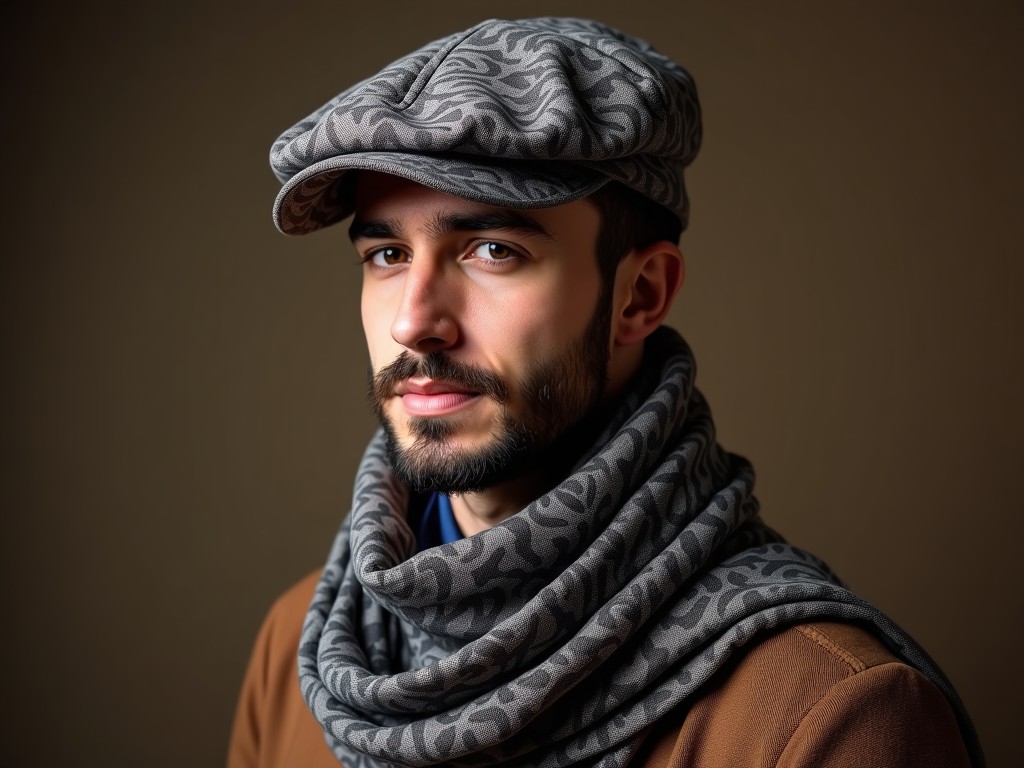
Mens Designer Hat And Scarf Set
This product page details the technical specifications, material composition, and functional characteristics of coordinated mens designer hat and scarf sets. The information focuses on measurable
Mens Designer Hat and Scarf Set
This product page details the technical specifications, material composition, and functional characteristics of coordinated mens designer hat and scarf sets. The information focuses on measurable properties relevant to industrial buyers evaluating textile accessories for private label development, uniform programs, or premium retail sourcing.
Material Composition and Structural Properties
The hat component typically utilizes a 2-ply worsted wool blend with a nominal fiber diameter of 18.5 microns, providing a balance between softness and dimensional stability. The scarf employs a single-ply merino wool construction with a fiber length of 65mm, selected to minimize pilling while maintaining thermal retention. Both components undergo a controlled fulling process to achieve a target density of 0.45 g/cm³, ensuring consistent drape and shape retention under repeated use.
Seam construction follows ISO 4916:1991 standards for apparel, with a stitch density of 8 stitches per cm and a seam strength minimum of 12 N/mm. Edge finishing on the scarf uses a hand-linked technique to eliminate bulk, while the hat brim incorporates a 2mm thermoplastic polyurethane insert for structured curvature without compromising flexibility.
Dimensional Specifications and Tolerance Bands
Hat dimensions are defined by a head circumference range of 56–60 cm, measured at the brow line, with a crown height of 12 cm ±0.5 cm. The brim extends 7 cm radially from the crown edge, maintained within a tolerance of ±0.3 cm to ensure uniform shading performance. These parameters are verified using digital calipers calibrated to NIST-traceable standards.
The scarf is manufactured to a finished length of 180 cm ±2 cm and a width of 30 cm ±0.5 cm, measured after relaxation under 0.5 N tension for 24 hours at 20°C and 65% RH. Dimensional stability is assessed via AATCC Test Method 135, with maximum allowable shrinkage of 2% in length and 1.5% in width after five home laundering cycles at 40°C.
Thermal and Moisture Management Characteristics
Thermal resistance (Rct) is measured at 0.15 m²·K/W for the hat and 0.22 m²·K/W for the scarf under ISO 11092 conditions (35°C, 40% RH, 1 m/s air velocity). These values indicate effective insulation for ambient temperatures between -5°C and 10°C when worn as a layered system. Moisture vapor transmission rate (MVTR) averages 800 g/m²/24h, determined via ASTM E96 BWC procedure, allowing sufficient breathability to prevent condensation buildup during moderate activity.
Water repellency is achieved through a fluorocarbon-free DWR treatment rated at ISO 4920 Level 3 after 20 wash cycles. The treatment adds no measurable mass (<0.02 g/cm²) and does not alter air permeability, which remains at 85 mm/s for both components. This ensures environmental compliance without sacrificing core performance metrics.
Quality Control and Inspection Protocol
Incoming wool lots are tested for fiber diameter distribution using OFDA2000 instrumentation, with acceptance criteria set at ≤5% coarse fibers (>25 microns). Each batch undergoes colorfastness evaluation per AATCC 61 (2A) for washing and AATCC 16.3 for light exposure, requiring a minimum rating of 4 on the gray scale. Visual inspection occurs under 5000 lux D65 lighting to detect shade variation exceeding ΔE 1.5 CIELAB units.
Dimensional checks are performed on the first and last piece of every 50-unit lot using a programmable vision system. Functional testing includes seam elongation recovery (must return to ≤2% residual strain after 50% elongation) and brim stiffness verification via cantilever bend test (deflection <15 mm under 50 g load). Non-conforming items are segregated for root cause analysis before lot release.
Customization Parameters and Technical Constraints
Fiber blends can be adjusted within defined limits: wool content may range from 85% to 100%, with nylon or Tencel® lyocell permitted as secondary fibers up to 15% to enhance abrasion resistance. Color matching follows Pantone® Textile Cotton eXtended (TCX) standards, with lab-dip approval required before bulk production. Custom jacquard patterns are feasible for scarves using 120-needle electronic looms, limited to a maximum of 8 colors per design and a repeat size not exceeding 6.4 cm.
Hat lining options include 100% cotton voile (40 gsm) or recycled polyester mesh (35 gsm), selected based on sweat-wicking requirements. Brim curvature can be modified between 5 cm and 9 cm radial extension, though changes beyond ±15% of standard geometry necessitate new tooling validation. All customizations undergo a pre-production sample review covering dimensional accuracy, seam integrity, and dimensional stability after simulated wear cycles.
Applications in Industrial and Commercial Contexts
These sets are commonly specified for corporate outerwear programs where employee appearance standards align with brand identity in client-facing roles. The thermal performance characteristics make them suitable for northern climate operations in logistics, security, and transportation sectors, where workers transition between indoor and outdoor environments multiple times daily. Unlike disposable alternatives, the durability metrics support a minimum service life of 120 wear cycles under normal conditions, reducing long-term replacement costs.
In premium retail environments, the coordinated design eliminates styling uncertainty for end users, while the standardized sizing and tolerance bands simplify inventory management for distributors. The absence of allergenic finishes and compliance with OEKO-TEX® Standard 100 Class II requirements allow confident deployment in markets with strict chemical regulations, such as the EU and Japan. These factors collectively reduce procurement risk by providing verifiable performance data rather than relying on aesthetic claims alone.
Typical Technical Specifications
| Property | Typical Value | Test Method / Standard |
|---|---|---|
| Hat Fiber Diameter | 18.5 microns | OFDA2000 |
| Scarf Length | 180 cm ±2 cm | AATCC 135 |
| Thermal Resistance (Hat) | 0.15 m²·K/W | ISO 11092 |
| Seam Strength | ≥12 N/mm | ISO 4916:1991 |
| MVTR | 800 g/m²/24h | ASTM E96 BWC |
| Colorfastness to Light | ≥4 (Gray Scale) | AATCC 16.3 |
For technical inquiries regarding material substitutions, dimensional tolerances, or test documentation, contact our engineering team to discuss project-specific requirements. All specifications are subject to confirmation based on final material sourcing and production validation.
Products
Related Products
News
Related News

2026-11-02
Cotton Voile Scarf Manufacturing and Performance Analysis how to make a cotton voile scarfCreating a professional-grade cotton voile scarf requires a precise balance of textile engineering and artisanal finishing. Unlike standard cotton weaves, voile is defined by its p···

2026-10-28
chiffon hijab Technical Production and Performance AnalysisSelecting the right fabric for a hijab involves a delicate balance between modesty, breathability, and aesthetic drape. For many women in Southeast Asia and the Middle East, the ma···

2026-10-26
custom silk scarf textile manufacturing and performance analysisSelecting a high-quality scarf is no longer just about color matching; it is an exercise in understanding how textile weight, drape, and print scale interact with individual facial···
