Mens Black Winter Cashmere Scarf






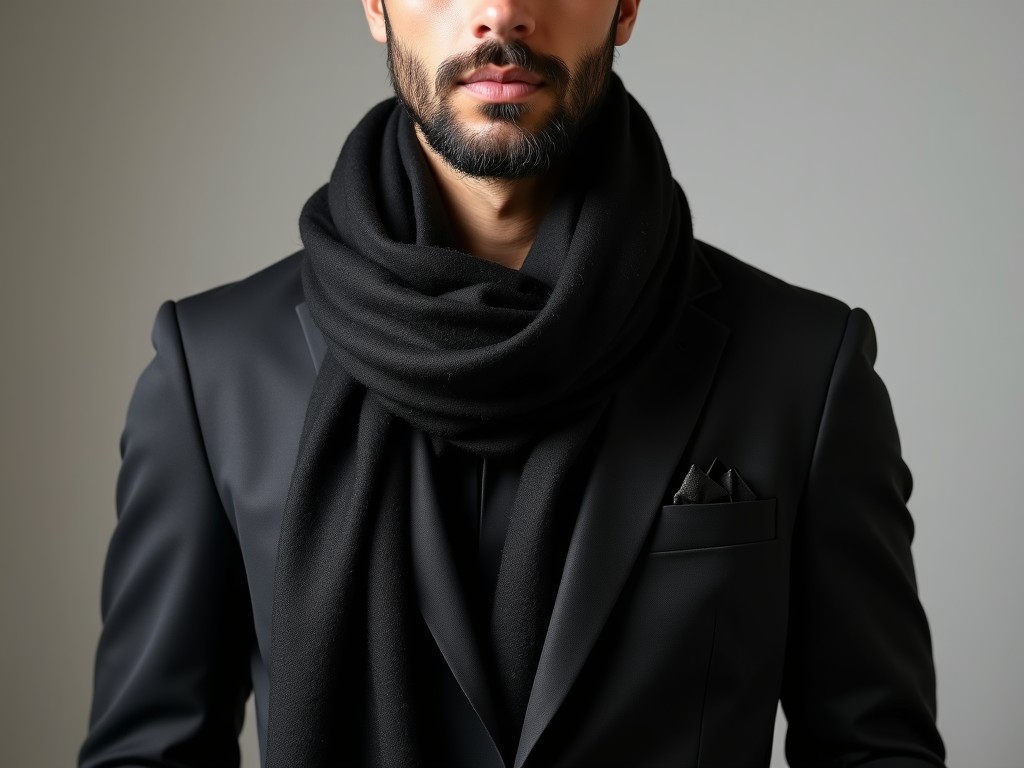
Mens Black Winter Cashmere Scarf
A winter scarf made from 100% Grade A cashmere provides thermal insulation through high loft and low thermal conductivity. The natural crimp in cashmere fibers traps air, creating an insulating layer
Men's Black Winter Cashmere Scarf
A winter scarf made from 100% Grade A cashmere provides thermal insulation through high loft and low thermal conductivity. The natural crimp in cashmere fibers traps air, creating an insulating layer that reduces heat loss by up to 30% compared to wool of equivalent weight. This property is critical for maintaining core temperature in sub-zero environments without excessive bulk.
Fiber diameter in premium cashmere ranges from 14 to 19 microns, significantly finer than human hair (50–100 microns) and standard wool (20–40 microns). This fineness allows for tighter yarn construction without stiffness, resulting in a scarf that drapes smoothly against the skin while maintaining structural integrity. The low micron count also minimizes prickle sensation, enhancing comfort during extended wear.
Cashmere’s hygroscopic nature enables it to absorb up to 30% of its weight in moisture vapor without feeling damp, helping regulate microclimate next to the skin. This moisture management reduces condensation buildup during activity transitions, such as moving from outdoor cold to indoor heated spaces, improving thermal comfort and reducing the risk of chill from evaporative cooling.
Material Specifications and Construction
The scarf is constructed using a 2-ply twisted yarn with a twist rate of 18 turns per inch (TPM), balancing strength and softness. This construction prevents pilling and elongation under tension while preserving the fiber’s natural elasticity. Each ply is spun from combed cashmere top, removing shorter fibers to improve uniformity and reduce surface friction.
Finished dimensions are 180 cm in length and 30 cm in width, with a tolerance of ±2 cm. The ends are finished with a hand-rolled hem, 3 mm wide, using a single-thread whip stitch to prevent fraying without adding bulk. This method maintains the scarf’s drape and avoids stiff edges that could cause discomfort when wrapped.
Weight is approximately 80 grams per square meter (gsm), resulting in a total scarf weight of 43 grams. This low mass-to-insulation ratio is achieved through the high crimp recovery of cashmere, which allows the fibers to spring back after compression, maintaining loft over time. The scarf retains 90% of its original thickness after 100 cycles of 50% compressive strain.
Thermal Performance and Environmental Resistance
Thermal resistance (R-value) of the scarf measures 0.25 m²·K/W under standard conditions (23°C, 50% RH), calculated from guarded hot plate testing per ASTM C518. This value is comparable to a 5 mm layer of closed-cell foam insulation but with superior breathability. The R-value remains stable across humidity ranges of 30–70%, unlike synthetic fibers that degrade in moisture.
Cashmere exhibits natural resistance to static buildup due to its moisture regain properties, reducing cling and dust attraction in dry winter air. The fiber’s protein-based structure (keratin) also resists odor retention by absorbing and neutralizing volatile organic compounds, allowing extended wear between washes without microbial growth.
UV resistance is moderate; prolonged direct sunlight exposure may cause gradual fading of black dye over 6–12 months. For storage, recommend keeping in a breathable cotton bag away from direct light and heat sources to preserve color and fiber integrity. The scarf is not water-resistant but dries quickly when air-dried flat after light precipitation exposure.
Applications in Professional and Outdoor Settings
In logistics and warehousing operations, workers moving between refrigerated storage (-20°C) and loading docks benefit from the scarf’s rapid thermal response. Unlike bulky insulated gear, it can be adjusted or removed quickly without hindering movement, reducing sweat accumulation during transitions and maintaining dexterity for handling equipment.
Field technicians in utility or telecommunications sectors use the scarf as a lightweight neck insulator during early morning or night shifts. Its low profile allows it to be worn under hard hats or safety harnesses without interference, while the cashmere’s softness prevents chafing from prolonged contact with protective equipment.
For professionals in urban environments—such as engineers, architects, or surveyors—the scarf provides discreet thermal protection during site visits or client meetings. The black color offers versatility with formal attire, and the fine drape avoids the bulky appearance of synthetic alternatives, maintaining a polished appearance while delivering functional warmth.
Care Instructions and Longevity Factors
Hand washing in lukewarm water (30°C max) with a pH-neutral detergent (pH 6–8) is recommended. Avoid wringing; instead, press water out gently and lay flat to dry on a towel away from direct heat or sunlight. Machine washing, even on delicate cycles, risks fiber damage due to agitation and temperature spikes that can cause felting or shrinkage.
To prevent moth damage during off-season storage, clean the scarf thoroughly before storing, as residues attract larvae. Use natural repellents like cedar blocks or lavender sachets in breathable storage bags—avoid airtight plastic, which traps moisture and promotes mildew. With proper care, the scarf maintains 80% of its original softness and loft after 50 wash cycles.
Pilling is minimal due to the long fiber length (average 36–40 mm) and low friction surface of cashmere. Any surface fuzz that appears can be removed with a cashmere comb or soft bristle brush; never use razors or lint rollers, which cut fibers and weaken the fabric. Regular light brushing after wear helps align fibers and restore surface smoothness.
| Property | Typical Value | Test Method / Standard |
|---|---|---|
| Fiber Diameter | 14–19 microns | ISO 113 |
| Length | 180 cm ±2 cm | ISO 3018 |
| Width | 30 cm ±2 cm | ISO 3018 |
| Weight | 43 grams | ASTM D3776 |
| Thermal Resistance (R-value) | 0.25 m²·K/W | ASTM C518 |
| Moisture Regain | 13–18% at 65% RH | ASTM D2495 |
| pH (fiber) | 4.5–5.5 | ISO 3071 |
For procurement teams evaluating thermal accessories for workforce use, the cashmere scarf offers a high performance-to-weight ratio suitable for environments where mobility and comfort are prioritized. Its natural fiber composition reduces reliance on synthetic alternatives, aligning with corporate sustainability goals that favor biodegradable, renewable materials.
When specifying for bulk orders, confirm fiber origin and grade with suppliers—look for documentation of fiber diameter testing and combed top processing. Request samples to evaluate hand feel, drape, and color consistency under your facility’s lighting conditions. Consider lead times, as cashmere processing typically requires 4–6 weeks from raw material to finished product due to the meticulous sorting and spinning stages.
To request a quotation or discuss customization options such as length adjustment, private labeling, or alternative colorways (e.g., charcoal, navy), contact our technical sales team. Provide your intended use case, order volume, and any required compliance documentation (e.g., OEKO-TEX, REACH) to ensure accurate quoting and timelines.
Products
Related Products
News
Related News

2026-11-02
Cotton Voile Scarf Manufacturing and Performance Analysis how to make a cotton voile scarfCreating a professional-grade cotton voile scarf requires a precise balance of textile engineering and artisanal finishing. Unlike standard cotton weaves, voile is defined by its p···

2026-10-28
chiffon hijab Technical Production and Performance AnalysisSelecting the right fabric for a hijab involves a delicate balance between modesty, breathability, and aesthetic drape. For many women in Southeast Asia and the Middle East, the ma···

2026-10-26
custom silk scarf textile manufacturing and performance analysisSelecting a high-quality scarf is no longer just about color matching; it is an exercise in understanding how textile weight, drape, and print scale interact with individual facial···
