Men S Black Scarf Wrap Factory






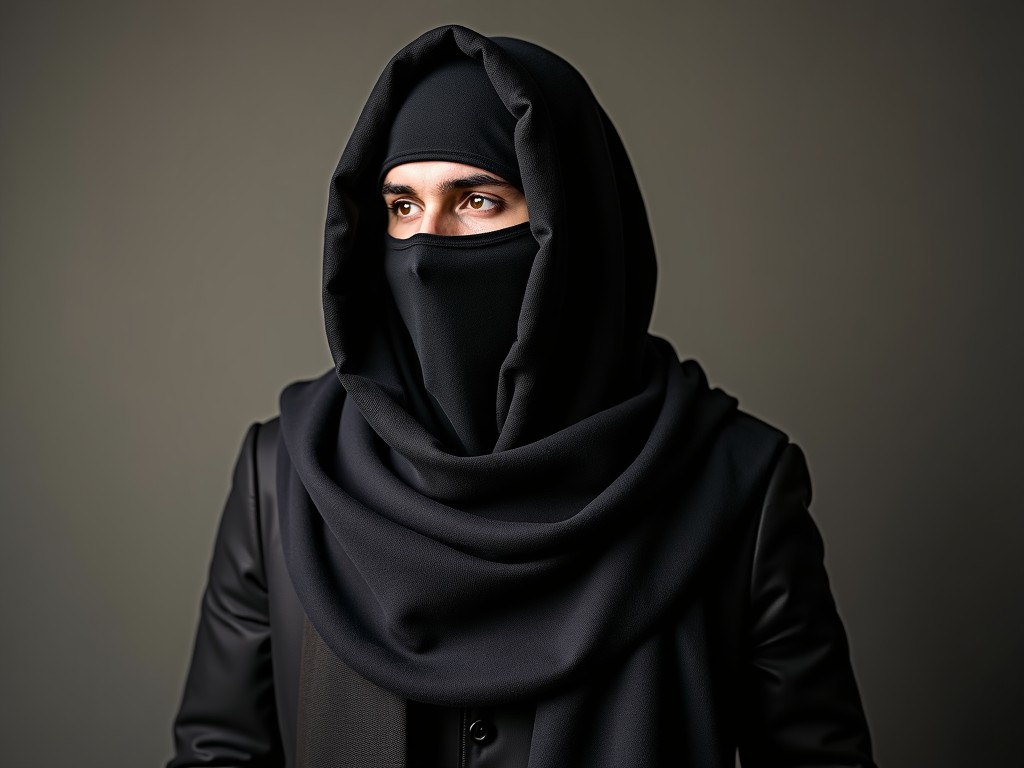
Men S Black Scarf Wrap Factory
This document details the manufacturing parameters, material constraints, and quality control processes for producing men's black scarf wraps at industrial scale. The focus is on technical
Men's Black Scarf Wrap Factory: Industrial Manufacturing Specifications
This document details the manufacturing parameters, material constraints, and quality control processes for producing men's black scarf wraps at industrial scale. The focus is on technical specifications that directly impact procurement decisions, including fiber composition, dimensional tolerances, dye fixation methods, and finishing procedures. Understanding these elements enables buyers to assess supplier capability, predict long-term performance, and mitigate risks associated with batch-to-batch variation.
Material Composition and Fiber Properties
The base fabric for men's black scarf wraps is typically constructed from 100% combed ring-spun cotton or a 65/35 polyester-cotton blend, selected based on end-use requirements. Combed ring-spun cotton undergoes additional processing to remove short fibers, resulting in a smoother surface, reduced pilling, and improved dye uptake—critical for achieving consistent black shade depth. The polyester-cotton variant offers enhanced dimensional stability and wrinkle resistance, particularly important for wraps subjected to frequent folding and unpacking in logistics chains.
Yarn count ranges from 20s to 40s Ne (Number English), with higher counts producing finer, lighter fabrics suitable for warmer climates, while lower counts provide greater durability and thermal mass for cooler environments. Twist per inch (TPI) is maintained between 3.5 and 4.5 for cotton yarns to balance strength and hand feel, directly affecting drape and resistance to skewing during cutting and sewing.
Dyeing Process and Colorfastness Standards
Achieving a true, fade-resistant black requires reactive dyeing for cotton-based fabrics or disperse dyeing for polyester blends, followed by precise fixation and after-treatment. Reactive dyes form covalent bonds with cellulose fibers, providing superior wash and light fastness compared to direct or vat dyes. For black shades, a combination of blue, red, and yellow dyes is often used to neutralize undertones, with spectral reflectance measured at 450nm, 550nm, and 650nm to ensure neutrality under D65 illumination.
Colorfastness is validated against ISO 105-B02 (light fastness), ISO 105-C06 (wash fastness), and ISO 105-X12 (rubbing fastness). Minimum acceptable ratings are 4 for light fastness (after 20 AFU), 3-4 for wash fastness (after 5 cycles at 40°C), and 3-4 for both wet and dry rubbing. Failure to meet these thresholds indicates inadequate dye penetration or insufficient fixation, leading to graying or staining during use.
Dimensional Specifications and Tolerances
Standard men's black scarf wraps are manufactured to a finished length of 180 cm ± 2 cm and a width of 30 cm ± 1.5 cm, measured under relaxed conditions after conditioning at 20°C and 65% RH for 24 hours. These dimensions accommodate standard wrapping techniques while allowing for minimal shrinkage during consumer laundering. Length tolerance is critical to prevent excessive fabric waste or insufficient coverage, while width tolerance ensures consistent fold geometry and prevents edge curling.
Shrinkage is controlled through sanforization or compressive shrinking for cotton fabrics, limiting residual shrinkage to ≤2% in both warp and weft directions after five home wash cycles. For polyester blends, heat setting during finishing reduces thermal shrinkage to <1%. Dimensional stability is verified using ISO 6330 (washing) and ISO 3759 (dimensional change) test methods, with measurements taken before and after conditioning.
Construction and Finishing Details
Edges are finished with a 3-thread overlock stitch (ISO 4915:1991) at 4–5 stitches per cm, providing fray resistance without adding bulk. The stitch tension is calibrated to prevent puckering on lightweight fabrics while maintaining integrity on heavier blends. Bar tacks are not used due to flexibility requirements; instead, end reinforcement relies on stitch density and fabric weight.
Finishing includes a low-temperature calendar pass to enhance surface smoothness and light reflection, contributing to the perceived depth of black. No resin-based stiffeners are applied, preserving drape and breathability. For applications requiring antimicrobial properties, a zinc pyrithione-based finish may be added post-dyeing, though this requires separate validation for wash fastness and skin compatibility.
Quality Control and Inspection Protocol
Quality assurance follows a four-stage system: incoming yarn inspection, in-process fabric monitoring, final product audit, and pre-shipment verification. Yarn is tested for count strength product (CSP), unevenness (U%), and hairiness using Uster® or equivalent instrumentation. Fabric width, weight (gsm), and bow/skew are monitored every 20 meters during production using online sensors.
Final inspection uses AQL 2.5 for major defects (e.g., dye streaks, holes, misprints) and AQL 4.0 for minor defects (e.g., loose threads, slight shade variation). Each batch undergoes visual shade matching under D50/D65 lighting using a spectrophotometer, with ΔE*ab < 1.5 required for approval. Packaging is verified for correct folding, labeling, and barrier protection against moisture and UV exposure during transit.
Customization Options and Engineering Considerations
Beyond standard specifications, customization is available for fiber blend ratios, yarn count, end-use finishes, and packaging configurations. For example, increasing polyester content to 50% improves moisture-wicking properties for activewear applications, while adding 5% viscose enhances luster and softness for fashion-oriented wraps. Custom lengths (160–220 cm) and widths (25–40 cm) are feasible but require retooling of cutting dies and may affect fabric yield efficiency.
Private labeling options include woven labels, heat transfers, or recycled polyester tags, with placement optimized to avoid discomfort during wear. Minimum order quantities for custom specifications typically start at 1,000 units per SKU, though this varies based on fabric width and dye batch size. Lead times are influenced by greige goods availability, dye capacity, and finishing line scheduling, with standard orders requiring 3–4 weeks and custom runs extending to 6–8 weeks.
| Parameter | Typical Range | Test Method / Standard |
|---|---|---|
| Fabric Weight (gsm) | 120–180 | ISO 3801 |
| Yarn Count (Ne) | 20s–40s | ASTM D1059 |
| Length Tolerance | ±2 cm | Internal Measurement |
| Width Tolerance | ±1.5 cm | Internal Measurement |
| Light Fastness | ≥4 (Blue Wool) | ISO 105-B02 |
| Wash Fastness | 3–4 | ISO 105-C06 |
| Residual Shrinkage | ≤2% | ISO 6330 |
All specifications are based on established textile engineering principles and internationally recognized test methods. Values represent typical production capabilities; exact performance depends on raw material lot consistency, machine calibration, and environmental conditions during manufacturing and storage. Buyers are advised to request counter samples and conduct independent testing for critical applications. For technical inquiries regarding material selection, tolerance stacking, or compliance with specific industry standards, contact our engineering team to discuss project requirements.
Products
Related Products
News
Related News

2026-11-02
Cotton Voile Scarf Manufacturing and Performance Analysis how to make a cotton voile scarfCreating a professional-grade cotton voile scarf requires a precise balance of textile engineering and artisanal finishing. Unlike standard cotton weaves, voile is defined by its p···

2026-10-28
chiffon hijab Technical Production and Performance AnalysisSelecting the right fabric for a hijab involves a delicate balance between modesty, breathability, and aesthetic drape. For many women in Southeast Asia and the Middle East, the ma···

2026-10-26
custom silk scarf textile manufacturing and performance analysisSelecting a high-quality scarf is no longer just about color matching; it is an exercise in understanding how textile weight, drape, and print scale interact with individual facial···
