Men S Arab Head Scarf Styles






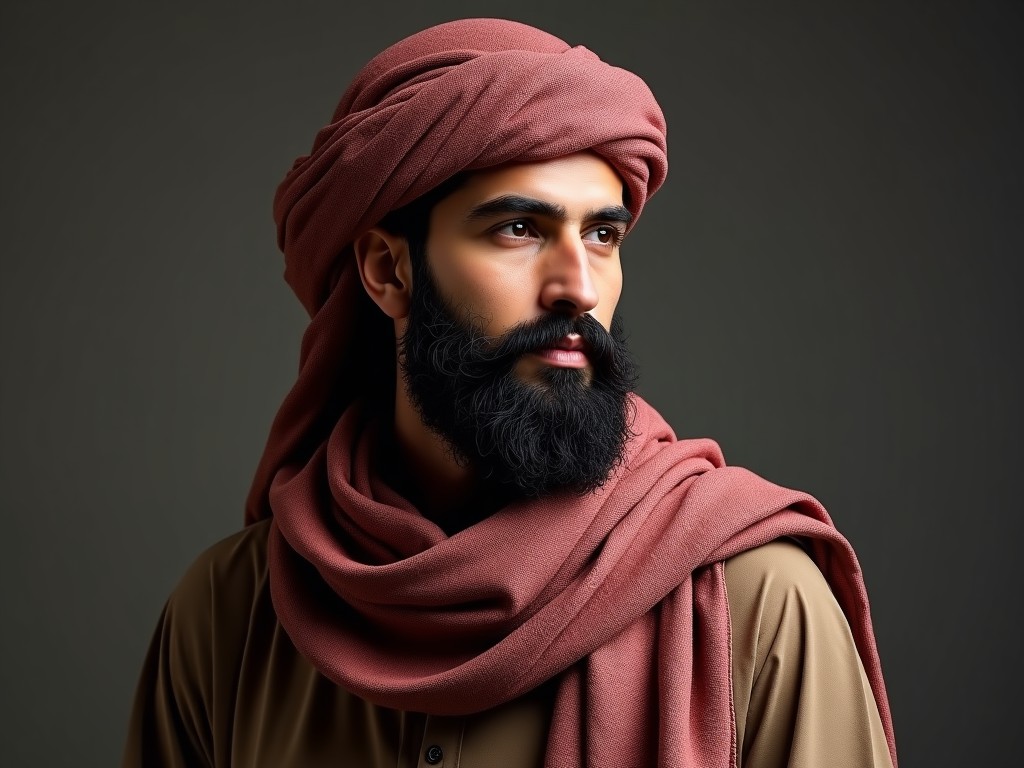
Men S Arab Head Scarf Styles
The traditional Arab head scarf, known as the keffiyeh or shemagh, serves both cultural and functional purposes across arid and semi-arid regions. Its design balances sun protection, dust filtration,
Men's Arab Head Scarf Styles
The traditional Arab head scarf, known as the keffiyeh or shemagh, serves both cultural and functional purposes across arid and semi-arid regions. Its design balances sun protection, dust filtration, and thermal regulation through specific weave structures and fiber selections. Understanding these technical attributes helps industrial buyers evaluate suitability for workwear, protective gear, or uniform applications in demanding environments.
Historically woven from cotton or wool blends, modern interpretations incorporate synthetic fibers to enhance durability and moisture management. The square or rectangular shape allows multiple wrapping techniques, each affecting coverage, ventilation, and secure fit. Industrial specifications often prioritize dimensional stability, abrasion resistance, and ease of maintenance over purely aesthetic considerations.
Regional variations in pattern, fringe length, and edge finishing reflect both heritage and practical adaptation to local climate conditions. For B2B procurement, standardizing on consistent weave density and colorfastness ensures predictable performance across large-volume orders. This page outlines the key technical distinctions between common styles to support informed sourcing decisions.
Core Styles and Structural Differences
The three primary styles—Jordanian, Palestinian, and Saudi—differ mainly in pattern scale, fringe treatment, and typical fiber ratios. Jordanian versions often feature larger geometric motifs with minimal fringe, optimized for high-visibility identification in group settings. Palestinian styles typically incorporate denser, smaller-scale patterns with longer fringes, which can be secured under clothing layers for added wind resistance.
Saudi variants frequently use a plain or subtle checkered base with contrasting border bands, reducing visual complexity for uniform integration. These structural differences directly influence how the fabric drapes, how easily it stays in place during movement, and how it layers with other protective equipment such as helmets or goggles. Buyers should match style characteristics to specific operational requirements rather than assuming interchangeability.
Pattern scale affects not only appearance but also fabric integrity; larger motifs may create stress points in loose weaves, while finer patterns distribute tension more evenly. Fringe length impacts both functional utility (e.g., tying, tucking) and potential snag hazards in machinery environments. Edge finishing—whether hemmed, fringed, or bordered with tape—determines fray resistance and laundering stability.
Material Composition and Performance Attributes
Cotton remains the dominant base fiber due to its breathability, moisture absorption, and hypoallergenic properties, particularly important for prolonged skin contact in hot climates. Typical compositions range from 100% cotton for traditional feel to 65/35 polyester-cotton blends for improved wrinkle resistance and dimensional stability after repeated washing. Wool blends, though less common, offer superior insulation for high-altitude or cold-desert variants.
Synthetic additives like polyester enhance tensile strength and UV resistance, critical for outdoor use where prolonged sun exposure degrades untreated fibers. However, excessive synthetic content reduces moisture wicking and can increase static buildup, which may be problematic in dusty or flammable environments. Industrial specifications often cap polyester at 35% to balance durability with comfort.
Colorfastness is measured using ISO 105-B02 standards for light exposure and ISO 105-C06 for washing; industrial-grade scarves typically achieve ratings of 4 or higher to prevent fading under harsh conditions. Shrinkage is controlled through sanforizing or pre-shrinking processes, limiting dimensional change to under 3% after washing. These metrics are essential for maintaining consistent fit in uniform programs.
Weave Density and Functional Implications
Weave density, measured in ends per inch (EPI) and picks per inch (PPI), directly affects the scarf’s ability to block airborne particulates and modulate airflow. Standard cotton keffiyehs range from 40x40 to 60x60 EPI/PPI, providing a balance between breathability and dust filtration. Higher densities (80x60 and above) approach the filtration efficiency of light-duty face masks but significantly reduce air permeability, increasing thermal load during exertion.
For environments with fine particulate exposure—such as mining, quarrying, or desert construction—a tighter weave may be specified despite comfort trade-offs, often paired with moisture-wicking linings. Conversely, in high-activity scenarios like security patrols or agricultural work, looser weaves (30x30) prioritize ventilation, accepting lower filtration efficiency in exchange for reduced heat stress. The choice depends on risk assessment prioritizing respiratory protection versus thermal comfort.
Weave consistency is verified during production using automated optical inspection; variations exceeding 5% across a batch can lead to inconsistent performance and are typically rejected for industrial orders. Buyers should request test reports detailing average EPI/PPI and standard deviation to ensure lot-to-lot uniformity, especially when integrating scarves into certified protective ensembles.
Dimensional Standards and Customization Options
Traditional dimensions range from 110x110 cm to 130x130 cm for square variants, with rectangular versions common at 100x180 cm. These sizes accommodate multiple wrapping styles while ensuring sufficient fabric for secure knotting or tucking into collars. Industrial buyers often require tighter tolerances—±1 cm—to maintain uniformity in large-volume uniform contracts, especially when scarves are issued as standardized components.
Customization options include logo jacquard weaving (limited to low-contrast, single-color designs to avoid compromising fabric integrity), custom dye lots for corporate colors, and modified fringe treatments (e.g., reinforced knotting, tape-bonded edges). Embroidery is generally discouraged on the main body due to stiffness and potential irritation; if required, it is restricted to corners or end panels with lightweight thread.
Length adjustments are feasible but must consider the functional limits of wrapping techniques; reducing width below 90 cm significantly restricts styling options and may compromise coverage. For specialized applications—such as integration with respiratory protection systems—custom shapes with tapered ends or attached chin straps are available upon request, though these deviate from traditional forms and require validation for user acceptance.
Quality Control and Industrial Testing
Industrial procurement relies on objective testing rather than visual inspection alone. Key tests include tensile strength (ASTM D5034), tear resistance (ASTM D2261), pilling resistance (ASTM D3512), and dimensional stability after 5 home launderings (AATCC 135). For protective applications, particulate filtration efficiency may be assessed using modified versions of ASTM F2299, though scarves are not certified as respirators.
Colorfastness to perspiration (ASTM E308) and light (AATCC TC161) is critical for outdoor use; ratings below 4 on the gray scale indicate unacceptable fading or staining. Seam and fringe integrity are evaluated via cyclic tumbling tests to simulate extended wear. Suppliers should provide third-party test reports upon request, particularly for orders exceeding 1,000 units where lot consistency impacts liability.
Packaging for industrial shipment typically involves folded flat packing in polybags with desiccant, then cartoned with humidity indicators to prevent mildew during transit. Bulk orders may use bale compression with breathable wraps to optimize container space without trapping moisture. Clear labeling includes size, material composition, care instructions, and batch number for traceability.
Applications in Industrial and Occupational Settings
Beyond cultural use, these scarves function as practical components in occupational uniforms for industries operating in dry, dusty, or high-solar-radiation environments. In construction and infrastructure projects across the Middle East and North Africa, they provide low-cost sun protection for neck and face areas not covered by hard hats or safety glasses. Their ability to be wetted for evaporative cooling adds temporary thermal relief during peak heat hours.
Security and military units in arid regions adopt them as part of standard issue gear, valuing their durability, low visual signature in earth-tone colors, and compatibility with helmets and communication headsets. The fabric’s resistance to abrasion from gear straps and its ability to be quickly repositioned make it preferable to single-use alternatives in prolonged field operations.
In agriculture and livestock management, they protect against wind-blown dust, plant chaff, and insect exposure while allowing unrestricted head movement. Workers in mineral processing and cement plants use darker variants to minimize visible soiling from airborne particulates, extending wearable life between washes. The reusability and low lifecycle cost make them attractive for large-scale workforce programs where disposable PPE would generate excessive waste.
Comparison of Common Styles
| Attribute | Jordanian Style | Palestinian Style | Saudi Style |
|---|---|---|---|
| Typical Pattern Scale | Large geometric | Small, dense motifs | Plain/checkered base with borders |
| Fringe Length | Short/minimal | Long (15-25 cm) | Medium or taped edge |
| Typical Fiber Blend | 65/35 cotton-poly | 100% cotton | 80/20 cotton-poly |
| Primary Use Case | Group identification, uniform | Wind resistance, tucking | Low-profile integration |
| Dimensional Stability | Good (blend-based) | Moderate (cotton) | Very good (low shrinkage) |
For technical specifications, customization requests, or sample evaluation, contact our industrial textiles team. We provide detailed weave analysis, colorfastness reports, and material safety data upon request to support your procurement decision-making process.
Email: [email protected] | Phone: +1-800-555-0199
Products
Related Products
News
Related News

2026-11-02
Cotton Voile Scarf Manufacturing and Performance Analysis how to make a cotton voile scarfCreating a professional-grade cotton voile scarf requires a precise balance of textile engineering and artisanal finishing. Unlike standard cotton weaves, voile is defined by its p···

2026-10-28
chiffon hijab Technical Production and Performance AnalysisSelecting the right fabric for a hijab involves a delicate balance between modesty, breathability, and aesthetic drape. For many women in Southeast Asia and the Middle East, the ma···

2026-10-26
custom silk scarf textile manufacturing and performance analysisSelecting a high-quality scarf is no longer just about color matching; it is an exercise in understanding how textile weight, drape, and print scale interact with individual facial···
