Male Middle Eastern Head Covering






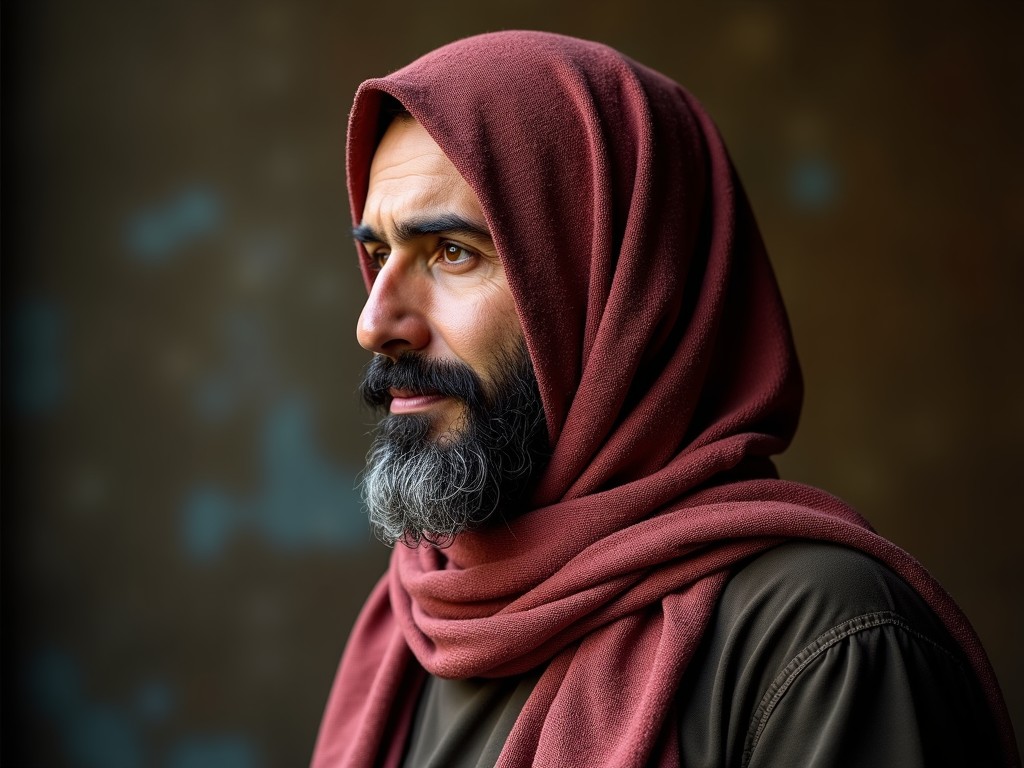
Male Middle Eastern Head Covering
Male Middle Eastern head coverings, commonly referred to as keffiyeh, shemagh, or ghutra depending on regional variation, are woven textile garments designed for protection against environmental
Male Middle Eastern Head Covering
Male Middle Eastern head coverings, commonly referred to as keffiyeh, shemagh, or ghutra depending on regional variation, are woven textile garments designed for protection against environmental elements in arid and semi-arid climates. These items serve functional purposes beyond cultural expression, including sun shielding, dust filtration, and thermal regulation. Industrial procurement of such items requires understanding of material composition, weave density, dimensional stability, and finishing treatments to ensure suitability for prolonged use in demanding conditions.
Material Composition and Weave Structure
Traditional head coverings are predominantly manufactured from 100% cotton or cotton-blend fibers due to cotton’s hygroscopic properties, breathability, and resistance to static buildup. The standard weave is a plain or twill construction with a thread count typically ranging from 60 to 80 ends per inch (epi) in both warp and weft directions. This density provides a balance between airflow resistance and particulate filtration efficiency, critical for environments with frequent sand or dust exposure. Some variants incorporate a small percentage of polyester (5–15%) to enhance wrinkle resistance and dimensional stability after repeated washing cycles, though this may slightly reduce moisture absorption capacity.
Dimensional Specifications and Cutting Tolerances
Standard finished dimensions for male head coverings range from 110 cm to 130 cm square, with a tolerance of ±2 cm allowed for cutting and sewing variability. The hem is typically folded and stitched with a 0.6 cm double-fold seam to prevent fraying, contributing to the final dimensional consistency. Diagonal measurement across the corners (used for folding into a triangular shape) ranges from 155 cm to 184 cm depending on the nominal size. These dimensions ensure adequate coverage of the head, neck, and shoulders when worn in the traditional style, while allowing for secure fastening with an agal (cord circlet) without excessive slack or tension.
Colorfastness and Dyeing Process
Color retention is a critical factor in industrial evaluation, particularly for items exposed to prolonged UV radiation and frequent laundering. Reactive dyes are commonly used on cotton substrates to achieve covalent bonding with fiber molecules, resulting in wash fastness ratings of 4–5 on the ISO 105-C06 scale and light fastness of 4–6 on the ISO 105-B02 scale. Traditional patterns often feature contrasting border designs in black, red, or white against a base fabric of white, natural beige, or olive green. The dye penetration must be uniform across both face and reverse sides to prevent fading disparities during use, which is verified through quadrant testing during quality control.
Comparative Performance Characteristics
| Property | 100% Cotton | Cotton-Polyester Blend (85/15) |
|---|---|---|
| Moisture Regain (% at 65% RH) | 7.0–8.5 | 4.5–5.5 |
| Tensile Strength (Warp/Weft, N/5cm) | 350–450 / 300–400 | 380–480 / 330–430 |
| Shrinkage After 5 Washes (%) | 3.0–5.0 | 1.5–3.0 |
| Air Permeability (cm³/cm²/s) | 120–160 | 100–140 |
The data above illustrates trade-offs between pure cotton and blended variants. While cotton offers superior moisture absorption and air permeability, it exhibits higher shrinkage and slightly lower tensile strength. The addition of polyester improves dimensional stability and strength but reduces breathability and hygroscopic performance. Selection depends on the priority: thermal comfort in high-heat environments favors cotton, whereas reduced maintenance and shape retention over multiple cycles may justify a blend. These values are typical ranges; actual performance varies with yarn count, weave tightness, and finishing applied.
Applications in Industrial and Professional Settings
Beyond traditional use, these head coverings are adopted in industrial environments where workers face prolonged exposure to solar radiation, airborne particulates, or wind-blown debris. In construction, mining, and desert-based logistics operations, they serve as a low-cost, reusable barrier against UV-induced skin irritation and particulate inhalation when worn beneath hard hats or alongside respiratory protection. Their lightweight nature allows for extended wear without significant heat accumulation, unlike synthetic alternatives that may trap moisture. Additionally, they are utilized in security and peacekeeping forces operating in culturally sensitive regions, where wearing locally appropriate attire supports operational effectiveness and community engagement.
Customization Options and Procurement Considerations
Customization is available for thread count, dimensions, hem width, and pattern layout to meet specific operational or branding requirements. Buyers may request reinforced corners with bar-tack stitching to prevent tearing at stress points during fastening with an agal. Pattern customization includes adjusting the width and contrast of border bands, which typically range from 1.5 cm to 3.0 cm in finished width. Minimum order quantities for custom runs generally start at 500 units, with lead times of 4–6 weeks depending on fabric sourcing and dye lot consistency. Samples can be provided upon request to validate color, hand feel, and dimensional accuracy before full production.
Quality Control and Inspection Protocol
Inspection follows AQL 2.5 standards for general items, with critical defects including holes, broken yarns, misprinted patterns, and open seams. Dimensional checks are performed on a flat surface under nominal tension, using calibrated rulers or vision systems. Color matching is assessed against a Pantone or textile swatch reference under D65 lighting to ensure batch consistency. Each batch undergoes a wash test simulation (3 cycles at 40°C) to evaluate shrinkage and color bleeding prior to shipment. Packaging is typically in polyethylene bags of 10–25 units, then packed in corrugated cartons with moisture barriers for export, with container loading optimized to minimize compression damage.
For technical specifications, customization requests, or sample evaluation, contact our engineering team to discuss your specific environmental and operational requirements. We provide detailed data sheets and support prototyping to ensure the final product meets functional expectations in real-world conditions.
Products
Related Products
News
Related News

2026-11-02
Cotton Voile Scarf Manufacturing and Performance Analysis how to make a cotton voile scarfCreating a professional-grade cotton voile scarf requires a precise balance of textile engineering and artisanal finishing. Unlike standard cotton weaves, voile is defined by its p···

2026-10-28
chiffon hijab Technical Production and Performance AnalysisSelecting the right fabric for a hijab involves a delicate balance between modesty, breathability, and aesthetic drape. For many women in Southeast Asia and the Middle East, the ma···

2026-10-26
custom silk scarf textile manufacturing and performance analysisSelecting a high-quality scarf is no longer just about color matching; it is an exercise in understanding how textile weight, drape, and print scale interact with individual facial···
