Male Arab Head Scarf



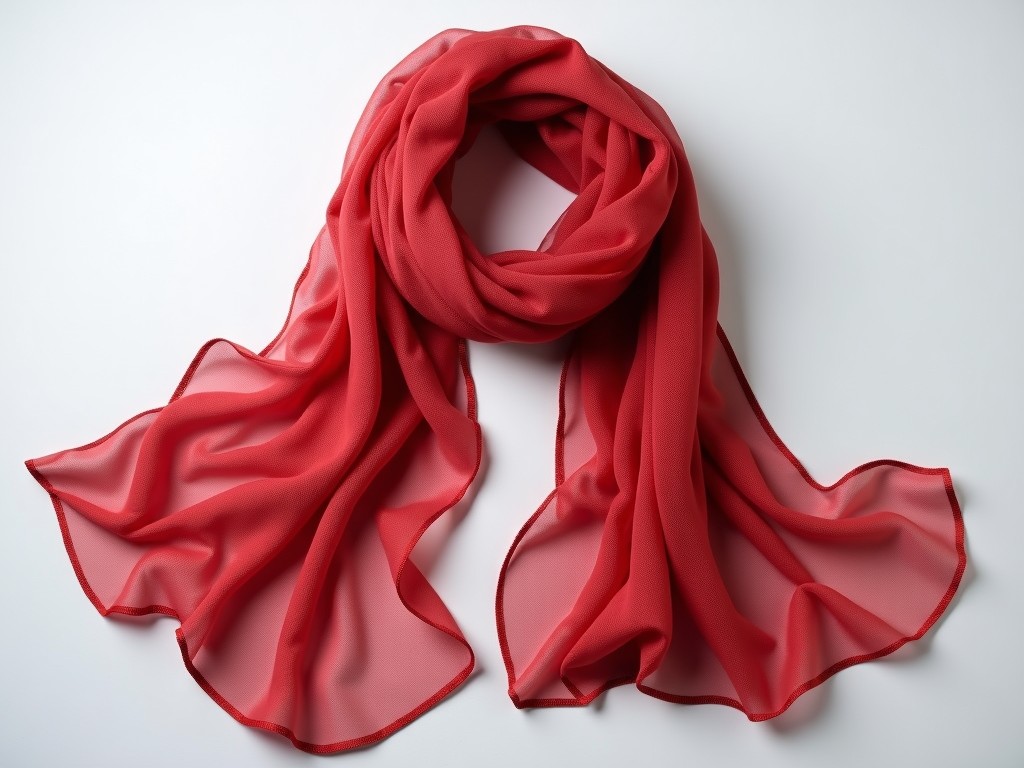


Male Arab Head Scarf
The male Arab head scarf, commonly referred to as ghutra or keffiyeh, is a traditional textile garment worn across the Middle East for protection against environmental elements. In industrial
Male Arab Head Scarf (Ghutra/Keffiyeh) - Industrial Technical Specification
The male Arab head scarf, commonly referred to as ghutra or keffiyeh, is a traditional textile garment worn across the Middle East for protection against environmental elements. In industrial contexts, this garment is adapted for use in harsh outdoor work environments where solar radiation, wind-blown particulates, and temperature extremes pose occupational hazards. The functional design integrates cultural significance with engineered performance for prolonged wear in sectors such as oil and gas, construction, mining, and desert logistics.
Material Composition and Structural Properties
Industrial-grade ghutras are predominantly manufactured from 100% combed cotton yarn with a thread count ranging from 120 to 160 ends per inch (epi) in both warp and weft directions. This construction yields a fabric weight between 180 and 220 GSM (grams per square meter), balancing breathability with sufficient mass to resist wind displacement. The plain weave structure ensures isotropic tensile strength, minimizing directional weakness under multidirectional stress from securing methods such as the egal (headband).
Fiber selection prioritizes long-staple cotton (Gossypium hirsutum) for its superior moisture regain capacity (approximately 8.5% at 65% RH), enabling effective sweat absorption and evaporative cooling. Unlike synthetic alternatives, cotton maintains dimensional stability under repeated high-temperature washing cycles (>60°C) without significant shrinkage (<3% after 5 cycles), critical for hygiene compliance in industrial laundering systems.
Dimensional Standardization and Wear Geometry
Standard industrial ghutras are cut to a square format with nominal dimensions of 110 cm × 110 cm (±2 cm tolerance), optimized for the traditional folding technique that creates multiple layers over the head and shoulders. This geometry provides approximately 0.012 m² of surface area per layer, with typical wear configurations utilizing 2–4 layers depending on environmental exposure. The resulting cumulative fabric thickness ranges from 0.4 to 0.8 mm, contributing to thermal resistance (R-value) of approximately 0.15–0.30 m²·K/W.
Edge finishing employs a 3-mm double-fold hem with lockstitch sealing to prevent fraying under abrasive contact with headgear or equipment straps. Dimensional stability is maintained through stentering during production, limiting diagonal skew to less than 1.5% after ISO 6330 wash testing. These tolerances ensure consistent fit when secured with an egal, preventing slippage during prolonged physical activity or vehicle operation.
Environmental and Occupational Performance Characteristics
The primary function of the industrial ghutra is solar radiation mitigation. Spectral reflectance measurements show that undyed white cotton achieves >85% reflectance across the UV-A (315–400 nm) and UV-B (280–315 nm) spectra, reducing direct erythemal exposure by up to 60% compared to uncovered skin. This performance is maintained even after 50 industrial wash cycles, as confirmed by ISO 105-B02 colorfastness testing.
In particulate environments, the fabric’s pore structure (estimated 150–200 µm mean flow pore size) provides mechanical filtration of coarse dust particles (>50 µm) while maintaining air permeability of 180–220 mm/s (ISO 9237). This balance prevents excessive heat buildup—a critical factor in preventing heat stress—unlike tighter-weave alternatives that may exceed 100 mm/s permeability and increase thermal retention.
Customization Options for Industrial Integration
While the traditional white ghutra remains standard for maximum solar reflectivity, industrial applications may require modified visual properties for safety or identification purposes. Available customizations include:
- Incorporation of retroreflective strips (50 mm width) along one or more edges for low-visibility compliance (EN ISO 20471 Class 2 equivalent)
- Application of durable, UV-stable dyes for zone-specific color coding (e.g., safety red, operational yellow) without compromising baseline reflectance (>70% in visible spectrum)
- Addition of RFID-enabled tracking tags woven into the hem for asset management in high-turnover environments
- Antimicrobial treatment (zinc pyrithione-based) achieving >99.9% reduction in S. aureus and E. coli after 24 hours (ISO 20743)
These modifications are applied via post-production processes that preserve the base fabric’s mechanical properties. Tensile strength retention exceeds 95% after treatment, and air permeability varies by less than ±8% from baseline, ensuring core protective functions remain intact.
Quality Control and Conformance Protocols
Industrial suppliers implement multi-stage quality assurance aligned with ISO 9001:2015 principles. Raw cotton undergoes fiber length analysis (HVI testing) and trash content verification (<2%) prior to spinning. In-process monitoring includes real-time tension control during weaving to maintain pick density uniformity (±3 picks/cm).
Final inspection evaluates: dimensional accuracy (ISO 13935-1), colorfastness to washing (ISO 105-C06), pH (4.5–7.5 per ISO 3071), and formaldehyde content (<75 ppm per ISO 14184-1). Batch traceability is maintained through lot-linked QR codes on packaging, enabling root-cause analysis in the event of field performance concerns. Acceptable quality limit (AQL) is set at 2.5% for major defects (e.g., holes, misprints) and 6.5% for minor defects (e.g., stitch irregularities) under ISO 2859-1 sampling.
Packaging, Storage, and Logistics Considerations
Industrial ghutras are packaged in units of 25 or 50 pieces per polyethylene-lined carton (dimensions: 40×30×20 cm), optimized for palletization (1.2 m × 0.8 m base). Each unit includes a desiccant packet (silica gel, 50 g) to maintain relative humidity below 50% during transit, preventing mildew formation in tropical climates. Cartons are marked with EAN-128 barcodes containing batch ID, production date, and material specifications for warehouse management system (WMS) integration.
Storage recommendations specify a maximum temperature of 30°C and avoidance of direct sunlight to prevent yellowing of optical brighteners (if present). Under these conditions, shelf life exceeds 24 months without degradation of tensile strength or absorbency. For export shipments, fumigation-treated wooden pallets (ISPM 15 compliant) are available upon request to meet international phytosanitary standards.
Typical Applications in Industrial Sectors
In upstream oil and gas operations, the ghutra serves as a primary barrier against wind-borne sand and drill cuttings during rig maintenance and well intervention tasks. Its lightweight nature allows compatibility with hard hats and hearing protection, unlike bulkier balaclavas that may interfere with positional auditory cues. Reflective-striped variants are commonly used during night-shift operations on offshore platforms to enhance visibility without compromising thermal comfort.
Construction crews in arid regions utilize the ghutra during concrete pouring and facade installation, where prolonged sun exposure increases risk of actinic keratosis. The garment’s sweat-wicking property helps maintain grip on tools and ladders by reducing forehead moisture—a documented factor in slip-related incidents. Mining operations in open-pit environments report reduced incidence of ocular irritation when the ghutra is worn with safety goggles, as it deflects particulate airflow away from the eyes.
Logistics personnel managing desert-based supply chains benefit from the garment’s adaptability during loading/unloading cycles. The ability to quickly reconfigure the wrap (e.g., doubling layers during sandstorms, loosening during rest periods) provides dynamic environmental response not achievable with fixed-design headwear. This functional flexibility supports compliance with ISO 11079:2007 (ergonomics of thermal environments) principles for adaptive clothing systems.
For technical inquiries, customization requests, or to receive a detailed specification sheet including full test reports and material certifications, please contact our industrial textiles team.
Submit InquiryProducts
Related Products
News
Related News
2026-11-02
Cotton Voile Scarf Manufacturing and Performance Analysis how to make a cotton voile scarfCreating a professional-grade cotton voile scarf requires a precise balance of textile engineering and artisanal finishing. Unlike standard cotton weaves, voile is defined by its p···
2026-10-28
chiffon hijab Technical Production and Performance AnalysisSelecting the right fabric for a hijab involves a delicate balance between modesty, breathability, and aesthetic drape. For many women in Southeast Asia and the Middle East, the ma···
2026-10-26
custom silk scarf textile manufacturing and performance analysisSelecting a high-quality scarf is no longer just about color matching; it is an exercise in understanding how textile weight, drape, and print scale interact with individual facial···