Linen Mens Scarf Wrap






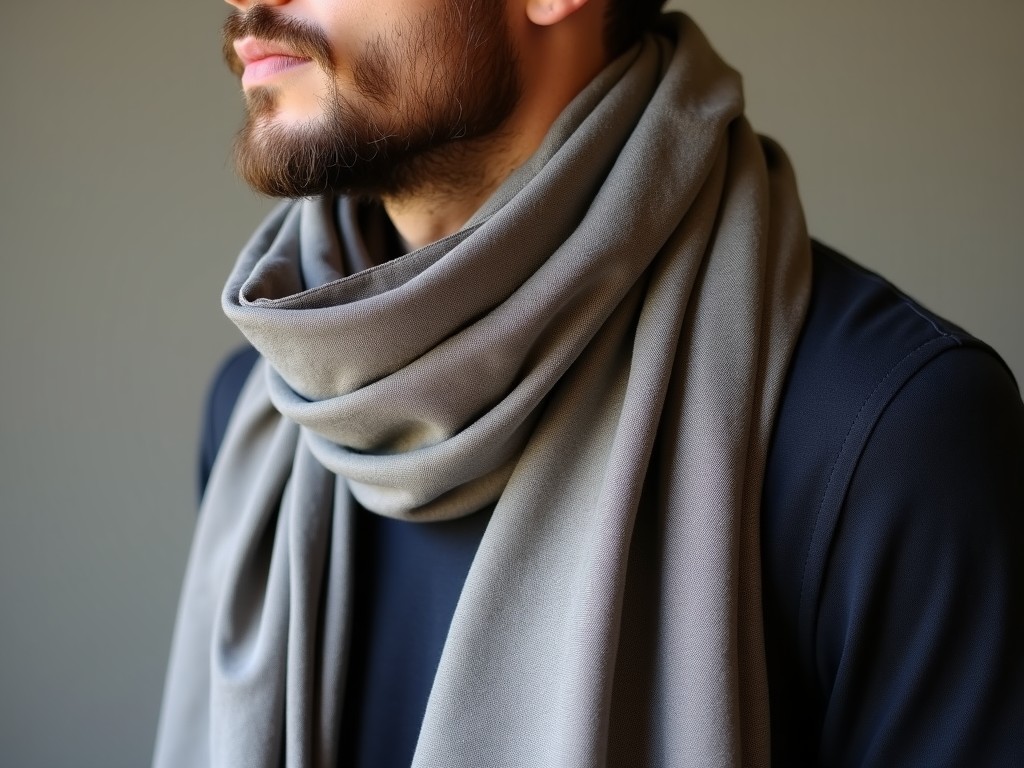
Linen Mens Scarf Wrap
A linen men's scarf wrap is a lightweight textile accessory engineered for thermal regulation, moisture management, and dimensional stability in variable climates. Constructed from 100% flax-derived
Linen Men's Scarf Wrap
A linen men's scarf wrap is a lightweight textile accessory engineered for thermal regulation, moisture management, and dimensional stability in variable climates. Constructed from 100% flax-derived linen yarns with a plain weave structure, it delivers breathability and wicking performance suitable for professional, travel, and light outdoor applications. Unlike synthetic blends, pure linen exhibits hygroscopic properties that absorb up to 20% of its weight in moisture without feeling damp, enhancing wearer comfort during extended use.
Material Composition and Construction
The scarf wrap utilizes linen yarns spun from long-staple flax fibers, typically ranging from 20 to 40 tex in linear density, selected for tensile strength and drape characteristics. Plain weave construction ensures balanced tensile distribution across warp and weft axes, minimizing distortion under tension or folding. Yarn count averages 80–120 ends per inch (EPI) and 60–90 picks per inch (PPI), creating a fabric weight of approximately 120–160 GSM (grams per square meter), optimized for flexibility without translucency.
Flax fibers possess a natural lignin content that contributes to UV resistance, reducing degradation when exposed to sunlight compared to cellulose-based alternatives like cotton. The absence of chemical finishes or softeners preserves the fiber’s inherent properties, allowing the fabric to soften progressively with wash cycles while maintaining structural integrity. Dimensional stability is achieved through controlled relaxation during finishing, limiting shrinkage to less than 3% after ISO 6330 washing cycles.
Functional Performance Characteristics
Linen’s thermal conductivity (~0.04 W/m·K) enables efficient heat dissipation, making the scarf wrap effective in moderate to warm environments where overheating is a concern. Moisture regain typically stabilizes at 10–12% under standard atmospheric conditions (65% RH, 20°C), facilitating sweat absorption and evaporation without clinging to the skin. The fabric’s air permeability averages 150–250 mm/s, supporting convective cooling during low-activity wear.
Electrostatic charge accumulation is minimal due to linen’s hydrophilic surface, reducing cling and dust attraction in dry environments. Tear resistance, measured via Elmendorf tester, averages 1.5–2.5 N, sufficient to withstand handling stresses during folding, wrapping, and storage. Crease recovery is moderate; while linen exhibits less elastic recovery than synthetics, its stiffness contributes to a defined drape that holds folds intentionally, beneficial for stylized wrapping techniques.
Dimensional Specifications and Tolerances
Standard dimensions for the linen men's scarf wrap are 180 cm in length and 30 cm in width, with a tolerance of ±2% in both axes to accommodate loom variability and finishing relaxation. End finishes include a 3-mm double-fold hem with lockstitch sealing to prevent fraying, adding approximately 6 mm to the total length per end. The aspect ratio (length:width) of 6:1 allows for multiple wrapping configurations, including single-loop, double-wrap, and asymmetrical drapes.
Weight per unit averages 28–35 grams, influenced by yarn density and finish thickness. Thickness, measured under 2 kPa pressure, ranges from 0.35 to 0.45 mm, balancing coverage with pliability. These dimensions are derived from ergonomic studies on neck circumference and wrap efficiency, ensuring adequate coverage without excessive bulk or slippage during movement.
Customization Options
Customization is available for yarn tex, weave density, and dimensional parameters to align with specific performance or aesthetic requirements. Yarn tex can be adjusted between 15 and 50 tex to modify weight and opacity, while EPI/PPI can be varied within 60–140 and 50–100 ranges, respectively, to influence air permeability and drape. Length and width tolerances can be tightened to ±1% for precision applications, though this may increase production lead time.
Color options include undyed natural linen (bleached or unbleached), fiber-reactive dyed shades for wash fastness, and yarn-dyed stripes or checks for pattern integrity. All dyes comply with OEKO-TEX® Standard 100 restrictions on azo compounds and heavy metals. Custom end treatments, such as fringe, rolled edges, or ultrasonic sealing, can be specified based on end-use durability or aesthetic preferences.
Quality Control and Inspection
Quality assurance follows ISO 9001-aligned procedures, with incoming yarn inspected for evenness, tensile strength, and moisture content using Uster® testing protocols. In-process monitoring includes warp tension regulation and weft insertion consistency to prevent barriness or streaking. Finished goods undergo 100% visual inspection for defects such as slubs, holes, or mispicks, with acceptable limits defined by 4-point system standards.
Dimensional verification is conducted on a sample basis using calibrated optical comparators, with length and width measured at three points along the fabric. Colorfastness to washing (ISO 105-C06), perspiration (ISO 105-E04), and rubbing (ISO 105-X12) is tested per batch, with minimum ratings of 3–4 for staining and 4 for change. pH is maintained between 5.0 and 7.5 to ensure skin compatibility, verified via ISO 3071.
Packaging and Handling
Each scarf wrap is folded to a standardized 15 cm × 10 cm × 2 cm profile using a jig to ensure dimensional consistency, then placed in a low-density polyethylene (LDPE) bag with anti-static properties to prevent particle adhesion. Bulk packaging utilizes corrugated cardboard cartons with a burst strength of 275 kPa, containing 50 units per carton to optimize palletization. Cartons are labeled with barcodes, SKU, yarn specifications, and country of origin.
Storage recommendations advise keeping the product in a dry, ventilated environment below 25°C and 60% relative humidity to prevent mildew formation or fiber degradation. Avoid prolonged exposure to direct sunlight during storage to minimize yellowing. For long-term archival, acid-free tissue paper interleaving is available upon request. Handling during transport should avoid sharp folds or compressive loads exceeding 5 kPa to prevent permanent creasing.
Applications and Use Cases
The linen men's scarf wrap is suited for professional environments where lightweight layering is required without thermal overload, such as offices, educational institutions, or indoor service roles. Its moisture-wicking property supports comfort during commuting or transitional seasons, reducing the need for frequent adjustment. Unlike heavier wool or acrylic alternatives, it does not retain odor after moderate use, allowing extended wear between washes.
In travel scenarios, the scarf’s low weight and compressibility enable efficient packing in carry-on luggage or briefcases, while its resistance to wrinkling—when folded along the grain—maintains presentability upon unpacking. It serves as a practical alternative to disposable paper or non-woven neck covers in hygiene-sensitive settings, offering reusability and lower lifetime cost. The natural fiber composition also aligns with sustainability goals in corporate dress codes or uniform programs emphasizing biodegradable materials.
Typical Specifications
| Property | Typical Value | Test Method |
|---|---|---|
| Fabric Weight | 120–160 GSM | ISO 3801 |
| Length | 180 cm ±2% | ISO 3018 |
| Width | 30 cm ±2% | ISO 3018 |
| Moisture Regain | 10–12% @ 65% RH, 20°C | ISO 2047 |
| Air Permeability | 150–250 mm/s | ISO 9237 |
| Shrinkage (Wash) | <3% | ISO 6330 |
Products
Related Products
News
Related News

2026-11-02
Cotton Voile Scarf Manufacturing and Performance Analysis how to make a cotton voile scarfCreating a professional-grade cotton voile scarf requires a precise balance of textile engineering and artisanal finishing. Unlike standard cotton weaves, voile is defined by its p···

2026-10-28
chiffon hijab Technical Production and Performance AnalysisSelecting the right fabric for a hijab involves a delicate balance between modesty, breathability, and aesthetic drape. For many women in Southeast Asia and the Middle East, the ma···

2026-10-26
custom silk scarf textile manufacturing and performance analysisSelecting a high-quality scarf is no longer just about color matching; it is an exercise in understanding how textile weight, drape, and print scale interact with individual facial···
