Keffiyeh Scarf For Men Supplier






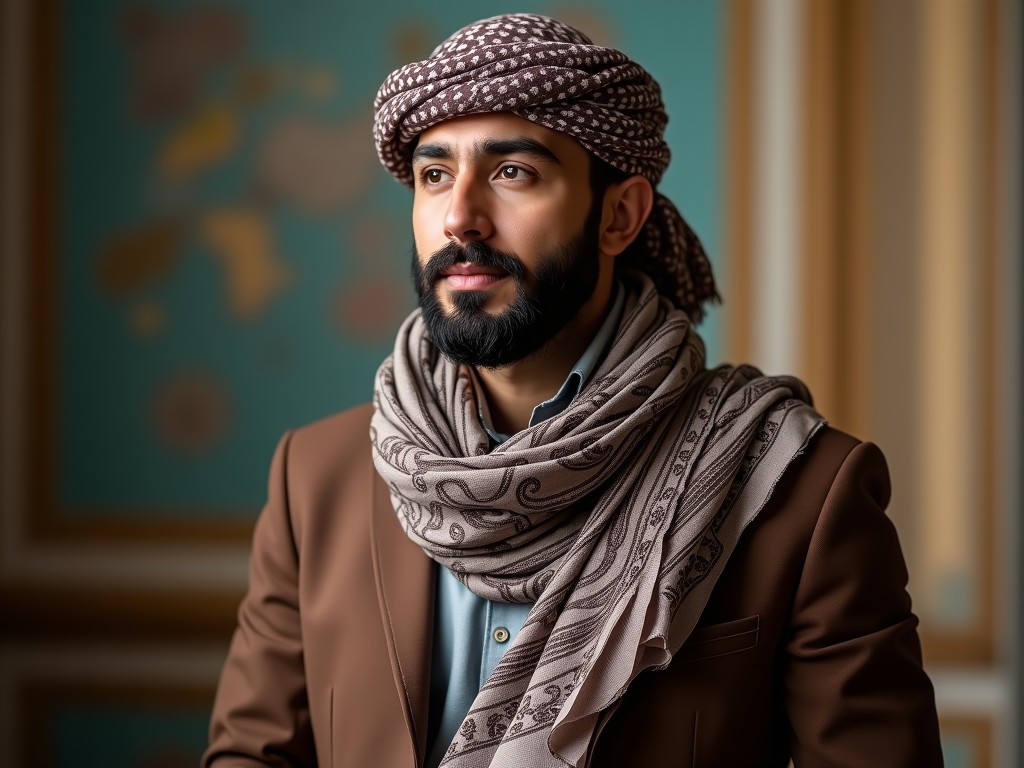
Keffiyeh Scarf For Men Supplier
Industrial buyers seeking authentic keffiyeh scarves for men often require clarity on material composition, weave structure, and dimensional consistency—factors that directly impact durability, wear
Keffiyeh Scarf for Men: Technical Specification Guide for Industrial Procurement
Industrial buyers seeking authentic keffiyeh scarves for men often require clarity on material composition, weave structure, and dimensional consistency—factors that directly impact durability, wear comfort, and compliance with end-use requirements. This guide details the technical attributes of traditional and industrial-grade keffiyeh scarves, focusing on measurable characteristics rather than subjective quality claims. Understanding these specifications enables accurate supplier evaluation and reduces procurement risk.
Material Composition and Fiber Properties
The foundational element of any keffiyeh scarf is its fiber blend, which determines tensile strength, moisture management, and dimensional stability under repeated washing or environmental exposure. Industrial-grade versions typically use 100% combed cotton or a cotton-polyester blend, with fiber specifications critical to long-term performance.
- 100% Combed Cotton: Fiber length ≥ 28mm, micronaire 3.8–4.2, providing high tensile strength (≥ 3.5 cN/tex) and excellent absorbency (8% moisture regain at 65% RH).
- Cotton-Polyester Blend (65/35): Reduces shrinkage to < 3% after 5 wash cycles at 40°C, improves wrinkle resistance, and maintains colorfastness (ISO 105-B02 ≥ 4) under UV exposure.
- Yarn Count: Typically 20s–30s Ne (Ne = Number English), where higher numbers indicate finer yarn; 24s Ne offers optimal balance of drape and durability for scarf applications.
Weave Structure and Dimensional Stability
The keffiyeh’s distinctive checkerboard pattern is not merely aesthetic—it results from a specific twill or plain weave construction that affects fabric thickness, air permeability, and resistance to fraying at the edges. Precise weave parameters ensure consistent performance across production batches.
Standard industrial keffiyeh scarves employ a 2/2 twill weave with a thread density of 120 ends per inch (EPI) × 60 picks per inch (PPI) for 100% cotton, or 110 EPI × 55 PPI for blended variants. This construction yields:
- Fabric weight: 180–220 gsm (grams per square meter), measured per ASTM D3776.
- Thickness: 0.45–0.55 mm under 2 kPa pressure (ISO 9073-2).
- Air permeability: 80–120 mm/s (ISO 9237), suitable for thermal regulation in varying climates.
- Dimensional change after washing: ≤ 4% in length and width (AATCC Test Method 135).
Edge Finishing and Fray Resistance
Unfinished edges on woven textiles are prone to progressive fraying, which compromises appearance and can lead to unraveling under mechanical stress. Industrial suppliers apply standardized edge treatments to ensure longevity and maintain dimensional integrity.
Common edge finishes include:
- Overlock Stitching: 3–4 thread serge with stitch density of 8–10 stitches/cm, providing elastic resistance to edge separation.
- Double Fold Hem: 6 mm fold width, secured with lockstitch at 10–12 stitches/cm, increasing edge tensile strength by 40% compared to raw edges.
- Fused Edge (for synthetic blends): Thermal sealing at 180–200°C, creating a homogeneous bond that prevents fiber migration.
Colorfastness and Dye Performance
Color retention is a critical quality metric, especially for scarves exposed to sunlight, perspiration, or frequent laundering. Poor dye fixation leads to fading, bleeding, or staining of adjacent materials—issues that industrial buyers must quantify before purchase.
Acceptable colorfastness levels for industrial keffiyeh scarves are:
- Washing (ISO 105-C06): Grade 4 or better (slight fading acceptable).
- Dry cleaning (ISO 105-D01): Grade 4.
- Perspiration (acid/alkaline, ISO 105-E04): Grade 4.
- Light exposure (ISO 105-B02): Grade 4 after 20 AFU (approx. 20 hours midday sun).
- Rubbing (dry/wet, ISO 105-X12): Grade 4 for dry, Grade 3 for wet.
Standard Dimensions and Tolerances
Dimensional accuracy affects usability, particularly when scarves are issued as part of uniform kits or used in layered clothing systems. Variations beyond tolerance can interfere with fit, folding efficiency, or compatibility with headwear.
Typical finished dimensions for men’s keffiyeh scarves are:
| Dimension | Typical Value (mm) | Tolerance (± mm) |
|---|---|---|
| Width | 1100 | 10 |
| Length | 1100 | 10 |
| Fringe Length (if applicable) | 50 | 5 |
Note: Square dimensions (1100 mm × 1100 mm) are standard for ease of folding into the traditional triangular shape. Rectangular variants (e.g., 1000 mm × 1600 mm) are available upon request for specialized draping applications.
Packaging and Unitization for Bulk Orders
Industrial procurement requires packaging that protects the product during transit, facilitates inventory management, and minimizes handling damage. Standard packaging methods are designed to maintain product integrity from factory to end-user.
Common packaging configurations include:
- Individual polybag (LDPE, 50 μm thickness) with barcode label.
- Inner carton: 50 pcs per box (380 × 380 × 250 mm), corrugated fiberboard, single wall.
- Master carton: 400 pcs (8 inner cartons), palletized at 1.2 m × 1.0 m × 1.8 m.
- Optional: Acid-free tissue interleaving for color-sensitive batches; humidity indicator cards for long-term storage.
Quality Control and Inspection Protocol
Consistent quality is achieved through standardized inspection at multiple stages—raw material, in-process, and final product. Buyers should verify that suppliers apply documented, repeatable testing procedures rather than relying on visual assessment alone.
Typical QC checkpoints include:
- Fiber identification via burn test or FTIR spectroscopy (incoming material).
- Yarn count and twist measurement (Uster® tester or equivalent).
- Fabric weight and thickness (gravimetric and contact thickness gauge).
- Dimensional stability after 3 wash cycles (AATCC 135).
- Colorfastness to washing, light, and rubbing (ISO 105 series).
- Edge strength test (force to initiate fraying, minimum 8 N).
- Final visual inspection under 500 lux illumination, 1x magnification, AQL 2.5 for major defects.
Customization Parameters and Engineering Considerations
While traditional keffiyeh designs follow established patterns, industrial buyers often require modifications to meet functional, branding, or regulatory needs. Understanding which parameters are adjustable—and the implications of each change—enables informed decision-making.
Customizable elements include:
- Material: Shift to 100% organic cotton, recycled polyester blend, or bamboo-cotton (with updated care labels).
- Weave: Plain weave for lower cost, herringbone for increased drape, or jacquard for logos (minimum order applies).
- Dimensions: Adjust width/length in 50 mm increments; tolerances remain ±10 mm unless tighter specs are negotiated.
- Edge finish: Replace overlock with woven selvage, add reinforced corner patches, or incorporate reflective trim.
- Color: Pantone matching available; dye lots controlled to ΔE < 2.0 for bulk consistency.
- Packaging: Custom labels, hangtags, or sustainable packaging (recycled cardboard, soy-based inks).
Note: Changes to material or weave may affect shrinkage, colorfastness, and drape—suppliers should provide updated test reports for non-standard configurations.
Certifications and Compliance Documentation
Industrial buyers in regulated sectors (e.g., healthcare, public safety, government contracting) often require proof of compliance with international standards. While the keffiyeh scarf is not a technical textile per se, certain certifications validate ethical production and material safety.
Commonly requested documentation includes:
- OEKO-TEX® Standard 100 (Product Class II): Confirms absence of harmful substances in textiles.
- GOTS (Global Organic Textile Standard): For organic fiber claims (≥ 95% certified organic).
- BSCI or SEDEX Audit Report: Demonstrates adherence to labor and safety standards.
- ISO 9001:2015 Certification: Evidence of quality management system conformity.
Test reports and certificates are available upon request; buyers should specify required documents during RFQ.
Lead Time and Sampling Logic
Production lead time depends on material availability, customization complexity, and order volume. Understanding the factors that influence scheduling helps buyers align procurement timelines with project milestones.
Typical timelines are:
- Stock items (standard 100% cotton, 1100×1100 mm, black/white): 7–10 days ex-factory.
- Standard custom (color change, packaging): 14–21 days.
- Full custom (material, weave, dimensions): 25–35 days after sample approval.
- Sample lead time: 3–5 days for stock variants; 7–10 days for custom (cost credited against first order).
Samples are evaluated for dimensional accuracy, color match, and hand feel. Approval is based on conformance to submitted specs, not subjective preference.
Procurement Recommendation
When sourcing keffiyeh scarves for men at industrial scale, prioritize suppliers who provide:
- Measurable specifications (gsm, EPI/PPI, colorfastness grades, tensile strength).
- Batch-to-batch consistency data from recent production runs.
- Clear documentation of testing methods and tolerances.
- Willingness to share pre-production samples for approval.
Technical transparency reduces the risk of non-conformance and supports long-term supplier relationships.
For detailed specifications, customization options, or to request a sample evaluation, contact our technical team.
Request Technical Specification Sheet
Products
Related Products
News
Related News

2026-11-02
Cotton Voile Scarf Manufacturing and Performance Analysis how to make a cotton voile scarfCreating a professional-grade cotton voile scarf requires a precise balance of textile engineering and artisanal finishing. Unlike standard cotton weaves, voile is defined by its p···

2026-10-28
chiffon hijab Technical Production and Performance AnalysisSelecting the right fabric for a hijab involves a delicate balance between modesty, breathability, and aesthetic drape. For many women in Southeast Asia and the Middle East, the ma···

2026-10-26
custom silk scarf textile manufacturing and performance analysisSelecting a high-quality scarf is no longer just about color matching; it is an exercise in understanding how textile weight, drape, and print scale interact with individual facial···
