Islamic Scarf For Men Factory






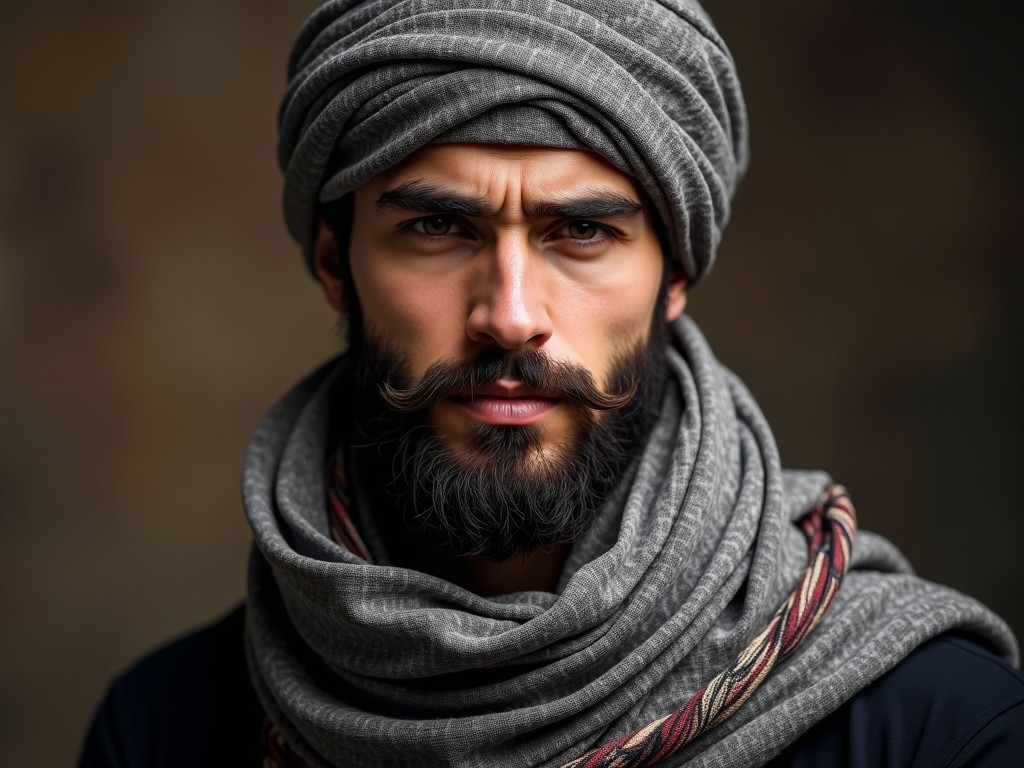
Islamic Scarf For Men Factory
We produce Islamic scarves for men designed specifically for industrial and institutional procurement. Our manufacturing focuses on dimensional stability, material consistency, and compliance with
Islamic Scarf for Men Factory
We produce Islamic scarves for men designed specifically for industrial and institutional procurement. Our manufacturing focuses on dimensional stability, material consistency, and compliance with cultural and functional requirements for workplace, religious, and uniform applications.
Each scarf is constructed to maintain shape after repeated washing, resist pilling, and provide appropriate coverage without restricting movement. We supply to uniform programs, government agencies, healthcare institutions, and corporate dress codes requiring modest attire solutions.
Production occurs in controlled environments with traceable material lots. We do not rely on generic fashion textile processes; instead, we apply workwear manufacturing principles to ensure consistency across large order volumes.
Material Specifications and Performance
Scarves are manufactured from polyester-viscose blends (65% polyester, 35% viscose) or 100% combed cotton, selected based on end-use requirements. Polyester-viscose offers wrinkle resistance, low shrinkage (<3% after 5 washes at 40°C), and dimensional stability critical for uniform programs.
100% cotton variants use combed, ring-spun yarns with a thread count of 140–160, providing breathability and moisture absorption suitable for warmer climates or healthcare environments. All materials undergo pilling resistance testing (ISO 12945-2) and colorfastness to washing (ISO 105-C06) and light (ISO 105-B02).
Fabric weight ranges from 140–180 g/m² for standard models, with heavier options (200–220 g/m²) available for colder climates or institutional durability needs. We do not use lightweight fashion fabrics prone to deformation under industrial laundering.
Design and Dimensional Consistency
Standard dimensions are 180 cm in length and 70 cm in width, with a tolerance of ±2 cm. This size ensures adequate coverage for most adult male proportions while minimizing excess fabric that could interfere with movement or pose safety risks in industrial settings.
Edges are finished with a 3-mm double-fold hem, sewn with 10–12 stitches per cm using polyester thread matched to fabric color. This prevents fraying and maintains appearance after 50+ industrial wash cycles. We avoid overlocking or raw edges, which degrade faster under repeated processing.
The scarf is cut on-grain to prevent torque or twisting after washing. Pattern matching is not applicable due to solid-color production, but we ensure consistent dye lot alignment across bulk orders to eliminate visible shade variation between units.
Customization Options for Institutional Buyers
We accommodate custom requests for length, width, fabric composition, and color within defined parameters. Length can be adjusted from 160 cm to 200 cm in 5 cm increments; width from 60 cm to 80 cm. These adjustments are made at the cutting stage to maintain fabric efficiency.
Color matching is available to Pantone, RAL, or custom swatches. We require a physical sample or certified color specification for accuracy. Dye lots are controlled to ΔE < 2.0 under D65 lighting to ensure batch-to-batch consistency.
Logo or text embroidery is available on one corner or along the hem, using polyester thread with a minimum height of 8 mm for legibility. Embroidery density is standardized at 20–22 stitches per cm² to prevent puckering. We do not offer screen printing due to cracking risks under frequent washing.
Quality Control and Testing Protocol
Every production lot undergoes incoming fabric inspection for weight, width, color, and defect frequency (4-point system). We accept no more than 4 defect points per 100 linear meters. In-line checks monitor stitch density, hem width, and fabric alignment during cutting and sewing.
Finished goods are inspected per AQL 2.5 for major defects (holes, open seams, miscut dimensions) and AQL 4.0 for minor defects (stitch variation, slight shading). We conduct wash testing on pilot samples: 5 cycles at 40°C followed by dimensional change and appearance assessment.
Packaging integrity is verified before shipment: scarves are folded to uniform dimensions (30 cm × 10 cm × 3 cm), placed in polybags with humidity indicators, and packed in export cartons with corner protectors. We do not use vacuum packaging, which can cause permanent creasing in natural fibers.
Applications in Institutional and Industrial Settings
These scarves are specified in uniform programs where modesty requirements intersect with workplace safety and professional appearance. Common applications include healthcare staff attire in hospitals and clinics, where scarves must withstand frequent high-temperature washing and resist staining from disinfectants.
Government institutions use them in civil service dress codes for male employees requiring consistent, low-maintenance attire. Corporate environments with diverse workforce policies adopt them as part of inclusive dress codes, particularly in regions with significant Muslim populations.
Educational institutions and religious organizations procure them for staff and volunteers needing reliable, standardized head coverings that do not require daily adjustment. We do not market these as fashion accessories; they are functional components of institutional uniform systems.
Packaging and Logistics
Standard packaging is 100 units per carton, folded and stacked to minimize creasing. Carton dimensions are 40 cm × 30 cm × 25 cm (L×W×H), with a gross weight of approximately 8–10 kg depending on fabric weight. Each unit is individually wrapped in a transparent polybag (50 µm thickness) to prevent contamination during transit.
Cartons are constructed from single-wall corrugated board (150 gsm kraft liner, 120 gsm flute) with edge crush test (ECT) ≥ 32 kN/m. We apply corner and edge protectors for palletized shipments. For bulk orders, we offer palletization with stretch wrap and top covers.
Lead time is typically 3–4 weeks for stock fabric and 5–6 weeks for custom-dyed or customized orders, excluding shipping. We provide FOB, CIF, and EXW terms. All shipments include a packing list, commercial invoice, and certificate of conformity upon request.
| Parameter | Typical Range | Notes |
|---|---|---|
| Fabric Weight | 140–220 g/m² | Selected by end-use climate and durability needs |
| Length Tolerance | ±2 cm | Applies to standard and custom lengths |
| Shrinkage (5 washes @ 40°C) | <3% (polyester-viscose) | Cotton: typically 4–6%; pre-shrunk options available |
| Pilling Resistance | Grade 3–4 (ISO 12945-2) | After 5,000 cycles; higher grades available |
| Colorfastness to Washing | Grade 4–5 (ISO 105-C06) | Minimum acceptable for institutional use |
We work with procurement teams to translate institutional requirements into producible specifications. Before quotation, we require details on: intended use environment, washing frequency and temperature, color standards (if applicable), logo placement, and annual volume.
Samples are available upon request, typically cut from current production stock or made-to-order for custom specifications. Sample lead time is 3–5 days for stock items, 7–10 days for custom dye or size changes. We charge for custom samples, which is credited against the first order.
Minimum order quantity is 500 units for standard colors and 1,000 units for custom-dyed fabric. We do not accommodate orders below these thresholds due to setup and quality control inefficiencies in textile manufacturing.
For technical inquiries, custom specifications, or sample requests, contact our industrial textiles team.
Request Quotation or SampleProducts
Related Products
News
Related News

2026-11-02
Cotton Voile Scarf Manufacturing and Performance Analysis how to make a cotton voile scarfCreating a professional-grade cotton voile scarf requires a precise balance of textile engineering and artisanal finishing. Unlike standard cotton weaves, voile is defined by its p···

2026-10-28
chiffon hijab Technical Production and Performance AnalysisSelecting the right fabric for a hijab involves a delicate balance between modesty, breathability, and aesthetic drape. For many women in Southeast Asia and the Middle East, the ma···

2026-10-26
custom silk scarf textile manufacturing and performance analysisSelecting a high-quality scarf is no longer just about color matching; it is an exercise in understanding how textile weight, drape, and print scale interact with individual facial···
