Islamic Head Scarf Covering For Muslim Men






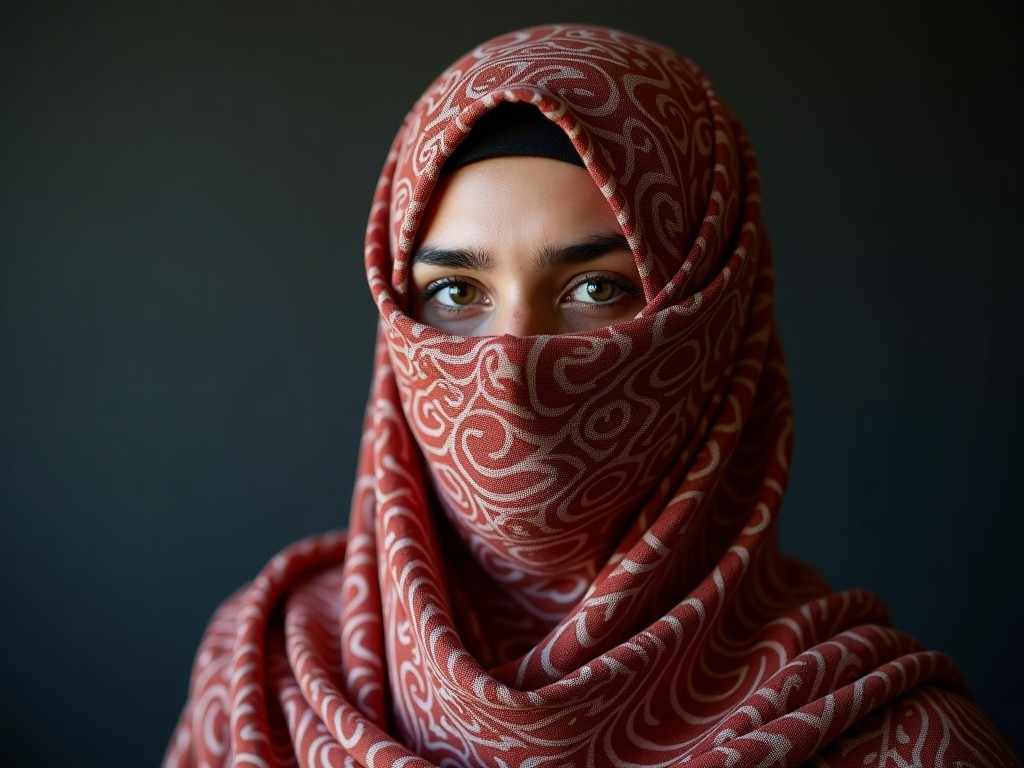
Islamic Head Scarf Covering For Muslim Men
This product page describes the technical specifications, material properties, and application considerations for Islamic head scarves designed for Muslim men, commonly known as kufis or taqiyahs.
Islamic Head Scarf Covering for Muslim Men
This product page describes the technical specifications, material properties, and application considerations for Islamic head scarves designed for Muslim men, commonly known as kufis or taqiyahs. The information is intended to assist procurement managers, product developers, and textile engineers in evaluating suitability for bulk procurement, private labeling, or OEM supply chains.
Material Composition and Fabric Properties
The head scarf is constructed from knitted or woven textile structures using natural or blended fibers. Common material options include 100% combed cotton, polyester-cotton blends (65/35 or 50/50), bamboo viscose, and modal. Fabric weight typically ranges from 120 to 180 GSM, balancing breathability with sufficient opacity for coverage. Stretch recovery is engineered to maintain shape after repeated wear, with elastane content (if present) limited to 2–5% to avoid constriction while ensuring a secure fit.
Moisture-wicking performance is evaluated using standard textile tests such as AATCC 195 for horizontal wicking and ISO 105-E04 for water absorption. Cotton-based variants exhibit higher regain (typically 7–8%), while polyester blends show lower moisture retention but faster drying rates. Air permeability is measured per ISO 9237, with target values between 150 and 300 mm/s for comfort in warm climates.
Dimensional Specifications and Fit Logic
The head covering is designed as a seamless or flat-knitted tube with a relaxed circumference ranging from 54 to 60 cm when unstretched, accommodating head circumferences from 52 to 58 cm. Height (depth) varies between 18 and 22 cm to ensure full coverage of the hairline and ears without slipping. Tapered crown designs reduce bulk at the top, while ribbed or folded brims provide edge stability without additional lining.
Sizing is not graded in traditional S/M/L terms but is instead defined by fabric stretch and cut geometry. Prototype fitting is recommended for bulk orders to validate comfort during prolonged wear, especially during prayer (salah) where pressure points can cause discomfort. Flat seam construction or link-linking minimizes abrasion at the temples and forehead.
Manufacturing Considerations and Quality Control
Production occurs on circular knitting machines (for seamless tubes) or flatbed knitters (for cut-and-sew variants). Needle gauge ranges from 24 to 28 GG for fine texture, with course density controlled to prevent snarling or uneven tension. Dyeing follows OEKO-Tex Standard 100 or equivalent restrictions for skin-contact textiles, with pH of the final product maintained between 4.5 and 7.5 to avoid irritation.
Visual inspection includes checking for barre, miss-stitches, dye streaks, and edge curling. Dimensional stability is assessed after 5 wash cycles at 40°C per ISO 6330, with acceptable shrinkage limited to 3% in length and 2% in width. Colorfastness to washing (ISO 105-C06) and rubbing (ISO 105-X12) is rated at minimum grade 4 for commercial acceptability.
Application Context and End-Use Requirements
The head scarf serves religious, cultural, and practical functions in daily wear, worship, and formal settings. In hot climates, lightweight, breathable fabrics prevent overheating during extended use. In cooler environments, slightly heavier weaves or layered constructions provide thermal comfort without bulk. The product must remain securely positioned during physical movements such as bowing (ruku) and prostration (sujud) in prayer, necessitating reliable friction and grip properties.
Beyond religious use, similar designs are adopted in medical, hospitality, and service industries where head covering is required for hygiene or uniformity. This dual-use potential influences material selection—for example, antimicrobial finishes or easy-care treatments may be specified for institutional laundering cycles.
Customization Options and Supply Chain Flexibility
Customization is available in fiber blend, weight, color, and finish. Solid colors are standard, but heathered, melange, or space-dyed effects can be achieved through yarn selection. Embroidery, jacquard patterns, or woven logos are feasible for private label branding, typically applied to the front or fold-over edge. Minimum order quantities vary by complexity but commonly start at 500 units per SKU for stock fabrics.
Lead times depend on raw material availability and dye lot scheduling, typically ranging from 2 to 4 weeks for approved samples and 4 to 8 weeks for full production. Packaging options include polybags (individual or bulk), recycled paper boxes, or custom branded packaging. Export compliance includes fumigation certificates, country of origin labeling, and adherence to destination market textile regulations.
| Parameter | Typical Range / Option | Notes |
|---|---|---|
| Fabric Weight | 120–180 GSM | Balances breathability and opacity |
| Head Circumference (Unstretched) | 54–60 cm | Fits 52–58 cm head size with stretch |
| Height (Depth) | 18–22 cm | Ensures full hairline and ear coverage |
| Elastane Content | 0–5% | Limited to avoid constriction |
| Shrinkage (After 5 Washes) | ≤3% length, ≤2% width | Per ISO 6330 at 40°C |
| Colorfastness (Washing/Rubbing) | Grade 4 minimum | Per ISO 105-C06 and ISO 105-X12 |
For technical inquiries, sample requests, or quotation preparation, please provide details on required material, quantity, target delivery date, and any specific compliance or labeling requirements. Our team will respond with actionable next steps, including lab-dip approvals, pre-production samples, and full specifications sheets.
Request Technical Specification or SampleProducts
Related Products
News
Related News

2026-11-02
Cotton Voile Scarf Manufacturing and Performance Analysis how to make a cotton voile scarfCreating a professional-grade cotton voile scarf requires a precise balance of textile engineering and artisanal finishing. Unlike standard cotton weaves, voile is defined by its p···

2026-10-28
chiffon hijab Technical Production and Performance AnalysisSelecting the right fabric for a hijab involves a delicate balance between modesty, breathability, and aesthetic drape. For many women in Southeast Asia and the Middle East, the ma···

2026-10-26
custom silk scarf textile manufacturing and performance analysisSelecting a high-quality scarf is no longer just about color matching; it is an exercise in understanding how textile weight, drape, and print scale interact with individual facial···
