High Quality Yashmagh Shemagh Head Scarf For Men






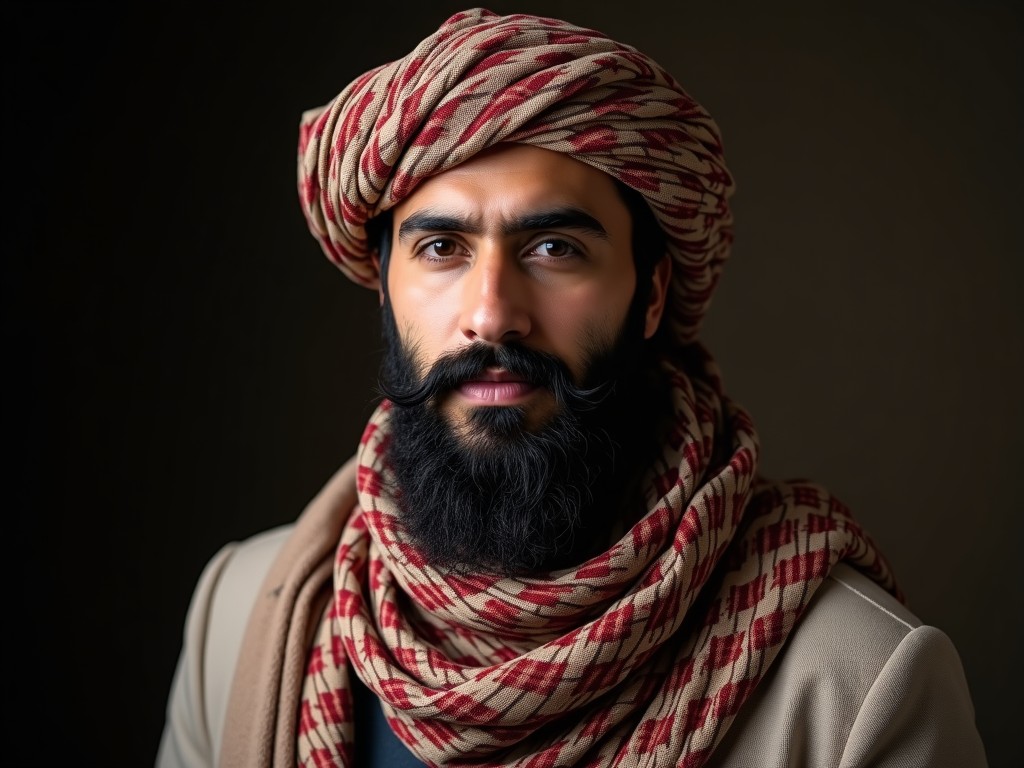
High Quality Yashmagh Shemagh Head Scarf For Men
The yashmagh shemagh is a traditional square textile worn across arid and semi-arid regions for environmental protection. Its functional design provides defense against wind-blown particulates,
High Quality Yashmagh Shemagh Head Scarf for Men
The yashmagh shemagh is a traditional square textile worn across arid and semi-arid regions for environmental protection. Its functional design provides defense against wind-blown particulates, intense solar radiation, and temperature fluctuations. Industrial buyers in sectors such as construction, logistics, and field operations prioritize this garment for its passive environmental mitigation properties, particularly where engineered shelters or climate control are impractical.
Material Composition and Structural Properties
Standard construction uses 100% combed cotton yarn with a thread count ranging from 120 to 160 ends per inch in both warp and weft directions. This density balances airflow resistance with particulate filtration efficiency, typically achieving 60-70% filtration of airborne dust particles larger than 10 microns under still air conditions. The fabric undergoes mercerization to increase tensile strength by approximately 15% and improve dye affinity for long-term colorfastness under UV exposure.
Alternative material blends include 65% cotton / 35% polyester for enhanced abrasion resistance and reduced shrinkage (<3% after 5 wash cycles at 40°C), or 100% lightweight viscose for improved thermal conductivity in high-humidity environments. All variants maintain a nominal weight of 180-220 gsm, ensuring sufficient mass to resist wind lift while remaining pliable for multiple wrapping configurations.
Dimensional Specifications and Functional Geometry
The standard yashmagh shemagh is manufactured as a square panel with nominal dimensions of 110 cm × 110 cm, subject to a tolerance of ±2 cm. This geometry enables multiple wrapping techniques: a single-layer drape provides basic solar shielding, while double-layer folding increases thermal resistance by approximately 0.15 m²·K/W. The diagonal measurement of approximately 155 cm allows for secure fastening under chin or behind head without slippage during moderate physical activity.
Edge finishing employs a 3mm double-fold hem with 8 stitches per centimeter using polyester-wrapped cotton thread, preventing fraying after extended use. Corner reinforcements incorporate a bar tack pattern (12 stitches in a 6mm square) to resist tearing at stress points during frequent donning and doffing. These details contribute to a typical service life of 12-18 months under regular field conditions.
Performance Characteristics in Environmental Conditions
Spectral reflectance measurements show the undyed cotton base reflects approximately 68% of visible light and 45% of near-infrared radiation, reducing radiant heat gain compared to darker synthetic alternatives. When dyed with reactive pigments in standard earth tones (olive, sand, charcoal), reflectance decreases by 8-12% but maintains sufficient UV blocking (UPF 15-20) for prolonged outdoor exposure. Air permeability averages 180-220 mm/s under a 100 Pa pressure differential, facilitating convective cooling without compromising particulate barrier function.
Moisture regain at 65% relative humidity is approximately 8.5% for cotton variants, enabling evaporative cooling when dampened—a practical adaptation in high-temperature operations. The fabric exhibits negligible electrostatic discharge (<0.5 kV) due to inherent hygroscopicity, making it suitable for environments where static sensitivity is a concern. Dimensional stability after 5 wash cycles shows <2% skew and <3% dimensional change, preserving fit and wrapping consistency.
Customization Options for Industrial Applications
Custom specifications are available to align with operational requirements. Thread count can be increased to 180+ ends per inch for enhanced filtration in high-dust environments, or reduced to 100 ends per inch for improved breathability in humid climates. Dimensions may be adjusted between 90 cm × 90 cm and 120 cm × 120 cm to accommodate varying body sizes or specialized wrapping protocols mandated by site safety guidelines.
Colorfastness can be upgraded to meet ISO 105-B02 standards (lightfastness rating 6+) for prolonged outdoor exposure. Additional treatments include antimicrobial finishes (zinc pyrithione-based) to inhibit odor-causing bacteria, or fluoropolymer coatings for liquid splash resistance while maintaining air permeability. All customizations are subject to minimum order quantities and require technical consultation to verify compatibility with intended use conditions.
Quality Assurance and Inspection Protocols
Incoming yarn is tested for tensile strength (ASTM D2256), fineness (micronaire), and moisture content. Fabric undergoes roll width inspection for bow, skew, and linear density consistency using automated optical scanners. Each batch is evaluated for color difference (ΔE < 3.0 under D65 illumination), pilling resistance (ASTM D3512, minimum grade 3 after 5,000 cycles), and dimensional stability after simulated washing (AATCC 135).
Final inspection includes visual examination for defects (stains, holes, misprints) at 300mm viewing distance under 500 lux illumination, seam strength verification (minimum 15N/cm), and dimensional audit of 10 random samples per batch. Packaging integrity is verified to prevent contamination during transit. Documentation includes material certificates, test reports, and conformance declarations available upon request.
Applications in Industrial and Operational Settings
In construction and infrastructure projects, the yashmagh shemagh provides localized protection against silica dust, cement particulates, and wind-blown debris during outdoor tasks such as concrete pouring, trenching, and steel erection. Its passive design requires no power or maintenance, making it suitable for remote sites where personal protective equipment (PPE) compliance is monitored but engineering controls are limited. Workers frequently use it in combination with hard hats and safety glasses to address facial exposure gaps not covered by standard headgear.
Logistics and transportation personnel operating in arid climates utilize the garment to mitigate solar radiation exposure during loading/unloading, vehicle inspection, and route planning activities. Field service technicians in telecommunications and energy sectors benefit from its ability to reduce glare and heat stress during prolonged outdoor equipment maintenance. The lack of restrictive components allows unimpeded head movement and compatibility with communication headsets or respiratory protection when required.
Packaging, Labeling, and Logistics Considerations
Standard packaging consists of polyethylene bags (50μm thickness) containing 10 folded units, labeled with size, material composition, care instructions, and batch identification. Carton configurations typically hold 100-200 units (500mm × 400mm × 300mm) with internal corrugated dividers to prevent shifting. For export shipments, desiccant packets (silica gel, 5g per bag) are included to control moisture ingress, and cartons are marked with humidity indicators to detect potential transit damage.
Labeling complies with textile regulations including fiber content disclosure and country of origin marking. Custom labeling options include barcodes for inventory management, QR codes linking to technical datasheets, or multilingual safety information. Lead times vary based on specification complexity but typically range from 14-21 days for standard configurations and 28-40 days for customized orders, subject to material availability and production scheduling.
Technical Comparison: Material Variants
| Property | 100% Combed Cotton | 65% Cotton / 35% Polyester | 100% Viscose |
|---|---|---|---|
| Weight (gsm) | 200 | 190 | 185 |
| Air Permeability (mm/s) | 200 | 220 | 240 |
| Tensile Strength (warp/weft, N/5cm) | 450 / 420 | 500 / 460 | 300 / 280 |
| Shrinkage (after 5 washes at 40°C) | 4% | 2.5% | 5% |
| UV Protection (UPF) | 18 | 16 | 14 |
| Typical Use Case | General purpose, high comfort | High abrasion, frequent washing | High humidity, cooling priority |
Products
Related Products
News
Related News

2026-11-02
Cotton Voile Scarf Manufacturing and Performance Analysis how to make a cotton voile scarfCreating a professional-grade cotton voile scarf requires a precise balance of textile engineering and artisanal finishing. Unlike standard cotton weaves, voile is defined by its p···

2026-10-28
chiffon hijab Technical Production and Performance AnalysisSelecting the right fabric for a hijab involves a delicate balance between modesty, breathability, and aesthetic drape. For many women in Southeast Asia and the Middle East, the ma···

2026-10-26
custom silk scarf textile manufacturing and performance analysisSelecting a high-quality scarf is no longer just about color matching; it is an exercise in understanding how textile weight, drape, and print scale interact with individual facial···
