Gold Scarf For Men Suppliers






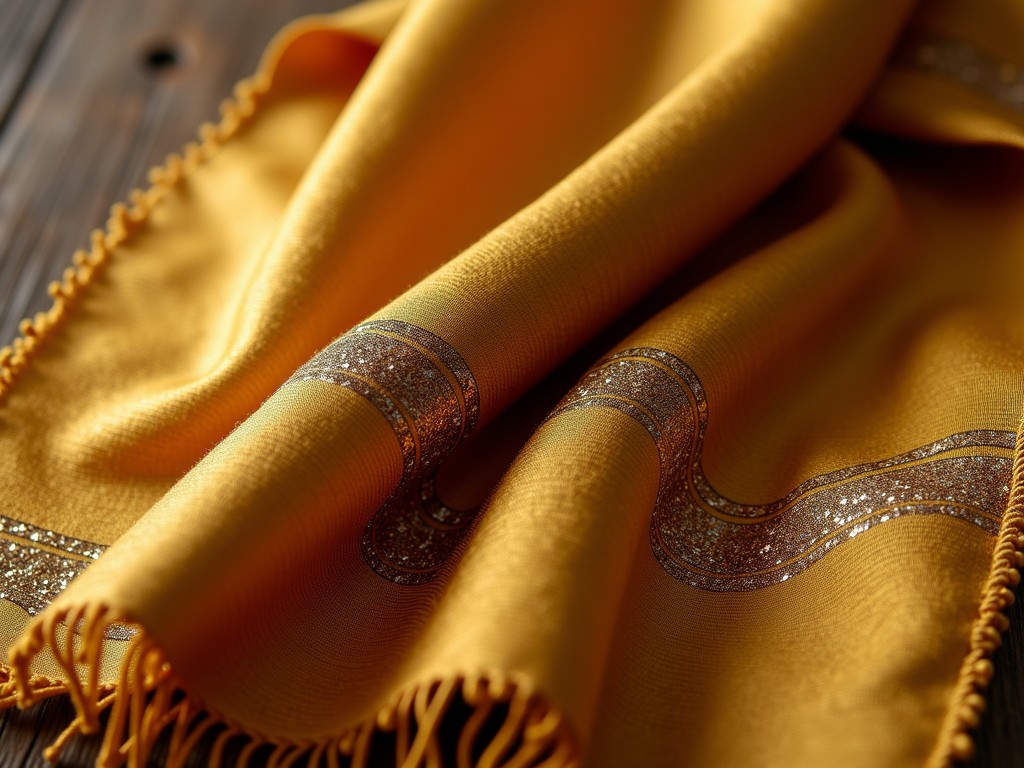
Gold Scarf For Men Suppliers
Selecting a gold scarf for men requires understanding material composition, weaving techniques, and dimensional stability—factors that directly impact durability, appearance, and suitability for
Gold Scarf for Men: Industrial Supplier Guide
Selecting a gold scarf for men requires understanding material composition, weaving techniques, and dimensional stability—factors that directly impact durability, appearance, and suitability for professional or ceremonial use. This guide outlines key technical considerations for industrial buyers evaluating suppliers, focusing on measurable characteristics rather than subjective claims.
Material Composition and Metallic Content
The term "gold scarf" typically refers to textiles incorporating metallic yarns, not solid gold. Industrial suppliers use gold-colored filaments made from aluminum, copper, or zinc alloys coated with a thin gold layer via vacuum deposition or electroplating. The gold layer thickness, measured in micrometers (µm), determines tarnish resistance and color retention. For outdoor or high-wear applications, a minimum of 0.5 µm gold plating is recommended to maintain appearance under UV exposure and humidity. Base yarns are often polyester or nylon for tensile strength, with metallic content ranging from 5% to 20% by weight depending on desired luster and flexibility.
Weaving Techniques and Structural Integrity
The weaving method affects scarf drape, tensile strength, and resistance to yarn slippage. Common constructions include plain weave for balanced stability, twill weave for enhanced drapability, and jacquard for intricate patterns. Metallic yarns are more brittle than synthetic fibers, so suppliers often use core-spun yarns—where a polyester core is wrapped with metallic filament—to improve tensile strength and reduce breakage during weaving. Ends per inch (EPI) and picks per inch (PPI) are critical metrics; a minimum of 120 EPI and 100 PPI ensures sufficient fabric density to prevent metallic yarn exposure at edges, which can lead to fraying or corrosion points.
Dimensional Stability and Finishing Processes
Dimensional stability is essential for maintaining shape after washing or pressing. Heat-setting during manufacturing reduces shrinkage by relaxing internal stresses in synthetic fibers. A stable gold scarf should exhibit less than 2% shrinkage after 5 wash cycles at 40°C, measured per ISO 6330. Finishing processes such as calendaring improve surface smoothness and luster but must be calibrated to avoid damaging delicate metallic coatings. Anti-static treatments are sometimes applied to reduce cling, particularly in low-humidity environments, though buyers should verify compatibility with metallic finishes to avoid chemical degradation.
Customization Options and Tolerances
Industrial buyers often require custom dimensions, weight, or patterning. Typical scarf widths range from 140mm to 180mm, with lengths between 1400mm and 1800mm. Weight tolerance is typically ±5% due to variations in metallic yarn density. Custom patterns via jacquard weaving require minimum order quantities, often starting at 500 units, due to loom setup time. Edge finishing options include ultrasonic cutting (for sealed edges), hemmed folds (3mm double fold), or laser sealing—each affecting fray resistance and hand feel. Color matching is achieved via Pantone references for the base dye, while metallic hue is controlled by plating thickness and alloy composition.
Quality Control and Inspection Criteria
Reliable suppliers implement inline inspection for metallic yarn continuity, picking defects, and color consistency. Key inspection points include: metallic yarn breaks per square meter (target <5), shade variation under D65 lighting (ΔE < 2.0), and edge integrity after 10 flex cycles. Final inspection measures dimensions, weight, and visual appearance under standardized lighting. Some suppliers provide third-party test reports for colorfastness to light (ISO 105-B02, minimum grade 4) and rubbing (ISO 105-X12, minimum grade 3–4). Buyers should request sample swatches with batch numbers to ensure traceability.
Packaging and Logistics Considerations
Metallic yarns are susceptible to abrasion and creasing during transit. Proper packaging prevents surface damage: scarves are typically folded flat, interleaved with acid-free tissue paper, and sealed in polyethylene bags with desiccant packs to control humidity. Carton dimensions are standardized for palletization—commonly 400mm x 300mm x 200mm—with a gross weight not exceeding 15kg per box for manual handling. For long-term storage, suppliers recommend flat storage in climate-controlled environments (18–22°C, 45–55% RH) to prevent metallic oxidation or fiber degradation. Export shipments may include humidity indicators and shock sensors for high-value batches.
| Parameter | Typical Range | Inspection Method |
|---|---|---|
| Gold Plating Thickness | 0.3–1.0 µm | X-ray Fluorescence (XRF) |
| Fabric Shrinkage | < 2% (after 5 washes) | ISO 6330 |
| Metallic Yarn Breaks | < 5/m² | Visual inspection, 10x magnification |
| Color Variation (ΔE) | < 2.0 | Spectrophotometer, D65 light |
| Weight Tolerance | ±5% | Precision scale, 0.01g resolution |
Applications in Professional and Ceremonial Contexts
Gold scarves for men are commonly used in formal uniforms, cultural ceremonies, and corporate branding where visual distinction is required. In military or paramilitary units, they may denote rank or regiment, requiring strict adherence to colorfastness and dimensional consistency. In hospitality or aviation sectors, scarves serve as part of branded attire, where resistance to frequent laundering and UV exposure is critical. The metallic content provides a reflective quality that enhances visibility under stage lighting, making them suitable for performance ensembles. Unlike decorative accessories, industrial-grade versions prioritize longevity and consistency over short-term aesthetics.
Products
Related Products
News
Related News

2026-11-02
Cotton Voile Scarf Manufacturing and Performance Analysis how to make a cotton voile scarfCreating a professional-grade cotton voile scarf requires a precise balance of textile engineering and artisanal finishing. Unlike standard cotton weaves, voile is defined by its p···

2026-10-28
chiffon hijab Technical Production and Performance AnalysisSelecting the right fabric for a hijab involves a delicate balance between modesty, breathability, and aesthetic drape. For many women in Southeast Asia and the Middle East, the ma···

2026-10-26
custom silk scarf textile manufacturing and performance analysisSelecting a high-quality scarf is no longer just about color matching; it is an exercise in understanding how textile weight, drape, and print scale interact with individual facial···
