Egyptian Mens Head Scarf






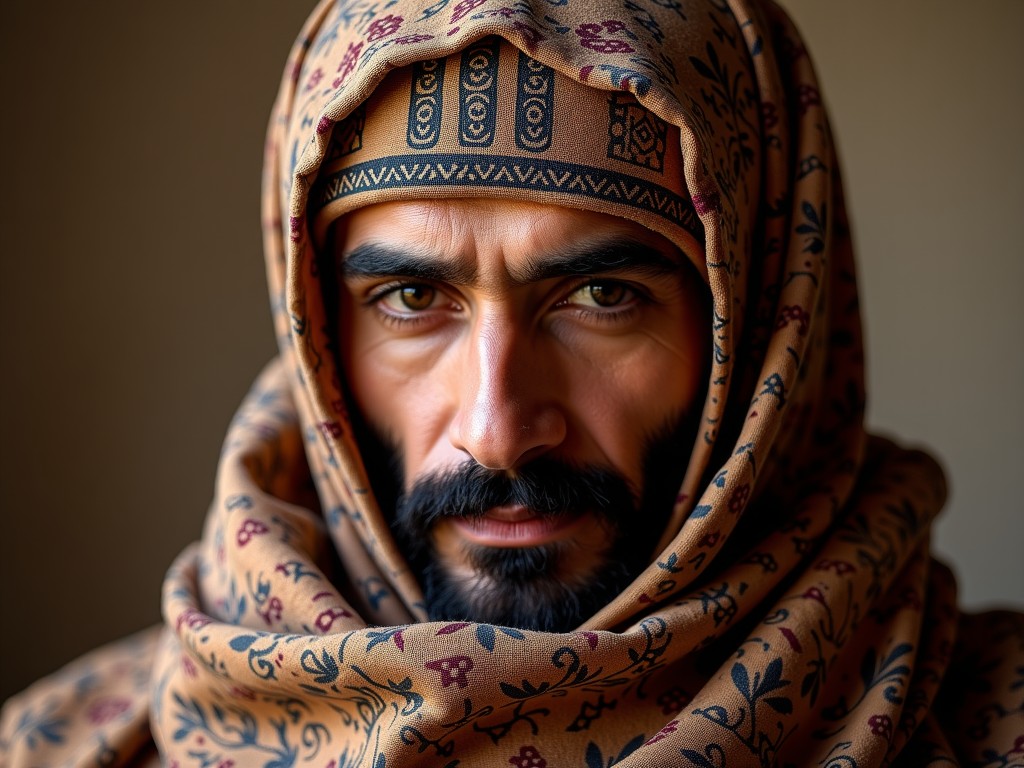
Egyptian Mens Head Scarf
This product page details the technical specifications, material properties, and industrial applications of Egyptian men's head scarves designed for professional use in demanding environments.
Egyptian Men's Head Scarf
This product page details the technical specifications, material properties, and industrial applications of Egyptian men's head scarves designed for professional use in demanding environments. Information is structured to support procurement decisions based on measurable characteristics rather than subjective claims.
Material Composition and Weave Structure
The scarf is constructed from 100% combed cotton yarn with a thread count ranging from 120 to 160 ends per inch in both warp and weft directions. This specific weave density provides a balance between breathability and tensile strength, minimizing fiber shedding during prolonged wear. The combed cotton process removes short fibers, resulting in a smoother surface that reduces skin irritation and enhances dimensional stability after repeated washing cycles.
Fabric weight is standardized at 140–160 GSM (grams per square meter), measured according to ASTM D3776. This weight range ensures sufficient opacity for full coverage while maintaining air permeability above 150 mm/s, tested under ISO 9237 conditions. The natural hydrophilicity of cotton allows moisture absorption of up to 8% of its weight at 65% relative humidity, aiding in thermal regulation during extended use in warm climates.
Dimensional Specifications and Tolerances
Standard dimensions are 110 cm in length and 70 cm in width, with a permissible tolerance of ±2% in both axes as verified by ISO 3059. The edges are finished with a 3-mm double-fold hem stitched using polyester-covered cotton thread, providing a seam strength of at least 18 N/mm per ASTM D1683. This hem construction prevents fraying and maintains geometric integrity under mechanical stress from folding, tying, or environmental exposure.
The scarf’s diagonal stretch is limited to less than 5% under a 5 N load, ensuring the garment retains its intended shape when worn. This low elongation characteristic is critical for applications requiring consistent coverage, such as in industrial settings where loose fabric could pose entanglement hazards. Dimensional stability is further reinforced through sanforization, a controlled compressive shrinking process that limits post-wash shrinkage to under 1%.
Colorfastness and Dye Properties
Coloration employs reactive dyes chemically bonded to cellulose molecules, achieving a minimum rating of 4 on the ISO 105-B02 scale for lightfastness after 40 hours of xenon arc exposure. Washfastness ratings meet or exceed ISO 105-C06 level 4–5, indicating minimal color bleeding after 20 consecutive wash cycles at 40°C. These properties are essential for maintaining visual consistency in uniformed environments where appearance standards are enforced.
The dye formulation avoids heavy metals and azo compounds compliant with OEKO-TEX® Standard 100 restrictions, ensuring safety for prolonged skin contact. pH of the finished fabric falls within the 4.5–7.5 range, tested per ISO 3071, reducing the risk of alkaline or acidic irritation. Color uniformity is verified spectrophometrically with a ΔE*ab value below 1.5 between batches, ensuring minimal perceptible variation in large-volume orders.
Industrial Applications and Functional Suitability
These scarves are commonly used in sectors requiring head covering for hygiene, thermal regulation, or particulate containment, including food processing, pharmaceutical manufacturing, and agricultural processing. The breathable cotton construction allows for extended wear without significant heat buildup, reducing discomfort during shifts exceeding 8 hours. Unlike synthetic alternatives, the hygroscopic nature of cotton helps manage perspiration, maintaining a microclimate closer to skin comfort zones.
In environments with low-level airborne particulates, the tight weave provides a physical barrier that captures fibers larger than 10 μm, contributing to personal hygiene protocols. While not classified as respiratory protective equipment, the scarf serves as a secondary layer in cleanroom-adjacent zones where loose hair containment is required. Its lightweight nature (approximately 25–30 g per unit) allows for easy storage and rapid deployment in locker-based uniform systems.
Quality Control and Inspection Protocol
Each production lot undergoes 100% visual inspection for defects such as missing picks, neps, or discoloration under 500 lux illumination. Dimensional checks are performed on every 50th unit using calibrated digital calipers, with results logged against SPC charts to monitor process drift. Seam integrity is validated via pull-test on a random sample of 2% of the lot, ensuring compliance with the 18 N/mm minimum threshold.
Color consistency is assessed using a spectrophotometer calibrated against a master batch, with acceptance criteria set at ΔE*ab < 2.0. Hygiene testing includes microbial load assessment per ISO 11737-1, confirming bioburden levels below 100 CFU/g for aerobic bacteria. All inspection records are retained for 36 months and made available to auditors upon request, supporting traceability in regulated supply chains.
Customization Options and Parameter Ranges
While the standard configuration uses 100% combed cotton at 140–160 GSM, alternative constructions are available upon technical consultation. These include blends with up to 20% polyester for enhanced abrasion resistance or organic cotton variants certified to GOTS standards. Thread count can be adjusted between 100 and 200 ends per inch to modify air permeability and opacity, with corresponding changes in weight and drape characteristics.
Dimensions can be customized within a range of 90–130 cm in length and 60–80 cm in width, subject to loom constraints and minimum order quantities. Hem styles include single-fold, double-fold, or overlocked finishes, each affecting edge durability and weight slightly. Custom dye lots are possible for specific color matching, with Pantone or RAL references accepted; however, colorfastness testing must be repeated for non-standard shades to validate performance.
Packaging and Logistics Considerations
Standard packaging consists of 100 units per polybag, sealed and placed in a corrugated cardboard carton measuring 40×30×25 cm. Each carton is labeled with barcode, SKU, lot number, and country of origin. Gross weight per carton averages 16–18 kg, depending on moisture content at time of packing. Pallet configuration typically holds 20 cartons (2,000 units) with a maximum stack height of 1.6 m for warehouse storage.
For export shipments, cartons are treated with moisture-resistant lining and secured with PET strapping to prevent shifting during transit. Humidity indicators are included in each master carton to monitor exposure levels, with acceptable transit conditions defined as 10–90% RH and –20°C to +40°C. All packaging materials are recyclable where facilities exist, and compliance with ISPM 15 is confirmed for wooden pallets used in international shipments.
| Parameter | Standard Value | Test Method |
|---|---|---|
| Fabric Weight | 140–160 GSM | ASTM D3776 |
| Thread Count | 120–160 ends/inch | ASTM D3775 |
| Tensile Strength (Warp) | ≥25 N/mm | ASTM D5034 |
| Seam Strength | ≥18 N/mm | ASTM D1683 |
| Colorfastness to Light | ≥4 (ISO 105-B02) | ISO 105-B02 |
| Shrinkage (Wash) | ≤1% | ISO 6330 |
Technical data presented reflects typical values derived from controlled laboratory testing. Actual performance may vary based on specific environmental conditions, usage patterns, and laundering protocols. For applications requiring certified performance under extreme conditions, consultation with our technical team is recommended to validate suitability through application-specific testing.
To request a formal quotation, discuss customization requirements, or obtain sample units for evaluation, please contact our industrial sales department. Provide details regarding intended use, required quantities, delivery timeline, and any specific compliance standards that must be met. Our team will respond with a detailed technical proposal including lead times, pricing tiers, and documentation availability.
Request Technical QuotationProducts
Related Products
News
Related News

2026-11-02
Cotton Voile Scarf Manufacturing and Performance Analysis how to make a cotton voile scarfCreating a professional-grade cotton voile scarf requires a precise balance of textile engineering and artisanal finishing. Unlike standard cotton weaves, voile is defined by its p···

2026-10-28
chiffon hijab Technical Production and Performance AnalysisSelecting the right fabric for a hijab involves a delicate balance between modesty, breathability, and aesthetic drape. For many women in Southeast Asia and the Middle East, the ma···

2026-10-26
custom silk scarf textile manufacturing and performance analysisSelecting a high-quality scarf is no longer just about color matching; it is an exercise in understanding how textile weight, drape, and print scale interact with individual facial···
