Designer Head Scarf For Men






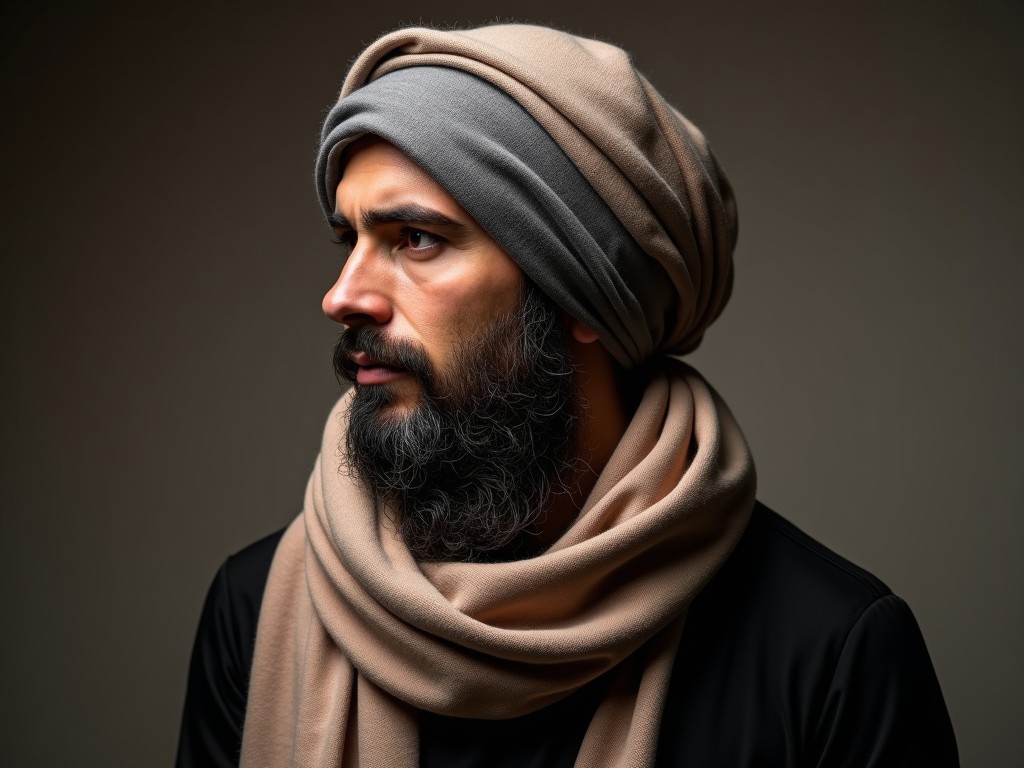
Designer Head Scarf For Men
Industrial head scarves for men serve functional roles in environments where particulate control, thermal regulation, or hygiene compliance is required. Unlike fashion-oriented accessories, these
Designer Head Scarf for Men
Industrial head scarves for men serve functional roles in environments where particulate control, thermal regulation, or hygiene compliance is required. Unlike fashion-oriented accessories, these garments are engineered to meet specific performance criteria in manufacturing, food processing, pharmaceutical, and cleanroom settings. Material selection, weave density, seam construction, and dimensional stability directly impact wearer comfort and contamination control efficacy.
Material Composition and Performance Characteristics
Common base materials include 100% combed cotton, polyester-cotton blends (65/35), and proprietary moisture-wicking synthetics. Cotton variants offer breathability and absorbency, with typical moisture regain rates of 8–10% at 65% RH. Polyester blends reduce shrinkage to under 3% after 50 wash cycles at 60°C and provide enhanced durability against abrasion. Antimicrobial treatments, when applied, utilize silver-ion or zinc-pyrithione finishes to inhibit bacterial growth, validated per ISO 20743 standards.
Fabric weight typically ranges from 120 to 180 gsm, balancing coverage with air permeability. Thread count varies between 120 and 180 threads per square inch, influencing both filtration efficiency for airborne particulates and resistance to pilling. Edge finishing employs overlock or flatlock seams to minimize fraying and prevent lint generation, critical in ISO Class 7–8 cleanroom applications.
Dimensional Specifications and Fit Logic
Standard dimensions are derived from anthropometric data for adult male head circumference, which averages 57 cm (22.4 inches) with a 95th percentile of 60 cm. Scarves are cut to a rectangular format measuring 110 cm in length and 55 cm in width, allowing for multiple wrapping configurations while ensuring full coverage of hair, ears, and lower forehead. The aspect ratio (2:1) prevents excessive bulk when folded, reducing interference with safety helmets, face shields, or respiratory protection equipment.
Hem tolerance is maintained within ±3 mm to ensure consistent fit across production lots. Stretch properties are minimized (<5% elongation at 20 N tension) to prevent slippage during prolonged wear. For applications requiring adjustable tension, optional integrated tie-back loops or elasticized corners (15–20% elongation) are available upon request, though these introduce variability in lint generation and must be validated per application.
Application-Specific Design Considerations
In food processing environments, scarves must comply with FDA 21 CFR Part 110 and EU Regulation 852/2004, necessitating non-fraying construction and ease of sanitization. White or light-colored fabrics are preferred to facilitate visual inspection for soiling. In pharmaceutical settings, low-linting materials (Class I or II per IEST-RP-CC003.4) are mandatory to prevent product contamination. Electrostatic discharge (ESD)-safe variants incorporate conductive carbon fibers at a density of 2–5% to achieve surface resistivity below 10⁹ Ω/sq, meeting ANSI/ESD S20.20 requirements.
Thermal environments, such as foundries or welding auxiliaries, may require flame-retardant treatments (e.g., Proban® or THPC-based) to achieve LOI ≥26%. These treatments add minimal weight (<5 gsm increase) but require specific laundering protocols to maintain efficacy. High-temperature stability is verified via thermogravimetric analysis, with degradation onset typically above 250°C for treated cotton blends.
Quality Control and Inspection Protocol
Incoming fabric undergoes roll inspection for width consistency, shade variation (ΔE < 3.0 CIELAB), and defect frequency using 4-point system standards. Finished products are sampled per ANSI/ASQ Z1.4 (Level II) for seam integrity, dimensional accuracy, and surface cleanliness. Particle shedding is evaluated via Helmke drum testing, with acceptable limits defined by end-use classification (e.g., <100 particles >0.5 µm per ft²/min for cleanroom use).
Colorfastness to washing (ISO 105 C06) and perspiration (ISO 105 E04) is rated minimum Grade 4 to prevent staining or dye transfer. Dimensional stability after 5 home launderings (AATCC 135) must not exceed 2% length change and 1.5% width change. All test reports are available upon request, traceable to lot number and production date.
Customization and Procurement Options
Standard offerings include solid colors (white, navy, black, grey) and woven stripes (1–3 mm width) for visual differentiation of zones or shifts. Custom dye matching to Pantone or RAL standards is available for orders exceeding 500 pieces, with lab-dip approval required prior to bulk production. Logo integration via embroidery or screen printing is feasible on one or both ends, though placement must avoid high-wear zones to maintain longevity.
Packaging options range from bulk polybags (100 pcs/bag) to individual sterile pouches for cleanroom transfer. Private labeling and barcode labeling (GS1-128) support supply chain traceability. Lead times average 14–21 days for stock items and 28–35 days for custom orders, contingent on material availability and finishing complexity. Minimum order quantities vary by fabric type, typically starting at 100 units for standard colors.
| Parameter | Typical Range | Test Standard |
|---|---|---|
| Fabric Weight | 120–180 gsm | ASTM D3776 |
| Thread Count | 120–180 tpi | ASTM D3775 |
| Length Tolerance | ±3 mm | Internal Gauge |
| Shrinkage (50x60°C) | <3% | AATCC 135 |
| Particle Shedding | <100 pcs >0.5µm/ft²/min | IEST-RP-CC003.4 |
Technical documentation, including material safety data sheets (MSDS), wash care guidelines, and compliance certificates, is provided with each shipment. For hazardous material environments, additional testing for chemical resistance or permeation can be arranged. Samples are available for evaluation prior to commitment, allowing validation of fit, comfort, and performance under actual operating conditions.
To request a quotation, technical datasheet, or sample kit, contact our engineering team via the inquiry form. Provide details on intended use, required quantity, material preferences, and any regulatory constraints to ensure accurate specifications and lead time confirmation.
Request Technical Specification or SampleProducts
Related Products
News
Related News

2026-11-02
Cotton Voile Scarf Manufacturing and Performance Analysis how to make a cotton voile scarfCreating a professional-grade cotton voile scarf requires a precise balance of textile engineering and artisanal finishing. Unlike standard cotton weaves, voile is defined by its p···

2026-10-28
chiffon hijab Technical Production and Performance AnalysisSelecting the right fabric for a hijab involves a delicate balance between modesty, breathability, and aesthetic drape. For many women in Southeast Asia and the Middle East, the ma···

2026-10-26
custom silk scarf textile manufacturing and performance analysisSelecting a high-quality scarf is no longer just about color matching; it is an exercise in understanding how textile weight, drape, and print scale interact with individual facial···
