Custom Design India Red Winter Yashmagh Keffiyeh






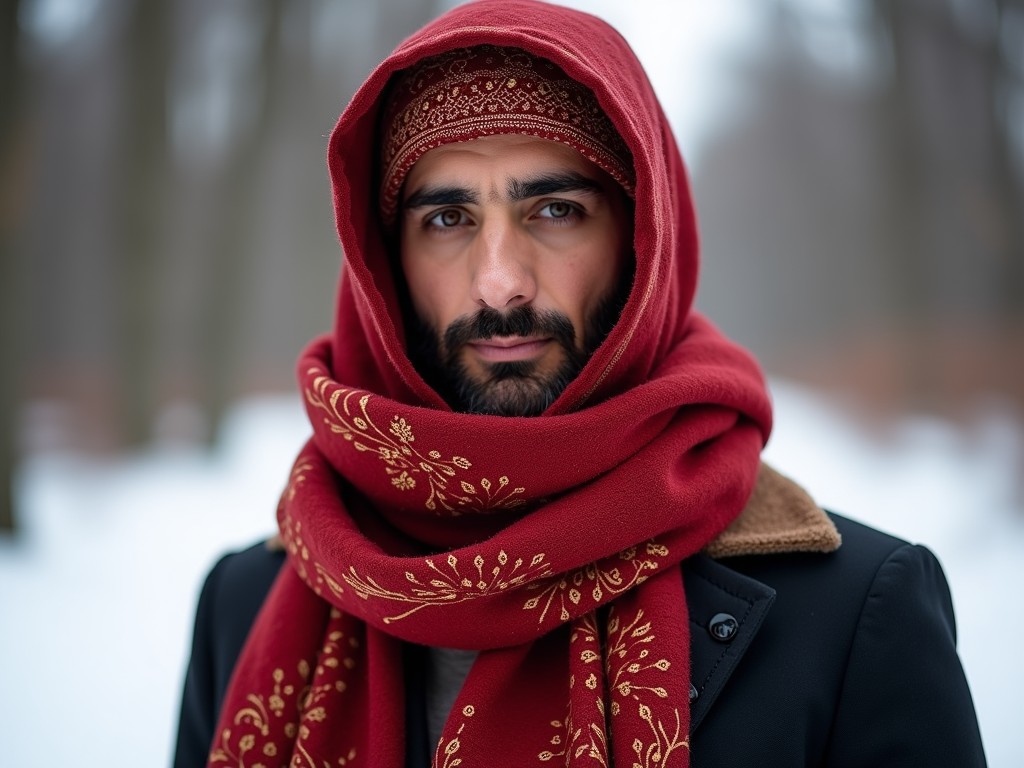
Custom Design India Red Winter Yashmagh Keffiyeh
The India red winter yashmagh keffiyeh is a traditional headscarf adapted for cold-weather use, featuring a distinctive red-and-white pattern woven from insulating fibers. Industrial buyers source
Custom Design India Red Winter Yashmagh Keffiyeh
The India red winter yashmagh keffiyeh is a traditional headscarf adapted for cold-weather use, featuring a distinctive red-and-white pattern woven from insulating fibers. Industrial buyers source this garment for workforce protection in outdoor operations across northern India, Himalayan regions, and similar climates where wind chill and low temperatures pose operational risks.
Unlike standard cotton keffiyehs, the winter variant incorporates thermal-regulating materials to maintain core body temperature during extended exposure. Customization allows alignment with specific occupational safety requirements, corporate branding, or regional cultural preferences while preserving functional integrity.
Material Composition and Thermal Performance
The base fabric typically combines 60% acrylic and 40% wool blend, selected for its ability to trap air pockets while resisting moisture absorption. Acrylic provides lightweight insulation and UV stability, while wool contributes natural crimp for loft retention and odor resistance. This ratio balances warmth-to-weight ratio with durability under abrasive conditions.
For extreme environments, optional linings of polar fleece (100% polyester, 200gsm) or Thinsulate™ insulation can be integrated into the inner layer, adding up to 15°C of effective thermal resistance without significantly increasing bulk. These layers are stitched using flatlock seams to prevent chafing during prolonged wear.
All materials undergo shrinkage testing (ISO 6330) and colorfastness evaluation (AATCC 61) to ensure dimensional stability after repeated industrial laundering. The red dye uses azo-free, reactive pigments compliant with OEKO-TEX® Standard 100, minimizing skin irritation risks in direct contact applications.
Customization Options for Industrial Use
Dimensions are adjustable to accommodate varying head circumferences and coverage needs. Standard sizes range from 110cm x 110cm (square) to 140cm x 140cm, with custom lengths available up to 180cm for full neck and shoulder wrapping. Width tolerances are maintained within ±2% via computerized cutting systems.
Pattern customization includes modification of the traditional yashmagh motif—adjusting stripe width, red intensity (Pantone 18-1663 TPX reference), or incorporating corporate logos via jacquard weaving or sublimation printing. Embroidery is available for high-wear zones using polyester thread with 40wt density.
Functional additions include reinforced corner grommets (brass or nickel-plated) for securing with cords, adjustable toggle closures at the chin, and detachable face masks made from the same thermal fabric. These features are engineered to prevent displacement during high-wind activities common in construction, logistics, or field surveillance.
Quality Control and Manufacturing Considerations
Production follows ISO 9001:2015 guidelines with in-process checks at yarn inspection, knitting/weaving, dyeing, and final assembly stages. Each batch undergoes burst strength testing (ASTM D3786) to ensure resistance to tearing under load, with minimum values of 180 kPa for the base fabric and 220 kPa for reinforced zones.
Dimensional stability is verified after 5 wash cycles at 40°C, with length and width change limited to ±3%. Color bleeding is assessed using the gray scale method (AATCC 8), requiring a minimum rating of 4/5 for industrial acceptability. All products are visually inspected under 500 lux lighting for pattern consistency and defect thresholds (max 1 major defect per 10m²).
Packaging uses recyclable LDPE bags (50µm thickness) with optional corrugated cartons for bulk orders. Unit weights range from 180g to 320g depending on lining, enabling accurate freight cost estimation. Custom labeling includes care instructions, material composition, and batch traceability codes compliant with REACH and ISO 14021.
Applications in Industrial Sectors
In construction and infrastructure projects, the keffiyeh protects workers from wind-driven particulate matter and cold-induced dexterity loss during high-altitude tasks such as tower erection or pipeline inspection. Thermal retention reduces the need for bulky outer layers, improving mobility and compliance with PPE protocols.
Logistics and transportation teams operating in refrigerated environments or overnight freight routes use the garment to maintain peripheral circulation during loading/unloading cycles. The moisture-wicking inner layer prevents sweat accumulation, reducing the risk of hypothermia during intermittent activity.
Security and field personnel in remote surveillance or border monitoring benefit from the low-profile design that accommodates communication headsets and night-vision mounts. The non-reflective surface minimizes visual signature during dawn/dusk operations, while the red variant supports team identification in low-visibility conditions.
| Parameter | Standard Specification | Customizable Range |
|---|---|---|
| Base Fabric Weight | 220 gsm | 180–280 gsm |
| Thermal Resistance (Clo) | 0.85 | 0.7–1.2 (with lining) |
| Width Tolerance | ±2% | ±1% (precision cutting) |
| Colorfastness (Wash) | 4/5 (Gray Scale) | 4.5/5 (premium dye) |
| Minimum Order Quantity | 100 units | 50 units (sample development) |
Lead times depend on complexity: standard designs ship in 14–18 business days after approval of lab dips, while fully customized orders with logo integration or special linings require 22–28 days. Sample development is available upon request, typically delivered within 7–10 days for evaluation of fabric hand, color accuracy, and dimensional fit.
Quotations require specification of: base material preference, dimensions, lining requirements, pattern modifications, labeling needs, and destination for freight estimation. Technical drawings or reference samples accelerate the approval process. All pricing is FOB Mumbai or Nhava Sheva port unless otherwise negotiated.
Products
Related Products
News
Related News

2026-11-02
Cotton Voile Scarf Manufacturing and Performance Analysis how to make a cotton voile scarfCreating a professional-grade cotton voile scarf requires a precise balance of textile engineering and artisanal finishing. Unlike standard cotton weaves, voile is defined by its p···

2026-10-28
chiffon hijab Technical Production and Performance AnalysisSelecting the right fabric for a hijab involves a delicate balance between modesty, breathability, and aesthetic drape. For many women in Southeast Asia and the Middle East, the ma···

2026-10-26
custom silk scarf textile manufacturing and performance analysisSelecting a high-quality scarf is no longer just about color matching; it is an exercise in understanding how textile weight, drape, and print scale interact with individual facial···
