China Yemeni Shemagh Scarf For Men






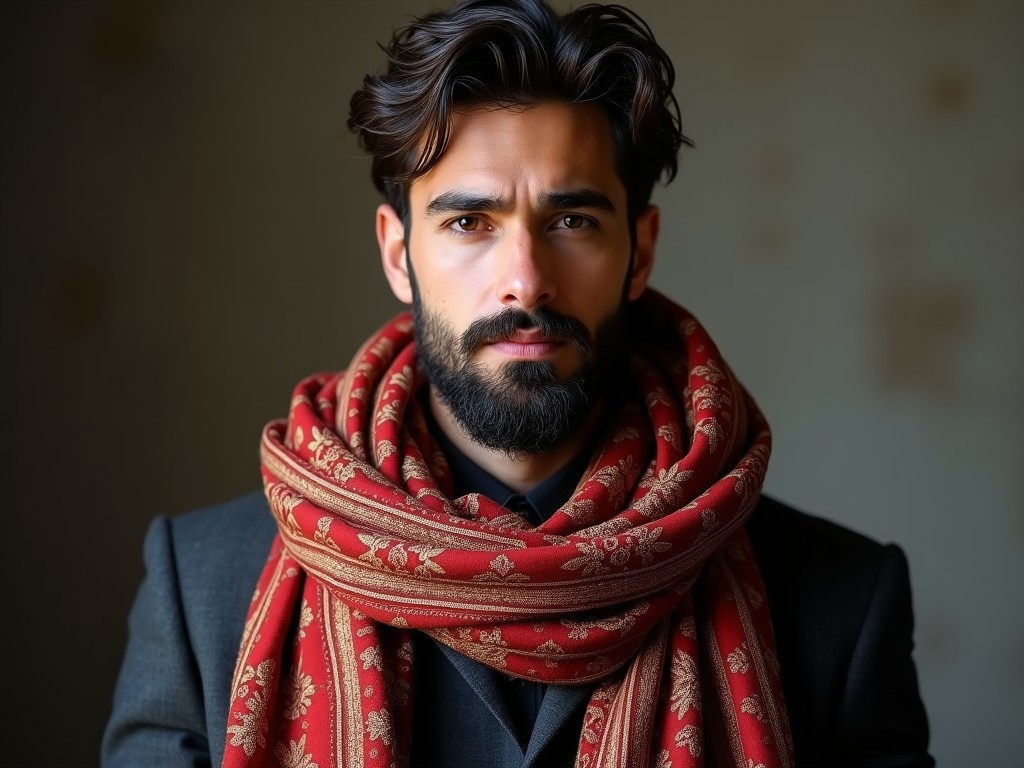
China Yemeni Shemagh Scarf For Men
The Yemeni shemagh, also known as a keffiyeh or ghutra, is a traditional square-woven cotton scarf originating from the Arabian Peninsula. Industrial buyers sourcing these garments for workwear,
China Yemeni Shemagh Scarf for Men
The Yemeni shemagh, also known as a keffiyeh or ghutra, is a traditional square-woven cotton scarf originating from the Arabian Peninsula. Industrial buyers sourcing these garments for workwear, protective clothing, or cultural distribution require precise specifications regarding weave density, thread count, edge finishing, and dimensional stability to ensure functional performance and compliance with end-use requirements.
Material Composition and Weave Structure
Authentic Yemeni shemaghs are typically constructed from 100% combed cotton yarns with a plain weave structure. The yarn count commonly ranges from 20s to 40s Ne (English cotton count), where higher numbers indicate finer yarns and lighter fabric weight. For industrial applications, a 30s Ne yarn count provides a balance between breathability and durability, with a typical fabric weight of 120–160 gsm. The plain weave ensures uniform tensile strength in both warp and weft directions, reducing susceptibility to tearing under multidirectional stress.
Cotton’s hygroscopic properties allow the fabric to absorb up to 8–10% of its weight in moisture without feeling damp, making it suitable for high-temperature environments. The natural fiber structure also provides moderate UV resistance, with UPF ratings typically between 15 and 30 depending on weave tightness and color depth. Synthetic blends are generally avoided in traditional production due to reduced breathability and potential melting hazards in high-heat scenarios.
Dimensional Specifications and Tolerances
Standard Yemeni shemaghs are cut as perfect squares, with nominal dimensions ranging from 110 cm to 130 cm per side. Industrial procurement requires tight tolerances to ensure consistency in folding, wearing, and integration into uniform systems. Acceptable dimensional deviation is typically ±1.5 cm after washing and relaxation, accounting for cotton’s natural shrinkage potential of 3–5% when washed at 40°C.
The fabric is usually pre-shrunk during manufacturing through sanforization or controlled relaxation processes to minimize post-purchase dimensional change. Edge selvages are formed during weaving to prevent fraying, eliminating the need for additional hemming in most cases. For applications requiring reinforced corners, bar-tack stitching or double-fold hems with 6–8 stitches per cm may be specified.
Colorfastness and Dyeing Process
Traditional Yemeni shemaghs feature characteristic patterns in black, red, or white on a natural cotton ground. Industrial buyers must verify colorfastness to washing, light, and perspiration, particularly when the scarf is used in outdoor or high-activity environments. Reactive dyeing is the preferred method for cotton, providing covalent bonding between dye molecules and cellulose fibers.
Minimum acceptable standards include: washing fastness ≥ 4 (ISO 105-C06), light fastness ≥ 4 (ISO 105-B02), and perspiration fastness ≥ 3–4 (ISO 105-E04). Darker colors, especially black and red, require higher dye fixation temperatures and longer curing times to prevent bleeding. White or natural variants are often bleached using hydrogen peroxide to achieve consistent brightness without weakening the fiber structure.
Edge Finishing and Durability Features
The edges of a Yemeni shemagh are critical to its longevity. Industrial specifications often require selvage edges formed during weaving, which interlace the final warp threads to create a self-finished border resistant to unraveling. In cases where cut edges are present, overlock stitching with 5–7 threads per cm or hemmed edges with a 6 mm fold and whip stitch are applied.
Reinforcement at the corners is optional but recommended for high-wear applications. Bar tacks or triangular gussets increase tear resistance at stress points where the scarf is folded, tucked, or secured with accessories such as agals (head ropes). Tensile strength testing of corner regions should show no significant reduction compared to the main fabric body.
Applications in Industrial and Professional Settings
Beyond cultural attire, Yemeni shemaghs are used in industrial contexts as protective head and neck coverings. In construction, mining, and oil and gas sectors, they provide protection against dust, sand, and solar radiation when worn under hard hats or as face wraps. The cotton material allows for evaporative cooling when dampened, offering passive thermal regulation in hot climates.
Logistics and warehouse personnel in arid regions use shemaghs to minimize inhalation of particulate matter. Security and field operations teams adopt them as part of standardized uniforms where cultural integration and environmental adaptation are priorities. The scarf’s versatility allows it to be configured as a head cover, neck scarf, face mask, or improvised carrying strap, reducing the need for multiple specialized garments.
Quality Control and Inspection Parameters
Industrial buyers should establish clear QC protocols based on measurable parameters. Fabric inspection follows a 4-point system per 100 linear yards, assigning penalty points based on defect size and length. Acceptable quality level (AQL) is typically set at 2.5 for major defects (e.g., holes, tears, misprinting) and 4.0 for minor defects (e.g., slight shade variation, loose threads).
Dimensional checks are performed on a random sample of 5% of each batch, measuring both diagonals and side lengths. Color matching is evaluated under D65 daylight simulation using a spectrophotometer, with Delta E values kept below 3.0 for batch-to-batch consistency. pH testing ensures the fabric remains within the skin-safe range of 4.5–7.5 after dyeing and finishing.
Packaging and Logistics Considerations
For bulk industrial orders, Yemeni shemaghs are typically folded to a uniform size of 25 cm × 25 cm × 2 cm and packed in polyethylene bags or cardboard cartons. Standard packaging configurations include 50 pieces per inner bale and 400 pieces per master carton, optimizing palletization for container shipping. Each carton is labeled with PO number, SKU, quantity, size, color, and country of origin.
To prevent moisture damage during transit, especially in humid climates, desiccant packs (silica gel, 5–10 g per carton) are recommended. Cartons should be marked “Keep Dry” and stored off the floor in ventilated warehouses. For long-term storage, acid-free tissue paper between layers prevents color transfer and fiber degradation.
| Parameter | Typical Range | Industrial Relevance |
|---|---|---|
| Fabric Weight | 120–160 gsm | Balances breathability and durability |
| Yarn Count | 20s–40s Ne | Determines texture and wear resistance |
| Dimensional Tolerance | ±1.5 cm | Ensures uniformity in folding and wear |
| Washing Fastness | ≥ 4 (ISO 105-C06) | Prevents fading during cleaning cycles |
| Fabric pH | 4.5–7.5 | Skin-safe for prolonged contact |
All specifications are subject to confirmation based on end-use requirements. Custom variations in yarn count, weave tightness, edge treatment, and color pattern can be accommodated based on project-specific technical datasheets. Minimum order quantities typically start at 500 pieces per colorway, with sample development available upon receipt of detailed technical requirements.
Products
Related Products
News
Related News

2026-11-02
Cotton Voile Scarf Manufacturing and Performance Analysis how to make a cotton voile scarfCreating a professional-grade cotton voile scarf requires a precise balance of textile engineering and artisanal finishing. Unlike standard cotton weaves, voile is defined by its p···

2026-10-28
chiffon hijab Technical Production and Performance AnalysisSelecting the right fabric for a hijab involves a delicate balance between modesty, breathability, and aesthetic drape. For many women in Southeast Asia and the Middle East, the ma···

2026-10-26
custom silk scarf textile manufacturing and performance analysisSelecting a high-quality scarf is no longer just about color matching; it is an exercise in understanding how textile weight, drape, and print scale interact with individual facial···
