China Scarf And Hat For Men






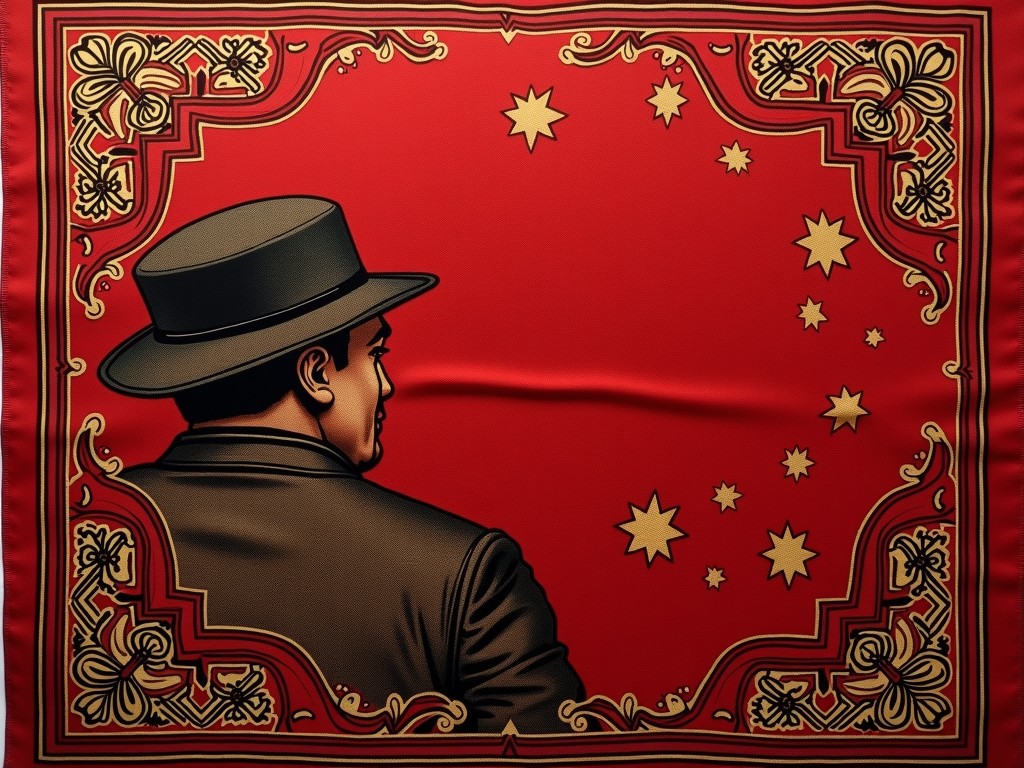
China Scarf And Hat For Men
Men’s scarves and hats sourced from China are engineered for industrial and commercial applications where durability, material consistency, and bulk producibility are critical. These products serve
China Scarf and Hat for Men: Industrial-Grade Headwear Solutions
Men’s scarves and hats sourced from China are engineered for industrial and commercial applications where durability, material consistency, and bulk producibility are critical. These products serve sectors requiring standardized headwear for workforce uniformity, environmental protection, or brand representation—such as logistics, outdoor utilities, security services, and transportation. Unlike consumer-focused variants, industrial versions prioritize dimensional stability, resistance to deformation under load, and compatibility with laundering cycles. Material selection is driven by performance criteria rather than aesthetic trends, with specifications defined by end-use conditions including UV exposure, abrasion resistance, and thermal regulation. Manufacturers in China operate under standardized production systems that allow for tight control over yarn count, weave density, and dimensional tolerances across large volumes. This ensures that each unit meets predefined technical benchmarks, reducing variability that could compromise function in operational environments. Buyers benefit from predictable performance, simplified inventory management, and the ability to integrate these items into existing PPE or uniform programs without requalification.
Material Composition and Structural Design
Scarves are typically constructed from acrylic, polyester, or wool-blend knits with a minimum weight of 180 GSM to ensure sufficient coverage and wind resistance. The knit structure uses a 1x1 rib or interlock pattern to prevent edge curling and maintain elasticity after repeated stretching. Hats—commonly beanies, baseball caps, or balaclavas—utilize brushed polyester fleece (220–260 GSM) for insulation or lightweight ripstop nylon (110–130 GSM) for sun and wind protection. Seam construction employs flatlock or overlock stitching with 6–8 stitches per centimeter to minimize skin irritation and prevent unraveling under tension. Dimensional stability is verified through ASTM D2261 tear resistance and AATCC 135 dimensional change after washing, with target shrinkage below 3% for polyester blends and 5% for wool-containing fabrics. Colorfastness to light (AATCC TC16.3) and washing (AATCC 61) is maintained at grade 4 or higher to prevent fading during prolonged outdoor use. These specifications are not arbitrary; they are derived from field performance data in similar industrial clothing applications.
Customization Parameters and Tolerances
Industrial buyers require precise control over dimensions, branding placement, and material properties to align with safety protocols or corporate identity. Scarf length ranges from 140cm to 180cm with a width tolerance of ±2cm; hat circumference is adjustable via internal drawbands or elastic cores, with standard sizes spanning 54cm to 60cm head circumference. Logo application methods include embroidery (minimum 6mm letter height), silicone transfer, or jacquard weaving—each selected based on wash cycle expectations and abrasion exposure. For high-wear environments, reflective trims compliant with EN ISO 20471 are integrated into hat brims or scarf ends using heat-bonded tape with peel strength >8N/cm. All customizations are subject to first-article inspection against approved samples, with bulk production allowed only after zero-defect validation in critical zones. Tolerances are tighter than consumer goods due to the need for interchangeability in uniform systems—where a mismatch in size or color could disrupt team identification or safety compliance.
Quality Control and Batch Consistency
Manufacturing processes incorporate in-line monitoring at knitting, cutting, and finishing stages to detect deviations in yarn tension, stitch density, or dye lot variation. Each batch undergoes 100% visual inspection for needle marks, holes, or misprinted logos, followed by AQL 2.5 sampling for dimensional accuracy and seam strength. Color matching is verified using spectrophotometer readings against Pantone or RAL standards, with ΔE < 2.0 acceptable for bulk approval. Fabric pilling resistance is tested per ASTM D3512, targeting a minimum grade 3 after 5,000 cycles—critical for items subjected to frequent friction against collars or backpacks. These controls are not optional add-ons; they are embedded in the production workflow to prevent costly rejects or field failures. Buyers receive inspection reports detailing test methods, sample sizes, and results, enabling traceability and supporting internal audits for supply chain compliance.
Applications in Industrial and Operational Settings
These headwear solutions are deployed where environmental exposure necessitates reliable thermal regulation or particulate protection. In logistics and warehousing, acrylic scarves prevent wind chill during loading dock operations without interfering with hearing protection or high-visibility vests. Security personnel in outdoor patrols use fleece-lined beanies that maintain insulation even when damp from precipitation, avoiding the thermal bridging seen in cotton alternatives. Transportation workers—such as railway maintenance crews or airport ground staff—utilize UV-stabilized polyester hats with wide brims to reduce glare and heat stress during extended shifts, with brim rigidity tested to withstand 0.5N lateral force without deformation. Unlike fashion-oriented products, these items are selected based on measurable performance: thermal resistance (TOG value), air permeability (mm/s), and UV protection factor (UPF). For example, a typical industrial fleece beanie achieves a TOG of 0.8–1.2 and UPF 30+, verified via ISO 11092 and AATCC 183 testing. This data-driven approach allows safety officers to justify PPE selections with quantifiable benchmarks rather than subjective preference.
Packaging, Labeling, and Logistics Integration
Products are packaged in polyethylene bags (50–70μm thickness) with printed labels containing batch number, material composition, care instructions (ISO 3758 symbols), and country of origin. Master cartons use double-wall corrugated fiberboard (150gsm/test) with burst strength >25 psi to withstand stacking during sea freight. Each carton includes a packing list detailing SKU, quantity, and dimensions, enabling automated warehouse receiving without manual unpacking. For clients with RFID or barcode tracking requirements, labels can be pre-printed with EPC/UPC codes at no additional tooling cost. Lead times average 25–35 days after sample approval, influenced by fabric sourcing and customization complexity—factors transparently communicated during quoting. Unlike spot-market sourcing, this model supports recurring orders with locked-in pricing and consistent specifications, reducing the risk of specification drift over time. This reliability is particularly valuable for multinational operators managing uniform programs across multiple regions.
Comparison: Industrial vs. Consumer Variants
| Parameter | Industrial Variant | Consumer Variant |
|---|---|---|
| Fabric Weight (GSM) | 180–260 | 120–180 |
| Shrinkage After Wash | < 3% | 5–8% |
| Seam Strength (N/cm) | >15 | 8–12 |
| Colorfastness (Light) | Grade 4+ | Grade 3 |
| Logo Durability (Washes) | >50 cycles | 10–20 cycles |
This comparison highlights engineered differences that directly impact service life and operational suitability. Industrial variants are not merely “stronger” versions of consumer goods—they are redesigned around specific failure modes observed in field use, such as seam fatigue under cyclic loading or premature fading from UV exposure. The data reflects real-world performance thresholds derived from end-user feedback in similar sectors, not arbitrary benchmarks. For procurement teams, this table provides a objective basis for justifying higher unit costs through reduced replacement frequency and lower total cost of ownership.
Technical Support and Sampling Protocol
Before full-scale production, suppliers provide pre-production samples (PPS) for validation against approved technical packs. These samples include full traceability: yarn certificates, dye lot reports, and knitting machine logs. Buyers are expected to conduct wear trials simulating actual conditions—such as prolonged exposure to wind, moisture, or abrasion—and report findings using standardized evaluation forms. Adjustments to stitch density, lining attachment, or trim placement are made based on this feedback, with revised samples submitted until sign-off. This iterative process prevents costly mismatches after bulk shipment and ensures that the final product aligns with functional requirements, not just appearance. Suppliers maintain sample libraries for repeat orders, enabling rapid requoting without re-developing specifications from scratch. This approach treats sampling not as a formality, but as a critical risk-mitigation step in the supply chain.
For technical inquiries, customization requests, or to request a pre-production sample evaluation kit, contact our industrial textile team. Provide your application details, required quantities, and any relevant performance standards (e.g., ISO, ASTM, EN) to receive a tailored specification sheet and lead time estimate. We support B2B transactions only and do not engage in retail distribution.
Request Technical Specification SheetProducts
Related Products
News
Related News

2026-11-02
Cotton Voile Scarf Manufacturing and Performance Analysis how to make a cotton voile scarfCreating a professional-grade cotton voile scarf requires a precise balance of textile engineering and artisanal finishing. Unlike standard cotton weaves, voile is defined by its p···

2026-10-28
chiffon hijab Technical Production and Performance AnalysisSelecting the right fabric for a hijab involves a delicate balance between modesty, breathability, and aesthetic drape. For many women in Southeast Asia and the Middle East, the ma···

2026-10-26
custom silk scarf textile manufacturing and performance analysisSelecting a high-quality scarf is no longer just about color matching; it is an exercise in understanding how textile weight, drape, and print scale interact with individual facial···
