China Long Black Scarf Mens






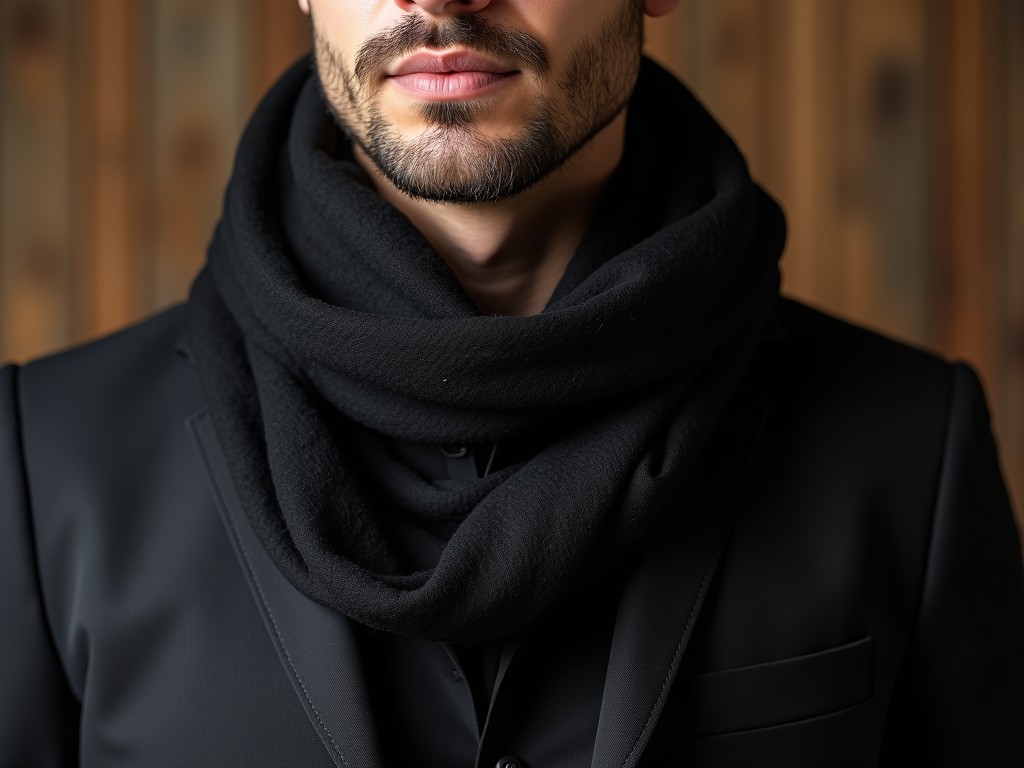
China Long Black Scarf Mens
Industrial buyers seeking a long black scarf for men from China often prioritize dimensional consistency, material stability, and suitability for bulk procurement in workwear, uniform programs, or
China Long Black Scarf for Men
Industrial buyers seeking a long black scarf for men from China often prioritize dimensional consistency, material stability, and suitability for bulk procurement in workwear, uniform programs, or protective clothing systems. This product page explains the technical characteristics of long black scarves manufactured in China, focusing on measurable attributes that influence performance in professional environments. Understanding these factors helps reduce uncertainty when evaluating suppliers for large-volume orders.
Material Composition and Fiber Stability
The most common materials for long black scarves in industrial applications are 100% polyester, polyester-cotton blends (typically 65/35 or 80/20), or acrylic wool substitutes. Polyester offers low moisture regain (<0.4%), high tensile strength (4.5–7.0 cN/tex), and resistance to UV degradation, making it suitable for outdoor use. Cotton blends improve breathability but increase shrinkage potential (up to 5% after first wash) unless sanforized. Acrylic alternatives mimic wool texture with better mildew resistance but lower abrasion resistance (<15,000 Martindale cycles). Colorfastness to washing (ISO 105-C06) and light (ISO 105-B02) should exceed grade 4 for professional uniforms.
Dimensional Specifications and Tolerance Control
Standard lengths for men’s long scarves range from 160 cm to 180 cm, with widths between 20 cm and 30 cm. Tolerance control is critical in bulk orders: length variation should not exceed ±2%, width ±1.5%, and end taper symmetry within 3 mm. These tolerances prevent misalignment during automated folding or packaging. For uniform programs, consistent dimensions ensure proper fit when worn under collars or over jackets. Suppliers should provide measurement reports showing standard deviation across production lots.
Weave Structure and Surface Properties
Common weaves include plain weave (balanced, low pilling), twill (2/1 or 3/1, improved drape and soil release), and brushed finishes (for thermal retention). Plain weave polyester typically has a thread count of 120x60 to 150x70 ends/inch, yielding a weight of 120–160 g/m². Brushed surfaces increase apparent thickness but may reduce pilling resistance (ISO 12945-2: grade 3 or better required). Surface friction coefficient affects knot stability; values between 0.35 and 0.45 are optimal for secure fastening without slippage.
Color Consistency and Dyeing Process
Achieving a true long black requires dyeing with sulfur or reactive dyes depending on fiber type. Polyester uses disperse dyes at 130°C; cotton/reactive blends require reactive dyes at 60°C. Color consistency is measured via ΔE*ab < 1.5 under D65 lighting. Batch-to-batch variation must be controlled through spectrophotometer calibration and dyelot tracking. For industrial buyers, requesting a dyelot sample before bulk production ensures shade matching across multiple deliveries. Poor rinsing can leave alkaline residues, causing skin irritation or fabric weakening over time.
Quality Control and Inspection Points
Key inspection parameters include: length/width measurement (AQL 2.5), color matching (AQL 4.0), end finish (straight cut or hemmed, AQL 2.5), and defect classification (holes, stains, yarn breaks). AQL levels follow ISO 2859-1. For uniform contracts, 100% inspection of first article and 20% random sampling during production are standard. Suppliers should provide inspection reports detailing defect types and quantities. Packaging integrity (e.g., polybag sealing, carton crush resistance) is also verified to prevent transit damage.
Applications in Industrial and Professional Settings
Long black scarves are used in industrial uniforms for transportation workers (rail, transit), security personnel, and hospitality staff where a formal appearance is required. In cold environments, acrylic or wool-blend versions provide thermal insulation (CLO value ~0.3–0.5 per layer). In food processing, polyester versions resist liquid absorption and withstand frequent sanitization. For outdoor work, UV-stabilized polyester prevents fading during prolonged sun exposure. The scarf’s function extends beyond aesthetics—it can serve as a sweat absorbent, neck insulator, or identification element when colored trims are added.
Customization Options and Technical Constraints
Common customizations include: length adjustment (140–200 cm), width variation (15–35 cm), end finishes (straight, fringed, or hemmed with 3mm double fold), and custom labeling (woven or printed). Adding reflective strips requires compliance with EN ISO 20471 for visibility. Blend ratio changes affect shrinkage and drying time—increasing cotton content from 35% to 50% may raise shrinkage from 3% to 6%. Minimum order quantities for custom colors typically start at 3,000 units due to dye setup costs. Lead time for custom orders is 4–6 weeks after sample approval.
Packaging and Logistics Considerations
Standard packaging involves folding scarves to 20x30 cm, placing 10–20 pieces per polybag (50μm thickness), and packing 10–20 bags per carton (5-ply corrugated, 15kg max weight). Carton dimensions are typically 40x30x25 cm. For long-term storage, include silica gel packets to control humidity (<50% RH). Export packaging must comply with ISPM 15 for wooden pallets if used. Marking requirements: PO number, size, quantity, country of origin, and care instructions (e.g., machine wash 40°C, tumble dry low).
| Parameter | Typical Range | Inspection Standard |
|---|---|---|
| Length | 160–180 cm | ±2% tolerance, AQL 2.5 |
| Width | 20–30 cm | ±1.5% tolerance, AQL 2.5 |
| Weight | 120–160 g/m² | ISO 3801, AQL 4.0 |
| Colorfastness (Wash) | Grade 4 or better | ISO 105-C06 |
| Colorfastness (Light) | Grade 4 or better | ISO 105-B02 |
Ordering Information and Supplier Evaluation
When requesting a quotation, provide: exact dimensions (length/width), material specification (e.g., 100% polyester, 65/35 poly-cotton), desired finish (hemmed, fringed), color standard (Pantone or Lab values), packaging requirements, and target delivery date. Request samples cut from bulk production, not lab dips, to assess real-world consistency. Evaluate suppliers based on their ability to provide dye lot tracking, inspection reports, and on-time delivery history. Minimum order quantities for standard colors often start at 1,000 units; custom colors require higher volumes. Clear technical specifications reduce back-and-forth and help ensure the product meets operational needs.
Products
Related Products
News
Related News

2026-11-02
Cotton Voile Scarf Manufacturing and Performance Analysis how to make a cotton voile scarfCreating a professional-grade cotton voile scarf requires a precise balance of textile engineering and artisanal finishing. Unlike standard cotton weaves, voile is defined by its p···

2026-10-28
chiffon hijab Technical Production and Performance AnalysisSelecting the right fabric for a hijab involves a delicate balance between modesty, breathability, and aesthetic drape. For many women in Southeast Asia and the Middle East, the ma···

2026-10-26
custom silk scarf textile manufacturing and performance analysisSelecting a high-quality scarf is no longer just about color matching; it is an exercise in understanding how textile weight, drape, and print scale interact with individual facial···
