China Arab Head Covering For Men






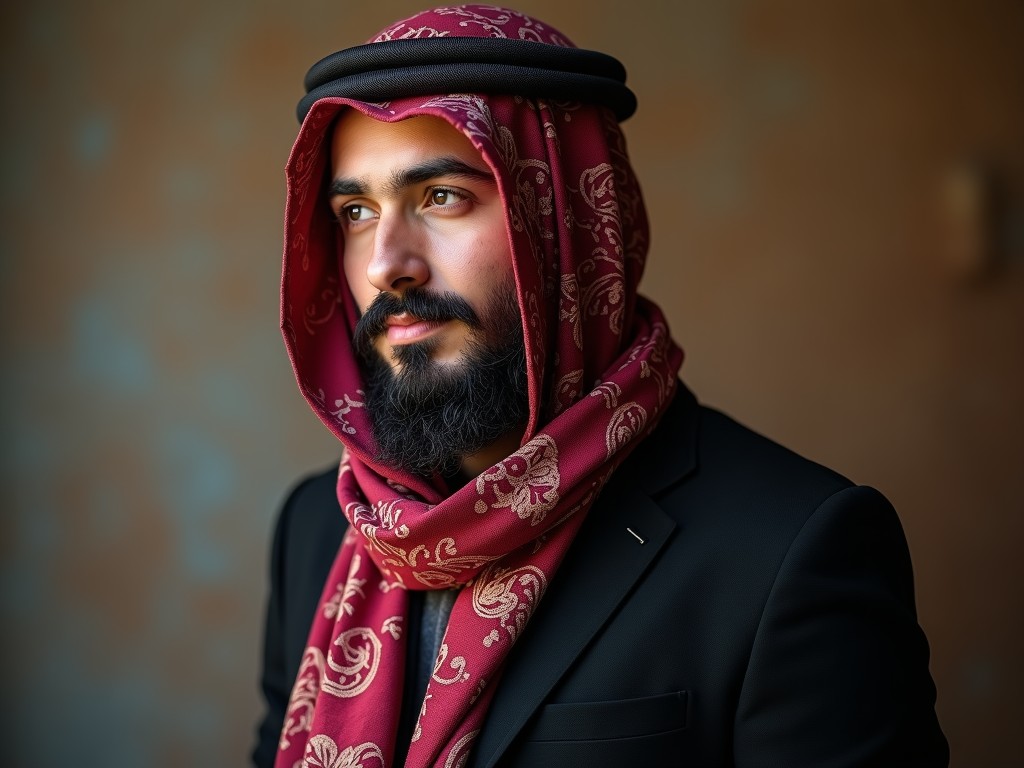
China Arab Head Covering For Men
Industrial buyers sourcing men’s Arab head coverings from China prioritize material consistency, dimensional accuracy, and compliance with regional textile standards. This product page details the
China Arab Head Covering for Men: Technical Specifications and Industrial Applications
Industrial buyers sourcing men’s Arab head coverings from China prioritize material consistency, dimensional accuracy, and compliance with regional textile standards. This product page details the technical characteristics of cotton and polyester-blend ghutra and shemagh variants manufactured for B2B distribution, focusing on measurable properties that affect performance in arid and high-UV environments.
Each unit is engineered for breathability, UV resistance, and ease of maintenance under continuous wear. Specifications are derived from standard production runs; custom requirements are available upon request.
Material Composition and Construction
The primary materials used are 100% combed cotton or a 65/35 polyester-cotton blend, selected for their moisture-wicking properties and dimensional stability after repeated washing. Cotton variants typically weigh 120–140 GSM, while blends range from 130–150 GSM to enhance wrinkle resistance.
Yarn count falls within Ne 30s/2 to Ne 40s/2 for cotton and Ne 20s/2 to Ne 30s/2 for blends, ensuring a balance between softness and durability. Fabric construction is plain weave with a thread count of 68x68 to 72x72 per square inch, providing uniform coverage without excessive porosity.
All fabrics undergo mercerization (for cotton) or heat-setting (for blends) to improve luster, tensile strength, and colorfastness. Edge finishing includes a 3-mm double-fold hem with 8–10 stitches per inch to prevent fraying during handling and use.
Dimensional Standards and Tolerances
Standard dimensions for men’s Arab head coverings are 110 cm × 110 cm with a tolerance of ±2 cm in both length and width. This size accommodates various wrapping styles while maintaining proportionality for average adult head circumferences (54–58 cm).
Diagonal shrinkage after three wash cycles at 40°C does not exceed 3% for cotton and 2% for blends, verified through ISO 6330 testing. Edge straightness is maintained within 1.5 mm deviation over a 30 cm span, ensuring clean folds during use.
Custom sizes (e.g., 100 cm × 100 cm or 120 cm × 120 cm) are available for specific regional preferences or uniform programs, with tolerances adjusted proportionally.
Colorfastness and UV Performance
Colorfastness to washing (ISO 105 C06) rates at 4–5 for cotton and 4–5 for blends after 20 cycles, minimizing fading in industrial laundering environments. Rubbing fastness (ISO 105 X12) achieves 3–4 for dry and 2–3 for wet conditions, acceptable for headwear subject to friction.
UV protection factor (UPF) testing shows typical values of 15–20 for unbleached cotton and 20–25 for bleached or dyed variants, providing moderate sun exposure reduction. Darker colors (e.g., black, navy, red) demonstrate higher UPF due to increased dye concentration.
Chlorine resistance (for blends) retains 80% tensile strength after 50 cycles at 50 ppm active chlorine, suitable for environments requiring frequent sanitization.
Comparison of Material Options
| Property | 100% Cotton | 65/35 Poly-Cotton Blend |
|---|---|---|
| Weight (GSM) | 120–140 | 130–150 |
| Yarn Count (Ne) | 30s/2–40s/2 | 20s/2–30s/2 |
| Shrinkage (3 washes, 40°C) | ≤3% | ≤2% |
| UPF (Typical) | 15–20 | 20–25 |
| Wrinkle Resistance | Moderate | High |
| Breathability | High | Moderate |
Table: Key technical differentiators between cotton and poly-cotton Arab head coverings. Values represent typical production ranges; actual performance depends on dye lot and finishing.
Quality Control and Inspection Protocol
Each batch undergoes 100% visual inspection for color uniformity, weave defects, and edge integrity under 500 lux lighting. AQL 2.5 standards are applied for major defects (e.g., holes, stains, misprint) and AQL 4.0 for minor defects (e.g., loose threads, slight shade variation).
Dimensional checks are performed on every 50th unit using calibrated gauges; weight is verified via batch sampling (5 units per 1,000). Colorfastness and pilling resistance are tested per lot using ISO 105-B02 and ISO 12945-2 methods, with results archived for traceability.
Packaging integrity is validated through drop testing (76 cm height, corner impact) and humidity exposure (48 hrs at 80% RH) to ensure protection during transit. Non-conforming items are segregated and reworked or scrapped based on defect type.
Applications in Industrial and Commercial Settings
Beyond traditional use, these head coverings are specified in industries requiring sun protection, dust mitigation, and hygiene control. In construction and oil & gas operations across the Middle East and North Africa, they serve as a base layer under hard hats or as standalone protection against solar radiation and wind-blown particulates.
In healthcare and hospitality sectors, poly-cotton variants are preferred for their resistance to staining and ease of industrial laundering. Food processing facilities utilize white or light-colored cotton versions to minimize lint shedding and comply with hygiene audits.
Logistics and security personnel adopt standardized colors (e.g., white, black, or corporate-specific shades) for team identification and uniform compliance, with custom labeling options available for embroidery or screen printing.
Customization and Ordering Considerations
Customization includes adjustable GSM (±10%), yarn count, dye lot matching (Pantone or TCX), and edge finishes (rolled, hemmed, or fringed). Private labeling is available via jacquard weaving or heat-transfer methods, with minimum order quantities typically starting at 500 units per SKU.
Lead times range from 14–21 days for stock items and 28–45 days for customized orders, depending on fabric availability and dye complexity. Samples are provided upon request, with color swatches and physical swatches available for approval before bulk production.
Export packaging includes polybags (50 units per bale) or cartons (100 units), marked with batch numbers, size, material, and care instructions. Palletization follows ISPM 15 standards for international shipments.
For technical inquiries, custom specifications, or sample requests, contact our industrial textiles team to discuss your project requirements.
Request Technical Specification SheetProducts
Related Products
News
Related News

2026-11-02
Cotton Voile Scarf Manufacturing and Performance Analysis how to make a cotton voile scarfCreating a professional-grade cotton voile scarf requires a precise balance of textile engineering and artisanal finishing. Unlike standard cotton weaves, voile is defined by its p···

2026-10-28
chiffon hijab Technical Production and Performance AnalysisSelecting the right fabric for a hijab involves a delicate balance between modesty, breathability, and aesthetic drape. For many women in Southeast Asia and the Middle East, the ma···

2026-10-26
custom silk scarf textile manufacturing and performance analysisSelecting a high-quality scarf is no longer just about color matching; it is an exercise in understanding how textile weight, drape, and print scale interact with individual facial···
