Buy Men S Arabic Scarf Styles






Buy Men S Arabic Scarf Styles
Selecting appropriate headwear for professional environments requires understanding material behavior, dimensional stability, and cultural appropriateness. This guide details the technical
Men's Arabic Scarf Styles for Industrial and Professional Use
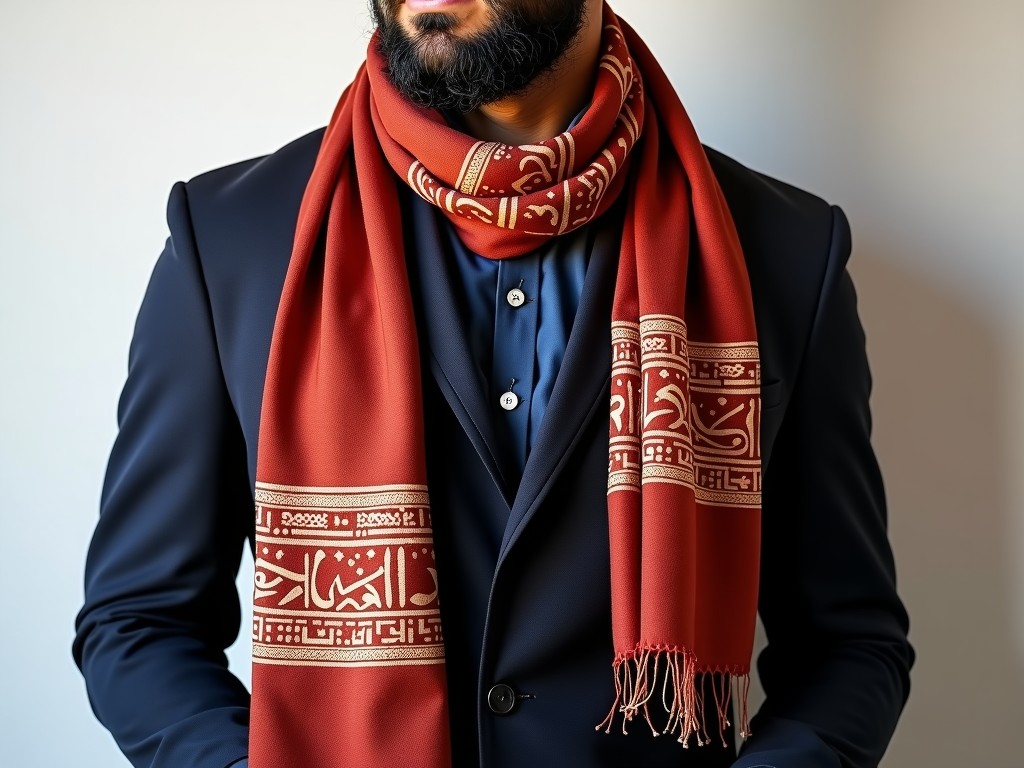
Selecting appropriate headwear for professional environments requires understanding material behavior, dimensional stability, and cultural appropriateness. This guide details the technical characteristics of men's Arabic scarf styles relevant to procurement decisions in industrial, commercial, and institutional settings.
Material Composition and Performance Characteristics
The functional performance of Arabic scarves depends primarily on fiber selection and weave structure. Common materials include 100% cotton, polyester-cotton blends, and lightweight wool, each offering distinct advantages for specific use cases.
100% cotton variants typically exhibit moisture absorption rates of 8-10% under standard conditions, providing comfort in warm environments while maintaining dimensional stability after repeated washing. Polyester-cotton blends (commonly 65/35) reduce shrinkage to less than 2% after 50 wash cycles and improve wrinkle resistance, though with lower breathability compared to pure cotton.
Thread count directly influences durability and appearance. Industrial-grade scarves generally utilize 40s-60s yarn counts in plain or twill weaves, yielding tear strength values between 15-25 N warp and 10-20 N weft, sufficient for daily professional handling without excessive pilling or fraying.
Dimensional Specifications and Wearing Geometry
Proper fit and draping behavior are critical for both appearance and functionality in professional contexts. Scarf dimensions must accommodate various wrapping techniques while maintaining consistent proportions across production batches.
Standard rectangular dimensions range from 140cm x 140cm to 180cm x 90cm, with the square format enabling multiple wrapping styles (e.g., shelf, neck loop, shoulder drape) without requiring excess fabric. The 180x90cm oblong variant reduces material usage by approximately 20% while still supporting common professional wrapping methods.
Edge finishing affects both longevity and presentation. Rolled hems (typically 3-5mm width) minimize weight and bulk, suitable for lightweight cotton, whereas double-folded hems (6-8mm) provide increased edge durability for heavier fabrics or high-frequency laundering environments.
Colorfastness and Dye Stability Considerations
Color retention under exposure to light, washing, and perspiration directly impacts product lifespan and professional appearance. Industrial procurement should specify standardized test methods to ensure consistency.
Reactive dyes on cotton typically achieve ISO 105-B02 lightfastness ratings of 4-5 (out of 8) and washfastness ratings of 4-5, maintaining visual integrity after 30+ home laundering cycles. Disperse dyes on polyester blends show superior lightfastness (rating 6-7) but may require disperse-specific washing protocols to prevent dye migration.
pH-neutral dyes are recommended for environments with frequent skin contact, reducing irritation risk. Color variation between production lots should remain within ΔE < 3 CIELAB units under D65 lighting to ensure visual consistency in uniformed settings.
Applications in Professional and Industrial Environments
Beyond cultural significance, Arabic scarves serve specific functional roles in various occupational settings where head covering is required or preferred for safety, hygiene, or identification purposes.
In food processing facilities, lightweight cotton scarves compliant with EN 13795-1 standards provide effective hair containment while allowing sufficient air permeability to prevent heat buildup during extended shifts. Their smooth surface minimizes particulate retention compared to knitted alternatives.
Cleanroom environments (ISO Class 7-8) may utilize anti-static treated polyester-cotton blends with surface resistivity below 10^9 Ω/sq, reducing electrostatic discharge risk while maintaining required particulate filtration efficiency. These variants undergo specific laundering protocols to preserve conductive properties.
Corporate hospitality and security sectors often specify scarves with embedded RFID threads or woven identifiers for personnel tracking, requiring non-metallic, wash-resistant integration methods that do not compromise fabric integrity or comfort.
Quality Control and Inspection Parameters
Consistent product quality relies on objective, measurable criteria evaluated at multiple production stages. Buyers should verify supplier capabilities against these parameters.
Fabric width tolerance is typically held to ±1.5% after relaxation, ensuring consistent cutting yield. End-to-end length variation should not exceed ±2% for rectangular formats to maintain wrapping symmetry. Skewness (bowing) must remain under 3% per ASTM D3882 to prevent torque during wear.
Defect classification follows 4-point system standards, with major defects (holes, drops, misprints) limited to 0-4 points per 100 square yards, and total points (major + minor) kept under 10 for first-quality goods. Color shading across a single roll should not exceed ΔE 2.0 under D65/10 conditions.
Dimensional stability after 5 home launderings (AATCC 135) should show width change < -1.5% to +1.0% and length change < -2.0% to +1.0%. Exceeding these limits indicates potential issues in preprocessing or tension control during manufacturing.
Customization Options and Technical Constraints
Industrial buyers frequently require specific modifications to base designs. Understanding the technical implications of common customization requests prevents costly redesigns or performance compromises.
Width adjustments beyond standard ranges (e.g., <120cm or >200cm) may require loom reconfiguration, affecting lead time and minimum order quantities. Length modifications are generally more flexible, achievable through cutting adjustments without altering core weaving parameters, though excessive length (>220cm) increases material consumption non-linearly.
Custom dye matching requires laboratory dip approvals using spectrophotometers to ensure ΔE < 1.5 against the target standard under multiple light sources (D65, TL84, CWF). Pilot batch evaluation is recommended before full production to assess dye uptake consistency across the specified fabric construction.
Embroidery or printing applications necessitate substrate stabilization. For logos exceeding 25cm², interfacing or backing materials may be required to prevent pucker, with typical stabilizer weights ranging 15-30 gsm depending on stitch density and fabric weight.
Packaging and Logistics Considerations
Packaging methods influence both product condition upon arrival and inventory management efficiency. Industrial buyers should align packaging specifications with their handling and storage capabilities.
Individual polybagging (typically 50-70μm LDPE) protects against moisture and soiling during transit, adding approximately 15-25g per unit. Bulk packaging in cartons (standard 40x30x20cm) holds 50-100 pieces depending on folding method, with gross weight ranging 8-15kg per carton.
For high-volume distribution, flat folding with precise dimensions (e.g., 20x20x2cm) enables automated stacking and bin storage. Alternatively, rolled packaging on 38mm cores reduces creasing but requires specialized handling equipment, increasing labor efficiency in retail environments by approximately 15-20% per handling cycle.
Export packaging must comply with ISPM 15 for wood pallets and include desiccant units (typically 1 unit per 0.5m³) to maintain relative humidity below 60% during transit, preventing mildew formation on natural fibers.
| Parameter | Typical Range | Test Method / Reference |
|---|---|---|
| Fabric Weight (Cotton) | 120-180 gsm | ASTM D3776 |
| Thread Count | 80-140 threads/inch | ASTM D3775 |
| Shrinkage (5 HL washes) | Warp: -2% to 0%; Weft: -1% to 1% | AATCC 135 |
| Tear Strength (Warp/Weft) | 15-25 N / 10-20 N | ASTM D1424 |
| Colorfastness to Light | 4-5 (Blue Wool Scale) | ISO 105-B02 |
| Colorfastness to Washing | 4-5 (Gray Scale) | ISO 105-C06 |
Technical evaluation of men's Arabic scarf styles enables informed procurement decisions aligned with specific operational requirements. By focusing on measurable characteristics such as material performance, dimensional stability, and quality control parameters, buyers can select products that deliver consistent value in professional environments.
To request samples, discuss customization options, or obtain detailed specifications for your specific application, please contact our technical team.
Submit InquiryProducts
Related Products
News
Related News

2026-11-02
Cotton Voile Scarf Manufacturing and Performance Analysis how to make a cotton voile scarfCreating a professional-grade cotton voile scarf requires a precise balance of textile engineering and artisanal finishing. Unlike standard cotton weaves, voile is defined by its p···

2026-10-28
chiffon hijab Technical Production and Performance AnalysisSelecting the right fabric for a hijab involves a delicate balance between modesty, breathability, and aesthetic drape. For many women in Southeast Asia and the Middle East, the ma···

2026-10-26
custom silk scarf textile manufacturing and performance analysisSelecting a high-quality scarf is no longer just about color matching; it is an exercise in understanding how textile weight, drape, and print scale interact with individual facial···
