Buy Male Head Scarf Arab






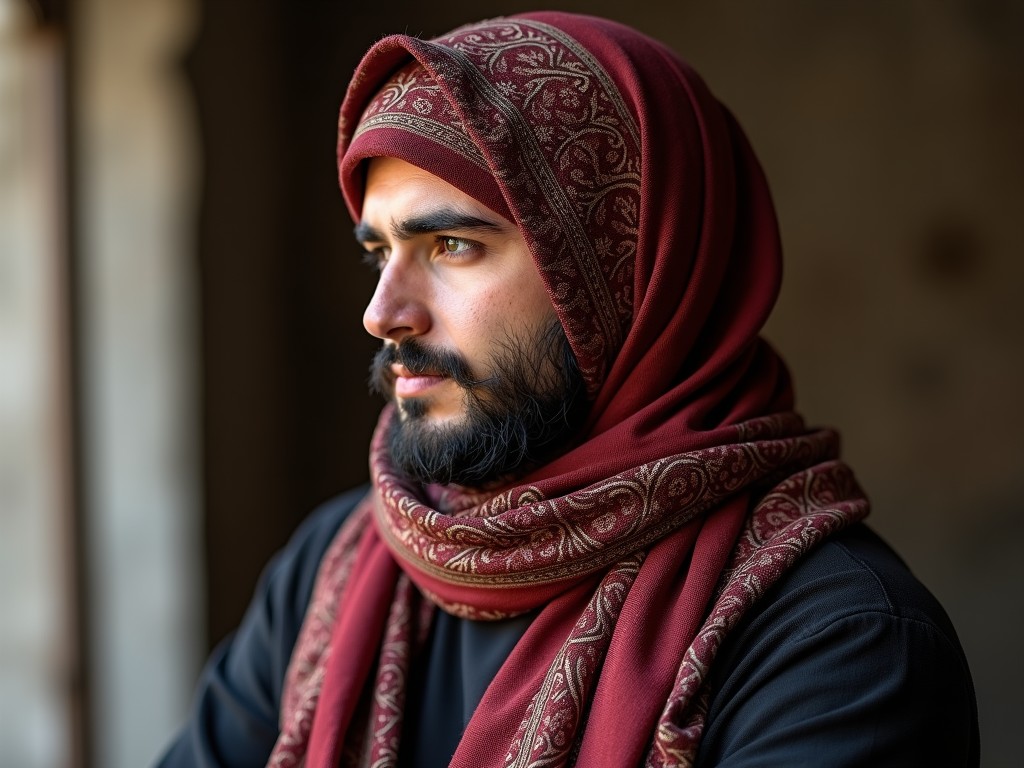
Buy Male Head Scarf Arab
Selecting a male head scarf for industrial or occupational use requires understanding material behavior, dimensional stability, and environmental resistance. This guide outlines key technical
Male Head Scarf Arab: Technical Specification Guide
Selecting a male head scarf for industrial or occupational use requires understanding material behavior, dimensional stability, and environmental resistance. This guide outlines key technical considerations for procurement professionals evaluating traditional Arab-style head coverings (such as shemagh or keffiyeh) for workplace applications where protection, durability, and compliance are critical.
Unlike fashion-focused variants, industrial-grade versions prioritize measurable performance characteristics: tensile strength, abrasion resistance, moisture management, and dimensional consistency after repeated washing. These factors directly impact service life and worker safety in demanding environments.
Material Composition and Performance Characteristics
The most common base material is 100% combed cotton, valued for its breathability and moisture absorption. Typical yarn count ranges from 20s to 40s Ne, with fabric weight between 120–180 gsm. Higher counts (e.g., 40s Ne) produce finer, smoother surfaces but may reduce tear resistance compared to 20s Ne constructions.
For enhanced durability in abrasive conditions, polyester-cotton blends (typically 65/35 or 50/50) are used. These improve dimensional stability—shrinkage typically <3% after 5 industrial wash cycles at 60°C—and increase tensile strength by 15–25% compared to pure cotton. However, moisture regain decreases from ~8.5% (cotton) to ~4–5% (blends), affecting comfort in high-humidity environments.
Colorfastness is critical for visible safety or identification purposes. Reactive dyes on cotton achieve ISO 105-B02 lightfastness ratings of 4–5 and washfastness of 4–5. Pigment-dyed polyester blends offer superior UV resistance (rating 6–7) but may exhibit lower crocking resistance initially. Always verify dye lot consistency for large orders.
Dimensional Standards and Tolerances
Traditional Arab head scarves are square, with nominal dimensions ranging from 100×100 cm to 130×130 cm. Industrial specifications define tight tolerances: ±1.5 cm on length and width, measured after conditioning at 20°C/65% RH for 24 hours. Skewness (bias distortion) must not exceed 2% per ASTM D3882 to ensure proper folding and coverage.
Fringe length, when present, is typically 2–4 cm and must be securely hemmed to prevent unraveling. Hem width averages 0.6–0.8 cm with stitch density of 8–10 stitches/cm. For applications requiring flame resistance, selvage edges may be reinforced with aramid threads, adding 0.1–0.2 cm to the effective width.
Thickness, measured under 100 g/cm² pressure (ASTM D1777), ranges from 0.35–0.55 mm for standard cotton. Thermal resistance (TOG) is approximately 0.15–0.25, suitable for moderate insulation but insufficient for cold-weather PPE without layering. Always confirm thickness consistency across production batches for uniform performance.
Environmental and Functional Treatments
Antimicrobial treatments (e.g., silver-ion or zinc-pyridine based) are available upon request to inhibit odor-causing bacteria. Efficacy is measured by ISO 20743, with typical bacterial reduction >90% after 24 hours. These treatments retain effectiveness for 30–50 industrial washes before gradual decline.
Water-repellent finishes (C6 fluoropolymer or silicone-based) increase surface contact angle to >90°, reducing wettability. However, such treatments may reduce moisture vapor transmission rate (MVTR) by 20–40%, impacting comfort during prolonged wear. Hydrophilic alternatives (e.g., silicone-modified) maintain MVTR while offering light splash resistance.
UV stabilizers (hindered amine light stabilizers - HALS) can be added to dyed fabrics to extend color life under sun exposure. Accelerated testing (ISO 4892-3) shows 500+ hours of UV exposure with <5% color shift (ΔE), compared to untreated fabric showing >15% shift. This is relevant for outdoor operations in high-irradiance zones.
Quality Control and Inspection Protocol
Incoming fabric undergoes 4-point inspection per ASTM D5430, with defect points assigned based on size and length. Acceptable threshold is typically <40 points per 100 square yards. Critical defects include holes, tears, misprints, or dye streaks exceeding 3 mm in width.
Dimensional stability is verified after 3 wash cycles at 60°C followed by tumble drying. Length and width change must remain within ±2%. Colorfastness to washing (ISO 105-C06) and rubbing (ISO 105-X12) is tested at minimum grade 4. pH of aqueous extract is maintained between 4.0–7.5 to prevent skin irritation.
Packaging inspection confirms correct folding, labeling, and barrier protection. Each unit is typically polybagged (50–70 μm thickness) with desiccant sachets for moisture control during transit. Carton markings include size, material, care instructions, and country of origin in ISO-compliant format.
Typical Applications in Industrial Settings
In construction and mining, these scarves provide protection against dust, UV radiation, and abrasion when wrapped properly. The multi-layer capability (2–4 folds) increases effective filtration efficiency for particulates >10 μm by up to 70% compared to single-layer use, based on airflow resistance measurements.
In petrochemical or refining environments, flame-resistant treatments (e.g., Proban® or THPC-based) can be applied to meet basic thermal protection needs (though not a substitute for certified FR PPE). Limiting Oxygen Index (LOI) typically increases from 18% (untreated cotton) to 26–28% after treatment, reducing ignition risk in flash fire scenarios.
For food processing or pharmaceutical facilities, white or light-colored variants are preferred for contamination visibility. Antimicrobial finishes help mitigate biofilm growth on the fabric surface. Laundry validation confirms >99% removal of common particulates after industrial wash at 75°C with alkaline detergent.
Customization Options and Ordering Considerations
Custom dimensions are available upon request, with minimums typically starting at 500 units for non-standard sizes (e.g., 110×110 cm or 140×140 cm). Lead time increases by 2–3 weeks for custom cutting due to die setup and fabric yield optimization.
Custom patterns (e.g., corporate logos, safety symbols) can be applied via screen printing or reactive dye injection. Minimum line width for reliable reproduction is 1.5 mm. Color matching uses Pantone+ or RAL references, with lab-dip approval required before bulk production. Expect ±1–2 ΔE variation in final product.
Packaging can be customized: individual polybags, bulk bales (25–50 units), or boxes with internal dividers. Barcode labeling (UPC or EAN) and RFID tagging are available for inventory tracking. Export packaging adheres to ISPM 15 standards for wooden pallets or uses corrugated cardboard with edge protection.
| Parameter | Typical Range (Cotton) | Typical Range (65/35 Poly-Cotton) | Test Method |
|---|---|---|---|
| Fabric Weight | 120–180 gsm | 140–200 gsm | ASTM D3776 |
| Tensile Strength (Warp) | 25–35 N/cm | 30–45 N/cm | ASTM D5034 |
| Shrinkage (After 5 Washes) | 4–8% | 1–3% | AATCC 135 |
| Moisture Regain | 7–9% | 4–5% | ASTM D2495 |
| Thickness | 0.35–0.55 mm | 0.40–0.60 mm | ASTM D1777 |
For technical inquiries, material samples, or quotation requests, contact our engineering team. Provide details on intended use, environmental exposure, cleaning protocols, and any required certifications to ensure accurate specification matching.
Request Technical Specification SheetProducts
Related Products
News
Related News

2026-11-02
Cotton Voile Scarf Manufacturing and Performance Analysis how to make a cotton voile scarfCreating a professional-grade cotton voile scarf requires a precise balance of textile engineering and artisanal finishing. Unlike standard cotton weaves, voile is defined by its p···

2026-10-28
chiffon hijab Technical Production and Performance AnalysisSelecting the right fabric for a hijab involves a delicate balance between modesty, breathability, and aesthetic drape. For many women in Southeast Asia and the Middle East, the ma···

2026-10-26
custom silk scarf textile manufacturing and performance analysisSelecting a high-quality scarf is no longer just about color matching; it is an exercise in understanding how textile weight, drape, and print scale interact with individual facial···
