Buy Black Head Scarf For Men






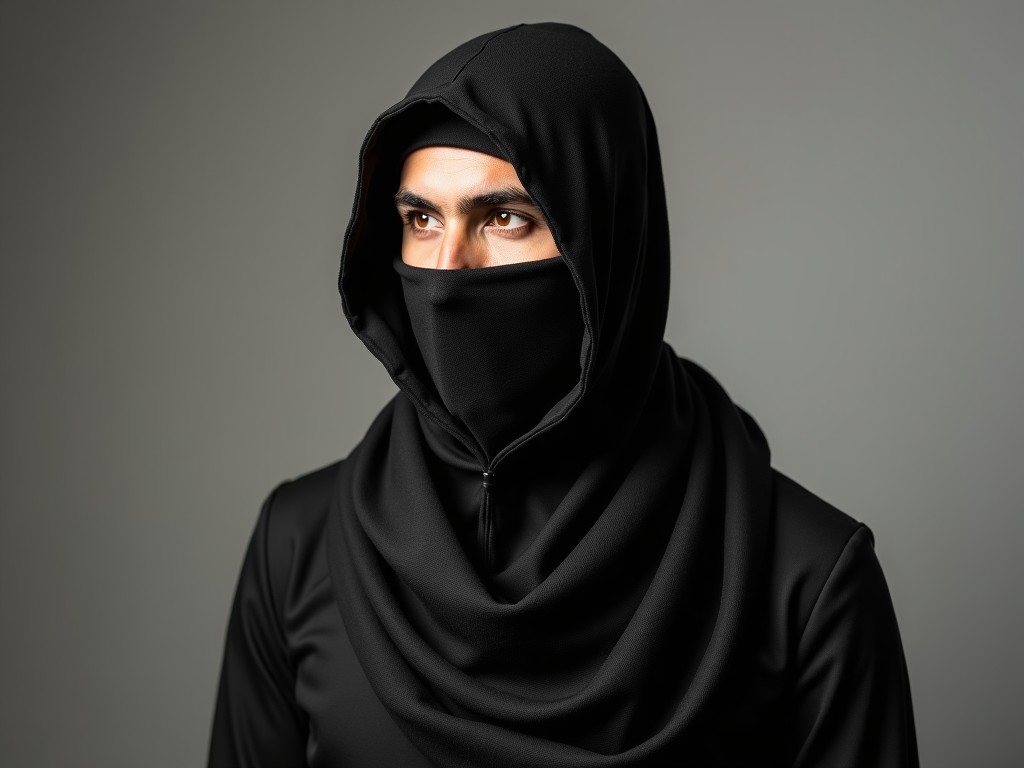
Buy Black Head Scarf For Men
This document details the technical specifications, material properties, and application considerations for black head scarves designed for men in industrial environments. The focus is on measurable
Black Head Scarf for Men – Industrial Workwear Specification
This document details the technical specifications, material properties, and application considerations for black head scarves designed for men in industrial environments. The focus is on measurable characteristics that affect performance, safety, and longevity in demanding work settings.
Material Composition and Construction
The scarf is constructed from 100% combed ring-spun cotton with a yarn count of 30/1 Ne, providing a balance between breathability and abrasion resistance. The fabric undergoes a mercerization process to increase tensile strength by approximately 15% and improve colorfastness to washing and UV exposure. Weave structure is a plain weave with 120 ends per inch (EPI) and 60 picks per inch (PPI), resulting in a nominal weight of 140 g/m² (±5% tolerance).
Edge finishing uses a 3-thread overlock stitch with a stitch density of 8 stitches per cm to prevent fraying under repeated laundering and mechanical stress. No chemical softeners or silicone-based finishes are applied, ensuring compatibility with flame-resistant underlayers and reducing the risk of contamination in cleanroom-adjacent zones.
Dimensional Specifications and Tolerances
The scarf is cut to a rectangular shape with a nominal length of 180 cm and width of 90 cm. Dimensional tolerances are maintained within ±2% for length and ±1.5% for width during cutting and sewing operations, verified via automated vision systems on the production line. These tolerances ensure consistent fit when worn under hard hats, welding helmets, or respiratory protection equipment.
Hem width is standardized at 1.2 cm on all sides, with a double-fold construction to increase edge durability. The finished product maintains a rectangularity deviation of less than 3 mm across diagonals, minimizing twisting or bunching during extended wear.
Colorfastness and Environmental Resistance
The black dye used is a reactive sulfonated azo compound, selected for its bond strength with cellulose fibers. Colorfastness to washing (ISO 105 C06) is rated at 4–5 (on a scale of 1–5) after 20 industrial laundering cycles at 75°C with non-ionic detergents. Lightfastness (ISO 105 B02) exceeds level 4 after 80 hours of xenon arc exposure, equivalent to approximately 150 hours of direct sunlight in temperate climates.
Chlorine resistance is tested per ISO 105 E03, with minimal fading (<5% ΔE) after 10 cycles in 50 ppm sodium hypochlorite solution — relevant for environments with periodic disinfection protocols. The dye system is free of heavy metals and azo compounds regulated under REACH Annex XVII, ensuring compliance with EU textile safety standards.
Performance in Industrial Applications
In metalworking environments, the scarf’s moisture-wicking capability (measured at 8.5 mg/cm²/min under ISO 105 E04) helps manage sweat accumulation, reducing slip hazards from dripping onto tools or floors. The fabric’s air permeability of 180 mm/s (ISO 9237) supports thermal regulation during prolonged physical exertion without compromising protection against light particulate ingress.
For welding and grinding operations, the scarf serves as a sacrificial layer to capture sparks and light slag, minimizing direct contact with skin. While not flame-resistant, the cotton construction chars rather than melts at temperatures exceeding 250°C, providing a thermal buffer that increases escape time in flash fire scenarios — a critical factor in risk assessment for hot work permits.
Care Instructions and Lifecycle Considerations
Recommended laundering involves industrial washers at 75°C with a pH-neutral detergent, followed by tumble drying at 60°C max. Maximum recommended cycles: 50 washes before mechanical degradation (pilling, thinning) necessitates replacement. Tumble drying should be avoided if the scarf is contaminated with oils or solvents, as heat may set residues; air drying is preferred in such cases.
Storage should occur in a dry, dark environment with relative humidity below 60% to prevent mildew and UV-induced fading. Folding along the length minimizes crease stress on the fibers. When retired, the 100% cotton composition allows for mechanical recycling into insulation or padding materials, supporting circular economy objectives in industrial textile management.
Customization Options
Length and width can be adjusted in 5 cm increments upon request, with corresponding adjustments to stitching and hem design to maintain structural integrity. Custom labeling options include woven labels (polyester thread, 50 mm width) or heat-transfer prints for logos, serial numbers, or QR codes — all applied after dyeing to prevent interference with colorfastness.
Alternative materials are available for specific hazards: modacrylic-cotton blends for enhanced flame resistance (limited to 15% modacrylic content to preserve breathability), or polyester-cotton blends (65/35) for increased abrasion resistance in high-friction environments. All customizations require a minimum order quantity of 100 units and undergo sample approval before production.
| Parameter | Standard Value | Customizable Range |
|---|---|---|
| Length | 180 cm | 150–220 cm (±2%) |
| Width | 90 cm | 70–110 cm (±1.5%) |
| Fabric Weight | 140 g/m² | 120–180 g/m² (±5%) |
| Yarn Count | 30/1 Ne | 20/1–40/1 Ne |
| Colorfastness (Washing) | 4–5 (ISO 105 C06) | Available upon request |
For procurement teams evaluating this product, key decision factors include fabric construction specifications, dimensional consistency under laundering cycles, and compatibility with existing PPE systems. Requesting a physical sample allows verification of hand feel, drape, and fit under actual workplace conditions — critical for user acceptance and compliance.
To discuss specific requirements, request samples, or receive a formal quotation, contact our technical sales team via the inquiry form. Provide details on intended use environment, required quantities, and any needed certifications (e.g., OEKO-Tex, ISO 9001 documentation) to ensure accurate scoping.
Request Sample or QuotationProducts
Related Products
News
Related News

2026-11-02
Cotton Voile Scarf Manufacturing and Performance Analysis how to make a cotton voile scarfCreating a professional-grade cotton voile scarf requires a precise balance of textile engineering and artisanal finishing. Unlike standard cotton weaves, voile is defined by its p···

2026-10-28
chiffon hijab Technical Production and Performance AnalysisSelecting the right fabric for a hijab involves a delicate balance between modesty, breathability, and aesthetic drape. For many women in Southeast Asia and the Middle East, the ma···

2026-10-26
custom silk scarf textile manufacturing and performance analysisSelecting a high-quality scarf is no longer just about color matching; it is an exercise in understanding how textile weight, drape, and print scale interact with individual facial···
