Blue Silk Scarf For Men






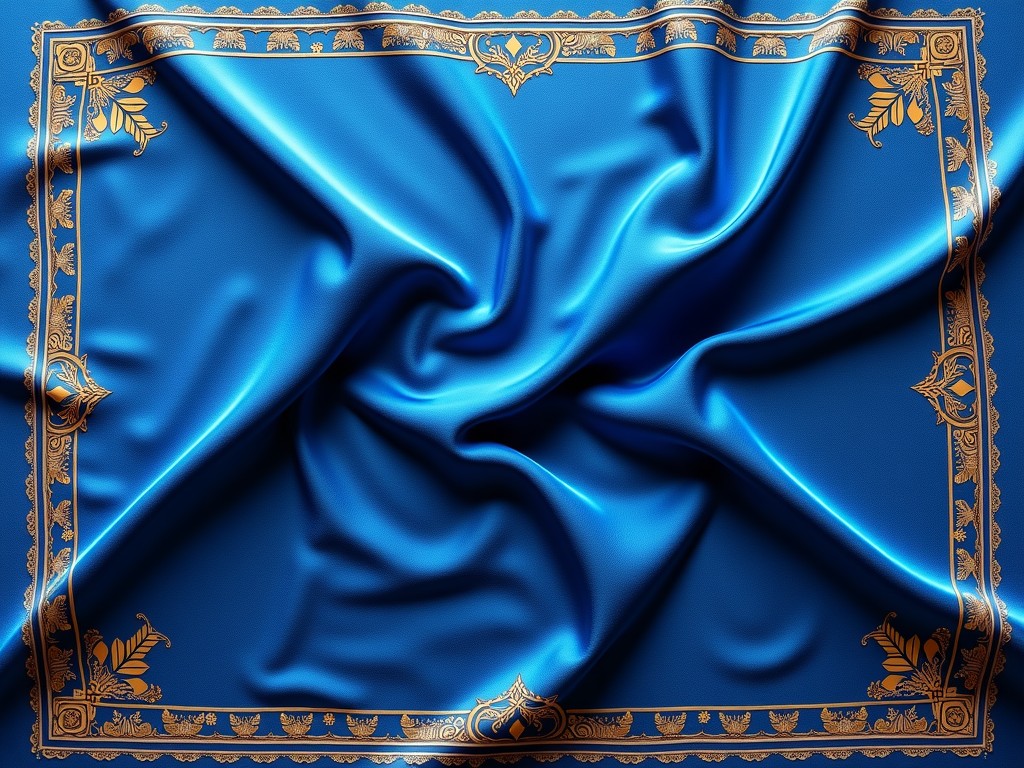
Blue Silk Scarf For Men
A men's blue silk scarf serves as a functional accessory in professional and formal environments, combining material properties with dimensional stability to maintain appearance under varied
Blue Silk Scarf for Men
A men's blue silk scarf serves as a functional accessory in professional and formal environments, combining material properties with dimensional stability to maintain appearance under varied conditions. Silk's natural fiber structure provides tensile strength adequate for daily handling while offering thermal regulation suitable for indoor climate control in office or meeting settings.
The scarf's dimensions are engineered to balance coverage with minimal bulk, allowing integration into standard dress shirt collars and suit lapels without creating excessive volume. This dimensional consistency supports uniform presentation across multiple wear instances, reducing the need for frequent adjustment during extended wear periods.
Color retention in blue silk is influenced by dye affinity to fibroin molecules and resistance to common environmental factors such as indirect light exposure and low-humidity indoor atmospheres. The selected blue shade aligns with standardized color references used in corporate attire, ensuring compatibility with navy, charcoal, and grey tailoring systems.
Material Construction
The scarf utilizes 100% mulberry silk, characterized by a triangular cross-section that refracts light to produce a consistent luster across the fabric surface. Fiber diameter averages 10–14 micrometers, contributing to smooth hand feel and reduced surface friction during contact with skin or collar fabrics.
Weave density is maintained at approximately 80–100 picks per inch in a plain or satin construction, balancing drape characteristics with resistance to snagging. This specification ensures the fabric retains its intended shape when folded or knotted, minimizing distortion over time.
Edge finishing employs a rolled hem technique with stitch density of 8–10 stitches per centimeter, preventing fraying without adding stiffness. This method preserves the scarf’s flexibility while maintaining clean lines visible at the perimeter during use.
Dimensional Specifications
Standard dimensions are 140 cm in length and 16 cm in width, providing sufficient material for common knotting styles such as the four-in-hand or half-Windsor while avoiding excess fabric that could create bulk beneath a jacket lapel. These proportions are derived from anthropometric data on average neck circumference and collar spread in men's formal wear.
Weight averages 15–20 grams per square meter, resulting in a total mass of approximately 35–45 grams for the finished scarf. This low mass ensures minimal perceptible weight when worn, reducing fatigue during extended wear in seated or standing positions.
Dimensional stability is maintained under typical indoor conditions (20–22°C, 40–50% relative humidity), with length variation under 0.5% after 24 hours of relaxed storage. This stability supports consistent presentation without requiring re-steaming or ironing between uses.
Applications in Professional Settings
In corporate environments, the scarf functions as a subtle visual element that enhances perceived attention to detail without dominating the overall ensemble. Its use is particularly relevant in client-facing roles where non-verbal cues contribute to professional perception, such as consulting, finance, or legal services.
The blue hue provides contrast against neutral shirt colors while remaining within the acceptable spectrum for formal business attire. Unlike patterned alternatives, a solid-color silk scarf avoids visual competition with striped or checked shirts, allowing the tie and shirt to retain their intended design hierarchy.
During temperature transitions between outdoor and indoor environments, the silk’s moisture-wicking properties help manage microclimate at the neckline, reducing discomfort caused by perspiration accumulation. This characteristic supports comfort in climates with seasonal variability or in buildings with aggressive HVAC cycling.
Comparison Table: Silk vs. Alternative Materials
| Property | Mulberry Silk | Polyester | Wool Blend |
|---|---|---|---|
| Fiber Diameter (µm) | 10–14 | 15–25 | 18–24 |
| Typical Weight (g/m²) | 15–20 | 20–30 | 25–35 |
| Moisture Regain (%) | 8–10 | 0.4–0.8 | 12–16 |
| Edge Fray Resistance | Moderate (requires hem) | High | Low to Moderate |
| Thermal Conductivity (W/m·K) | 0.04–0.05 | 0.05–0.06 | 0.04–0.05 |
Typical values based on industry textile standards; actual properties may vary with specific construction and finish.
Quality Considerations
Colorfastness is evaluated using ISO 105-B02 for light exposure and ISO 105-E04 for perspiration resistance, with target ratings of 4 or higher on the grey scale to ensure minimal fading during expected service life. These tests simulate prolonged exposure to indoor fluorescent lighting and periodic contact with skin secretions.
Tensile strength is measured per ASTM D2256, with minimum acceptable values of 3.5 cN/tex to ensure resistance to tearing during knotting and unknotting cycles. Elongation at break is maintained between 15–25%, allowing recovery from temporary deformation without permanent set.
Visual inspection occurs under 5000K daylight simulation to assess color uniformity, shade consistency, and absence of defects such as slubs, missing picks, or oil spots. Each unit is evaluated at 30 cm distance for 10–15 seconds per side to detect irregularities affecting professional appearance.
Customization Options
Length can be adjusted between 130–150 cm to accommodate varying neck circumferences or preferred knot complexity, with width options ranging from 14–18 cm to align with lapel proportions or personal drape preference. These modifications are made during cutting to maintain grain alignment and prevent skew.
Alternative blue shades are available upon request, including variations in hue, saturation, and value to match specific corporate color palettes or seasonal collections. Custom dye lots require minimum quantities and are subject to laboratory dip approval before bulk production.
Monogramming or subtle jacquard weaving can be integrated into one end or along the border using thread counts that do not compromise fabric integrity. Placement is restricted to non-visible areas when worn in standard configurations to maintain aesthetic simplicity.
For technical inquiries regarding material specifications, dimensional tolerances, or customization requirements, contact our engineering team to discuss project-specific needs.
Request Technical SpecificationProducts
Related Products
News
Related News

2026-11-02
Cotton Voile Scarf Manufacturing and Performance Analysis how to make a cotton voile scarfCreating a professional-grade cotton voile scarf requires a precise balance of textile engineering and artisanal finishing. Unlike standard cotton weaves, voile is defined by its p···

2026-10-28
chiffon hijab Technical Production and Performance AnalysisSelecting the right fabric for a hijab involves a delicate balance between modesty, breathability, and aesthetic drape. For many women in Southeast Asia and the Middle East, the ma···

2026-10-26
custom silk scarf textile manufacturing and performance analysisSelecting a high-quality scarf is no longer just about color matching; it is an exercise in understanding how textile weight, drape, and print scale interact with individual facial···
