Black Designer Scarf For Men






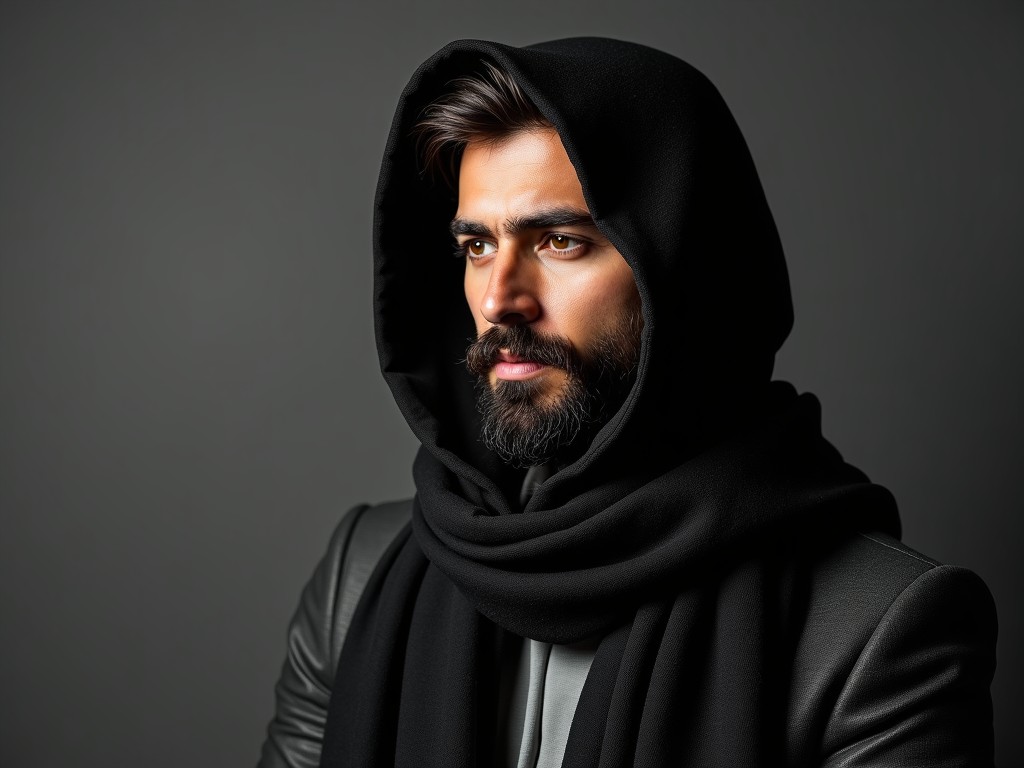
Black Designer Scarf For Men
A black designer scarf for men serves as both a functional accessory and a refined element of professional attire. Beyond aesthetics, its value lies in material properties, construction techniques,
Black Designer Scarf for Men
A black designer scarf for men serves as both a functional accessory and a refined element of professional attire. Beyond aesthetics, its value lies in material properties, construction techniques, and dimensional stability under varied environmental conditions. This page outlines the technical characteristics that inform selection for industrial, corporate, or uniform applications where appearance and durability intersect.
Material Composition and Fiber Performance
The foundation of any men's scarf lies in its fiber blend, which determines thermal regulation, drape, and resistance to pilling or deformation. Common constructions include merino wool, cashmere, silk, or synthetic alternatives like modal or acrylic, each selected based on end-use requirements. Merino wool offers natural moisture-wicking and odor resistance, effective in temperatures ranging from -5°C to 15°C. Cashmere provides superior softness with a fiber diameter typically under 19 microns, though it requires careful handling to avoid abrasion damage. Silk adds luster and tensile strength, with a tenacity of approximately 3.5–5.0 g/d, enhancing shape retention. Synthetic blends may improve wrinkle resistance and colorfastness, particularly under UV exposure, with polyester variants achieving UPF ratings of 15–30.
Dimensional Stability and Construction Techniques
Dimensional stability ensures the scarf maintains its intended dimensions after repeated use, washing, or exposure to humidity. This is influenced by yarn twist, weave density, and finishing processes. A typical men's scarf ranges from 160–180 cm in length and 20–30 cm in width, with tolerance held to ±2 cm for length and ±1 cm for width in quality-controlled production. Weave structures such as plain, twill, or herringbone affect both appearance and mechanical behavior; twill weaves, for example, offer greater drape and resistance to creasing due to their diagonal thread interlacing. Finishing treatments like sanforization reduce residual shrinkage to under 1%, critical for maintaining fit in uniformed environments.
Colorfastness and Dye Penetration
The black color must retain depth and uniformity under laundering, light exposure, and friction. Colorfastness is measured using standardized scales: lightfastness (ISO 105-B02) should achieve a minimum of 4–5 on the blue wool scale for indoor use, or 6+ for outdoor applications. Wash fastness (ISO 105-C06) targets a rating of 4–5 to prevent bleeding or fading after 5–10 cycles at 30°C. Dye penetration is optimized through exhaust or pad-steam methods, ensuring even coloration across fiber cross-sections. Reactive dyes are common on cellulose-based fibers (e.g., modal), while acid dyes suit protein fibers like wool and silk, forming covalent or ionic bonds that enhance durability.
Comparison of Common Scarf Constructions
| Property | Merino Wool | Cashmere Blend | Silk-Modal |
|---|---|---|---|
| Fiber Diameter (microns) | 17.5–24 | 14–19 | 10–12 (silk), 12–18 (modal) |
| Thermal Retention (Clo per mm) | 0.08–0.10 | 0.12–0.15 | 0.04–0.06 |
| Wash Shrinkage (after 5 cycles) | 1–3% (unsanforized) | 2–4% | <1% (with stabilization) |
| Pilling Resistance (Martindale) | 3,000–5,000 cycles | 1,500–3,000 cycles | 5,000–8,000 cycles |
Applications in Professional and Industrial Contexts
In corporate environments, a black designer scarf complements formal attire while providing microclimate control in air-conditioned offices or transitional outdoor settings. For uniformed personnel in hospitality, aviation, or retail, scarves may be integrated into dress codes to enhance brand consistency, with specifications often requiring specific weave patterns, end finishes (e.g., hand-rolled vs. machine-hemmed), and dimensional conformity to ensure visual uniformity across teams. In colder climates, scarves function as thermal layers, reducing convective heat loss from the neck and upper torso—particularly valuable for workers in logistics, maintenance, or field operations where full outerwear may impede mobility.
Customization and Specification Options
Industrial buyers often require tailored specifications to align with branding, functional needs, or procurement standards. Customization may include adjusting length and width to accommodate different wearing styles (e.g., looped, draped, or knotted), selecting end treatments such as fringed, tapered, or square finishes, or incorporating subtle jacquard patterns visible only at close range. Labeling options—woven tags, printed care labels, or ultrasonic bonding—support compliance with textile regulations (e.g., OEKO-TEX®, REACH). Minimum order quantities typically start at 100 units for custom colors or weaves, with lead times ranging from 3–6 weeks depending on complexity and raw material availability.
For technical evaluation, suppliers can provide swatch cards detailing fiber content, weight (gsm), thickness, and colorimetric data (L*a*b* values) to confirm consistency against master standards. Bulk orders may include packaging configurations such as flat-folded in polybags, boxed sets, or hanging-ready formats with individual barrier protection to prevent snagging or soiling during transit.
Quality Control and Inspection Criteria
Quality assurance focuses on measurable attributes rather than subjective appeal. Inspection protocols typically include: dimensional verification using calibrated gauges, color difference assessment via spectrophotometer (ΔE < 1.5 for acceptability), seam strength testing (minimum 5 N for hand-rolled ends), and defect grading under 2x magnification (allowing no more than 1 minor flaw per linear meter). pH levels are checked to ensure skin compatibility (target: 4.5–6.5), and formaldehyde content is screened to meet safety thresholds (<75 ppm for direct skin contact). These controls reduce the risk of rejection upon receipt and support long-term performance in service.
Unlike consumer-focused descriptions, this specification-driven approach enables procurement teams to compare offerings objectively, predict wear behavior, and integrate the item into broader uniform or PPE systems where traceability and consistency are required.
Products
Related Products
News
Related News

2026-11-02
Cotton Voile Scarf Manufacturing and Performance Analysis how to make a cotton voile scarfCreating a professional-grade cotton voile scarf requires a precise balance of textile engineering and artisanal finishing. Unlike standard cotton weaves, voile is defined by its p···

2026-10-28
chiffon hijab Technical Production and Performance AnalysisSelecting the right fabric for a hijab involves a delicate balance between modesty, breathability, and aesthetic drape. For many women in Southeast Asia and the Middle East, the ma···

2026-10-26
custom silk scarf textile manufacturing and performance analysisSelecting a high-quality scarf is no longer just about color matching; it is an exercise in understanding how textile weight, drape, and print scale interact with individual facial···
