Arabic Scarf For Men






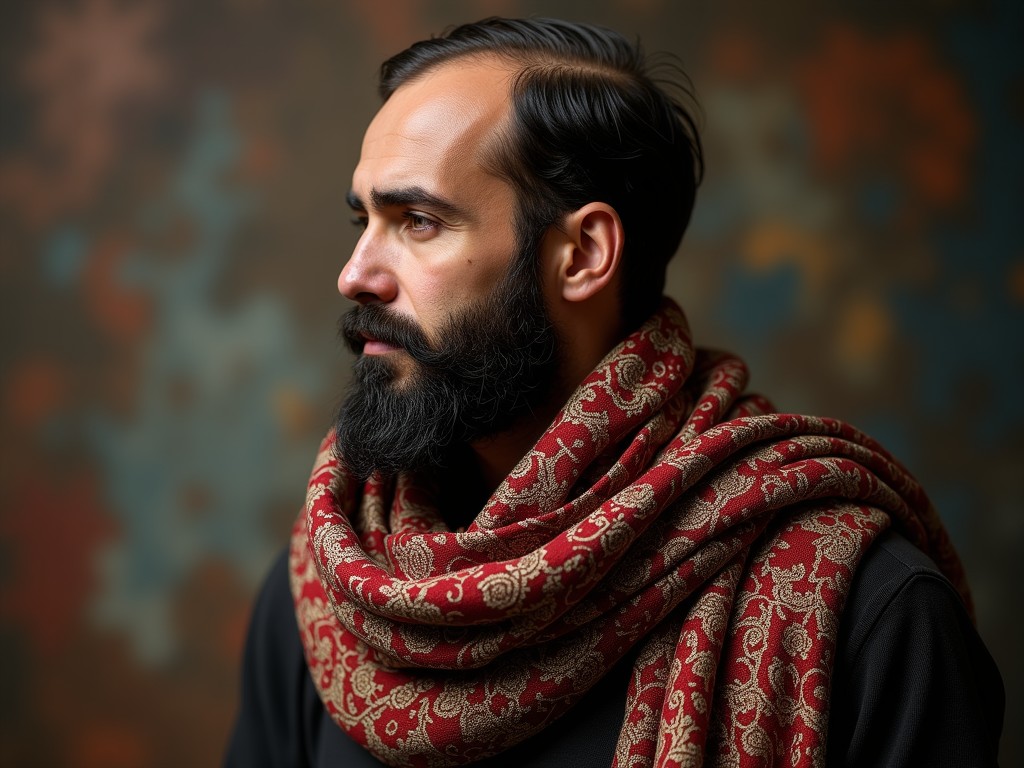
Arabic Scarf For Men
An Arabic scarf for men, commonly known as a keffiyeh or shemagh, is a square or rectangular textile traditionally worn across the Middle East and North Africa. In industrial contexts, this garment
Arabic Scarf for Men: Technical Specifications and Industrial Applications
An Arabic scarf for men, commonly known as a keffiyeh or shemagh, is a square or rectangular textile traditionally worn across the Middle East and North Africa. In industrial contexts, this garment serves functional purposes beyond cultural significance, providing protection against environmental elements such as solar radiation, wind-blown particulates, and temperature fluctuations. The design typically features a woven pattern with fringed edges, constructed from natural or blended fibers selected for breathability, moisture management, and durability under prolonged outdoor exposure.
Modern industrial variants are engineered to meet specific performance criteria required in sectors including construction, oil and gas, renewable energy installations, and desert-based logistics operations. Unlike fashion-oriented versions, industrial-grade scarves prioritize measurable technical attributes such as ultraviolet protection factor (UPF), air permeability, tensile strength, and dimensional stability after repeated washing cycles. These characteristics are determined through standardized textile testing methods to ensure consistent performance in harsh environments.
The following sections detail the material composition, structural design, performance specifications, and application considerations for industrial Arabic scarves intended for professional use. Each parameter is evaluated based on its impact on wearer comfort, safety, and operational efficiency in field conditions.
Material Composition and Fiber Properties
Industrial Arabic scarves are predominantly manufactured using 100% combed cotton, polyester-cotton blends (typically 65/35 or 50/50), or 100% polyester variants engineered for specific environmental challenges. Combed cotton offers superior moisture absorption (regain of 8-10% at 65% RH) and thermal regulation, making it suitable for high-temperature, low-humidity conditions where evaporative cooling is beneficial. The combed process removes short fibers and impurities, resulting in a smoother yarn with reduced pilling and increased tensile strength compared to carded cotton.
Polyester-cotton blends combine the hydrophilic properties of cotton with the hydrophobic durability of polyester, improving wrinkle resistance, drying speed, and resistance to UV degradation. A 65/35 blend typically retains 60-70% of cotton’s moisture absorption while reducing drying time by approximately 40% compared to 100% cotton. For extreme UV exposure environments, 100% polyester scarves with UV-stabilizing additives achieve UPF ratings of 40+ (blocking >97.5% of UV radiation), though they exhibit lower moisture absorption (<0.4% regain) and may require antimicrobial treatments to manage odor from perspiration.
Fiber fineness is another critical parameter, with yarn counts ranging from Ne 20s to Ne 40s (cotton count system) influencing fabric weight and drape. Lower counts (e.g., Ne 20s) produce heavier, more durable fabrics (180-220 gsm) suited for abrasion-prone environments, while higher counts (Ne 30s-40s) yield lighter constructions (120-160 gsm) preferred for thermal comfort in sustained heat. All materials are selected based on standardized tests including ASTM D5034 for tensile strength, ASTM D737 for air permeability, and AATCC TM183 for UV protection.
Structural Design and Construction Parameters
The standard industrial Arabic scarf is constructed as a square with nominal dimensions of 110 cm × 110 cm, though rectangular variants (100 cm × 140 cm) are available for specific wrapping techniques that require additional length. Dimensional stability is critical; fabrics must maintain size within ±3% after five industrial wash cycles at 60°C according to ISO 6330 to ensure consistent fit and coverage. Fringe elements, typically 2-3 cm in length, are integrated during weaving rather than sewn post-production to prevent unraveling under mechanical stress.
Weave structure predominantly uses a plain weave with a thread count ranging from 80 to 120 ends per inch (EPI) in both warp and weft directions. This balance provides sufficient opacity (minimizing visibility of underlayers) while maintaining adequate air permeability for heat dissipation. Some industrial variants incorporate a ripstop weave pattern using reinforcement threads at 5-7 mm intervals to inhibit tear propagation, increasing tear strength by 25-40% compared to standard plain weave without significant weight penalty.
Edge finishing is performed via heat cutting or ultrasonic sealing for synthetic blends to eliminate fraying, while cotton versions may use a narrow overlock stitch (3-4 mm width) to maintain flexibility. The fabric’s drape coefficient, measured using a Cusick drape meter, typically falls between 0.4 and 0.6, indicating moderate conformity to complex wrapping geometries without excessive stiffness. These structural parameters are validated through prototype testing under simulated field conditions involving repeated donning/doffing cycles and exposure to abrasive surfaces.
Performance Specifications and Testing Standards
Industrial Arabic scarves are evaluated against a defined set of performance criteria to ensure suitability for professional use. Key specifications include ultraviolet protection factor (UPF), air permeability, moisture vapor transmission rate (MVTR), and resistance to environmental stressors. These properties are not inherent but are engineered through fiber selection, yarn construction, and post-treatment processes. Compliance with international standards allows for objective comparison between products and supports risk assessment in procurement decisions.
UPF is measured according to AS/NZS 4399 or ASTM D6544, with values indicating the fraction of UV radiation blocked. A UPF of 15-24 offers good protection (93.3-95.9% blockage), 25-39 very good (96.0-97.4%), and 40+ excellent (>97.5%). Air permeability, tested per ASTM D737, quantifies breathability; values between 50-150 mm/s are typical for cotton-based scarves, balancing protection with convective cooling. MVTR, assessed via ASTM E96, determines moisture transport capacity; values exceeding 2000 g/m²/24h indicate effective sweat dissipation during prolonged physical activity.
Additional considerations include colorfastness to light (ISO 105-B02, minimum rating 4), rubbing (ISO 105-X12, minimum rating 3-4), and washing (ISO 105-C06, minimum rating 4). Dimensional change after washing is limited to ±3% to maintain functional integrity. For applications involving flame resistance, scarves may be treated with phosphorus-based compounds to achieve limited flame spread (LFS) properties per ISO 15025, though this adds weight and may reduce breathability—trade-offs evaluated based on specific hazard assessments.
Industrial Applications and Functional Benefits
In construction and infrastructure projects located in arid or semi-arid regions, the Arabic scarf functions as a primary defense against solar radiation and wind-borne sand or dust particulates. Workers engaged in prolonged outdoor tasks such as surveying, pipeline installation, or solar panel maintenance experience reduced risk of actinic keratosis, photoconjunctivitis, and dehydration when the scarf is used to cover the neck, lower face, and head. The fabric’s moisture-wicking capability aids in evaporative cooling when dampened, providing a passive thermal regulation mechanism in environments where active cooling systems are impractical.
Within oil and gas exploration and refining operations, particularly in offshore or desert facilities, the scarf serves as a barrier against hydrocarbon mists, fine particulates, and wind-chill effects during winter months. Its low lint generation (critical in sensitive instrumentation areas) and resistance to chemical splashes (when treated with fluorocarbon finishes) make it suitable for use in zones where foreign material exclusion (FME) protocols are enforced. The scarf’s adaptability allows it to be worn under hard hats or alongside respiratory protection without compromising seal integrity.
Logistics and transportation personnel operating in extreme climates benefit from the scarf’s ability to mitigate thermal stress during loading/unloading operations or vehicle maintenance in exposed areas. Unlike specialized PPE that may be task-specific, the Arabic scarf offers multi-hazard protection with minimal interference to movement or peripheral vision. Its reusability and low lifecycle cost—typically enduring 50+ industrial wash cycles—position it as a cost-effective component of a broader personal protection strategy, especially when issued as part of standardized workwear kits in high-turnover industries.
Customization Options and Procurement Considerations
Industrial buyers can specify variations in material composition, dimensions, colorfastness levels, and edge treatments to align with site-specific risk assessments and operational requirements. Color selection is not merely aesthetic; darker shades (e.g., black, navy, olive) exhibit higher UV absorption but lower visible light reflectance, potentially increasing thermal load, while lighter tones (white, beige, light gray) reflect more solar radiation but may show soiling more readily. Near-infrared (NIR) reflective treatments can be applied to reduce heat gain without altering visible appearance, a consideration for prolonged wear in direct sunlight.
Size adjustments beyond standard squares are available for specialized wrapping techniques; for example, elongated rectangles (110 cm × 160 cm) accommodate users requiring additional coverage for the shoulders or chest when worn in a layered configuration. Custom weave patterns, including company logos or identification codes, can be integrated via jacquard weaving during production, eliminating the need for separate labeling that could detach or create snag hazards. Minimum order quantities for custom designs typically start at 500 units, with lead times ranging from 4 to 8 weeks depending on complexity.
Packaging options include bulk packing in polypropylene bags (25-50 units per bale) or individual polybagging with barcode labels for inventory control. For export shipments, moisture-barrier liners and desiccant packs are recommended to prevent mildew during transit, particularly when transporting natural fiber products through humid climates. All customization requests should be accompanied by detailed technical specifications, including target UPF, air permeability, and dimensional tolerances, to enable accurate quoting and sample development.
For technical inquiries, sample requests, or to discuss custom specifications for your operational environment, please contact our industrial textiles team.
Request Technical Specification SheetProducts
Related Products
News
Related News

2026-11-02
Cotton Voile Scarf Manufacturing and Performance Analysis how to make a cotton voile scarfCreating a professional-grade cotton voile scarf requires a precise balance of textile engineering and artisanal finishing. Unlike standard cotton weaves, voile is defined by its p···

2026-10-28
chiffon hijab Technical Production and Performance AnalysisSelecting the right fabric for a hijab involves a delicate balance between modesty, breathability, and aesthetic drape. For many women in Southeast Asia and the Middle East, the ma···

2026-10-26
custom silk scarf textile manufacturing and performance analysisSelecting a high-quality scarf is no longer just about color matching; it is an exercise in understanding how textile weight, drape, and print scale interact with individual facial···
