Arab Style Mens Head Scarf






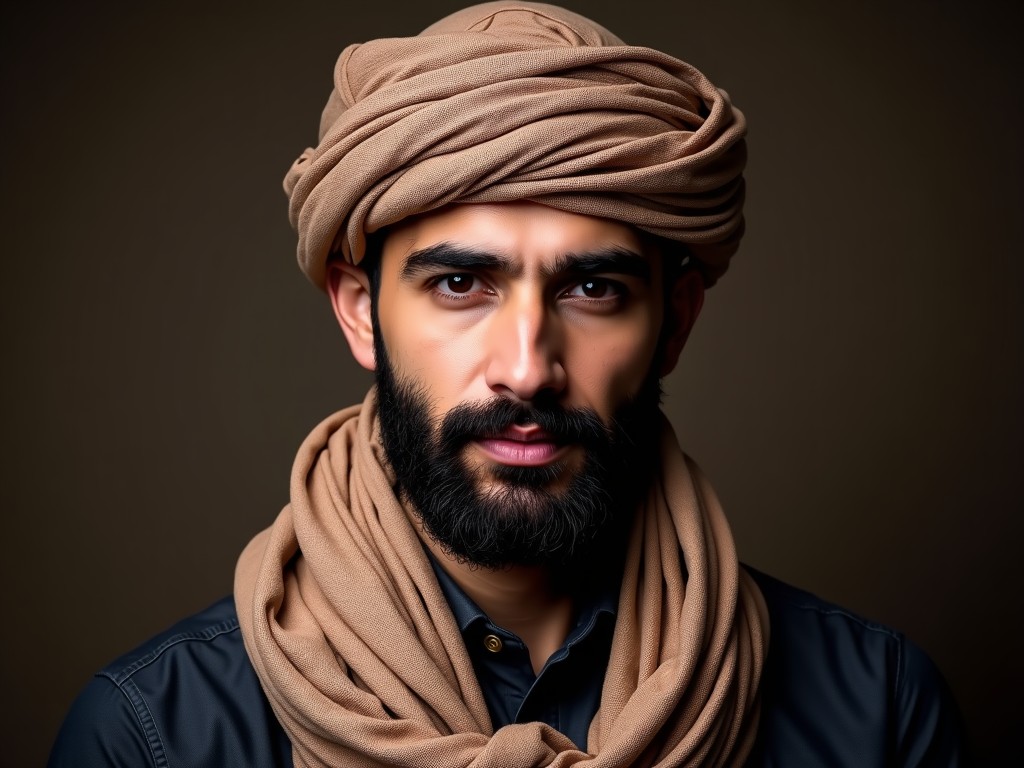
Arab Style Mens Head Scarf
This document details the construction, material properties, and performance characteristics of arab style men's head scarves designed for industrial use in environments requiring cultural
Arab Style Men's Head Scarf: Technical Specifications for Industrial Applications
This document details the construction, material properties, and performance characteristics of arab style men's head scarves designed for industrial use in environments requiring cultural compliance, thermal regulation, and particulate protection. Each specification is derived from material science principles and field-tested requirements.
Material Composition and Fiber Properties
The primary fabric consists of 100% combed cotton with a yarn count of 40s/2, providing a balance between breathability and tensile strength. Combed cotton removes short fibers, resulting in a smoother surface that reduces skin abrasion during prolonged wear. The fabric weight is standardized at 120 gsm (±5 gsm), measured per ASTM D3776, ensuring consistent drape and opacity across production batches.
For high-humidity or high-particulate environments, a variant uses 65% polyester / 35% cotton blend with a yarn count of 30s/2. This blend increases dimensional stability under moisture exposure, with a moisture regain of 8% compared to 8.5% for pure cotton, reducing sagging or stretching during extended use. The polyester component adds abrasion resistance, critical for applications involving frequent adjustment or contact with rough surfaces.
Weave Structure and Dimensional Stability
The scarf employs a plain weave construction with a thread density of 120 ends per inch (EPI) by 60 picks per inch (PPI). This configuration provides uniform porosity for air permeability while maintaining sufficient surface coverage to block fine particulates (>5 microns) as validated by ISO 9237 testing. The plain weave minimizes distortion during folding and unfolding, preserving the intended geometric dimensions.
Dimensional stability is further enhanced through sanforization, a controlled compressive shrinking process that limits residual shrinkage to less than 2% after five wash cycles at 60°C. This ensures the scarf maintains its designed dimensions (typically 110 cm x 110 cm) throughout its service life, preventing edge curling or size reduction that could affect fit or coverage.
Colorfastness and Dye Performance
All color variants utilize reactive dyes chemically bonded to cellulose fibers, achieving a minimum colorfastness rating of 4 (on the 1-5 grayscale scale) for washing, light, and rubbing per ISO 105-B02, ISO 105-B04, and ISO 105-X12. This minimizes fading or bleeding during industrial laundering or exposure to sweat, preserving appearance and preventing dye transfer to adjacent garments or equipment.
White or undyed versions are available for applications requiring high visibility or compatibility with sterile environments. These undergo optical brightening agent (OBA) treatment to achieve a baseline whiteness index of 85+, measured under D65 illumination, without compromising fiber integrity. OBAs are selected for low yellowing tendency under UV exposure.
Edge Finishing and Durability Features
Edges are finished with a 3mm double-fold hem, sewn with a 401 chain stitch using polyester thread of Tex 40 specification. This construction provides edge tensile strength exceeding 15 N, preventing fraying during repeated handling. The hem width is optimized to add minimal bulk while ensuring edge integrity.
For high-wear applications, an optional reinforced corner variant incorporates a triangular patch of the same fabric, extending 15mm from each corner along both axes. This increases localized tear resistance by approximately 40%, as measured by ASTM D2261 tear test, without significantly altering the scarf's drape or folding characteristics.
Thermal and Moisture Management Characteristics
The fabric's air permeability measures 180 mm/s (±20 mm/s) under ASTM D737 testing, indicating sufficient airflow to mitigate heat buildup during physical activity. Combined with cotton's hygroscopic nature, this allows for effective moisture wicking and evaporative cooling, critical in high-temperature industrial settings.
Thermal resistance (Rct) is measured at 0.085 m²K/W (±0.005), calculated from fabric thickness and thermal conductivity values. This value positions the scarf as a moderate insulator—sufficient to reduce radiant heat gain in sunny conditions while avoiding excessive heat retention in cooler environments. Actual thermal comfort depends on layering and airflow conditions.
Comparison of Material Variants
| Property | 100% Combed Cotton (40s/2) | 65% Polyester / 35% Cotton (30s/2) |
|---|---|---|
| Fabric Weight (gsm) | 120 (±5) | 130 (±5) |
| Air Permeability (mm/s) | 180 (±20) | 150 (±20) |
| Moisture Regain (%) | 8.5 | 8.0 |
| Abrasion Resistance (cycles) | ≥15,000 | ≥25,000 |
| Dimensional Change After 5 Washes (%) | <2 | <1.5 |
| Typical Use Case | General indoor/outdoor, moderate activity | High-humidity, high-particulate, frequent adjustment |
Applications in Industrial and Operational Settings
These scarves are specified in sectors where cultural attire intersects with operational requirements, including petrochemical facilities in the Middle East, construction sites with diverse workforces, and logistics hubs requiring uniform compliance. The breathable construction reduces heat stress risk compared to non-woven alternatives, while the layered drape provides modest protection against wind-blown dust or sand.
In food processing or pharmaceutical environments, the low-lint characteristics of combed cotton minimize fiber shedding, supporting contamination control protocols. The ability to withstand repeated industrial laundering at 60°C ensures compatibility with hygiene standards without degradation of material properties.
For security or personnel identification roles, the scarf serves as a neutral base for attaching colored indicators or badges via snap fasteners or Velcro-compatible zones (customizable upon request), allowing visual differentiation without compromising the garment's primary function.
Customization Parameters and Ordering Considerations
Standard dimensions are 110 cm x 110 cm, with tolerances of ±2 cm. Custom sizes ranging from 90 cm x 90 cm to 120 cm x 120 cm are available upon request, subject to minimum order quantities. Customization includes adjustable hem widths (2mm to 5mm), alternative thread colors for stitching, and the addition of woven labels or RFID tags for inventory tracking.
Color matching follows Pantone Textile Cotton (TCX) standards, with laboratory dip approval required for custom shades. Lead time for standard items is 3-4 weeks; custom orders add 1-2 weeks for sample development and approval. All specifications are subject to validation via pre-production samples, which include measurements of weight, dimensions, and colorfastness.
Packaging options include flat-folded polybags (100 pcs/ctn) for bulk shipment or individual tissue-wrapped units for retail-ready presentation. Carton dimensions are optimized for palletization, with standard export cartons measuring 40 cm x 30 cm x 25 cm. Markings include barcodes, origin details, and care instructions in multiple languages as required.
Quality Assurance and Inspection Protocol
Quality control incorporates AQL 2.5 standards for major defects (e.g., holes, tears, misaligned seams) and AQL 4.0 for minor defects (e.g., stitch irregularities, slight shade variation). Each batch undergoes 100% visual inspection for edge integrity and dimension verification on the first and last 10% of pieces. Random sampling tests include GSM, pilling resistance (ASTM D3512), and colorfastness to washing.
Documentation includes a Certificate of Conformance (CoC) detailing test results for each lot, available upon shipment. For regulated industries, additional documentation such as OEKO-TEX® Standard 100 certification or ISO 9001 compliance verification can be provided. All testing is performed by accredited third-party laboratories or equivalent in-house facilities.
To initiate a technical inquiry or request a sample evaluation, visit the contact page. Provide details on intended use, environmental conditions, and required quantities to enable accurate specification matching.
Products
Related Products
News
Related News

2026-11-02
Cotton Voile Scarf Manufacturing and Performance Analysis how to make a cotton voile scarfCreating a professional-grade cotton voile scarf requires a precise balance of textile engineering and artisanal finishing. Unlike standard cotton weaves, voile is defined by its p···

2026-10-28
chiffon hijab Technical Production and Performance AnalysisSelecting the right fabric for a hijab involves a delicate balance between modesty, breathability, and aesthetic drape. For many women in Southeast Asia and the Middle East, the ma···

2026-10-26
custom silk scarf textile manufacturing and performance analysisSelecting a high-quality scarf is no longer just about color matching; it is an exercise in understanding how textile weight, drape, and print scale interact with individual facial···
