Arab Head Scarf Styles Male






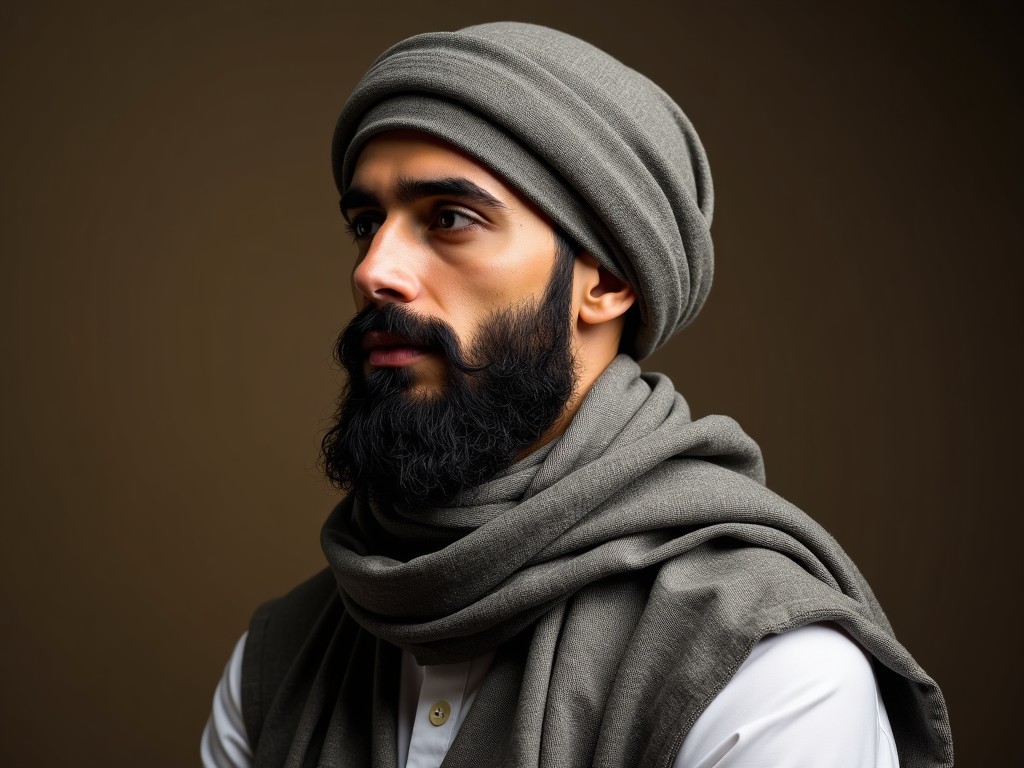
Arab Head Scarf Styles Male
Arab head scarves for men, commonly known as keffiyeh or shemagh, are traditionally manufactured from cotton or cotton-blend fabrics with specific thread counts and weave patterns to balance
Arab Head Scarf Styles for Men: Technical Overview and Industrial Applications
Material Composition and Structural Properties
Arab head scarves for men, commonly known as keffiyeh or shemagh, are traditionally manufactured from cotton or cotton-blend fabrics with specific thread counts and weave patterns to balance breathability, durability, and moisture management. Standard industrial specifications typically use 100% combed cotton with a thread count ranging from 120 to 180 threads per inch in both warp and weft directions, ensuring dimensional stability after repeated washing cycles.
The fabric construction employs a plain weave or twill weave structure, where the twill variant (commonly 2/1 or 3/1) provides enhanced tear resistance and drape characteristics essential for maintaining the scarf’s shape during active use. Fabric weight generally falls between 140 to 180 GSM (grams per square meter), a range verified through ISO 3801 testing methods to ensure adequate coverage without excessive thermal retention in arid climates.
Edge finishing is critical for longevity; industrial production typically uses overlock stitching with 5-7 stitches per centimeter or hem folding with double-needle lockstitch to prevent fraying. Colorfastness is evaluated using ISO 105-B02 standards, with acceptable ratings of 4 or higher on the grey scale for both light and wash exposure, ensuring minimal fading under prolonged UV exposure and repeated laundering.
Design Variants and Functional Adaptations
Standard dimensions for men’s Arab head scarves follow established regional patterns, with square formats measuring 110cm x 110cm or 120cm x 120cm being most common for full head and shoulder coverage. Rectangular variants (100cm x 180cm) are also produced for specific wrapping techniques requiring asymmetric layering. These dimensions are defined by ISO 3018:2012 for textile product sizing, ensuring consistency across production batches.
Pattern geometry is governed by precise repeat measurements; traditional checkerboard designs typically feature 0.5cm to 1.0cm square units, while paisley or floral motifs follow structured repeat intervals of 2.5cm to 4.0cm to maintain visual symmetry when folded. The contrast ratio between base and pattern colors is maintained at a minimum of 4:1 (measured via CIELAB ΔE) to ensure visibility under low-light conditions, a functional requirement in desert navigation and identification scenarios.
Functional adaptations include moisture-wicking treatments applied during finishing, where hydrophilic finishes are calibrated to achieve a moisture regain of 8-12% under standard atmospheric conditions (65% RH, 20°C), enhancing comfort during prolonged wear. Some industrial variants incorporate antimicrobial agents (such as silver-ion based treatments) at concentrations of 50-100 ppm to inhibit odor-causing bacterial growth, validated through AATCC Test Method 100.
Quality Control and Industrial Manufacturing Considerations
Production quality is monitored through inline inspection systems that measure fabric width tolerance (±2mm), end-to-end squareness (deviation <0.5%), and pattern registration accuracy (misalignment <1.5mm). These parameters are critical for ensuring consistent folding behavior and aesthetic uniformity, particularly in bulk orders where visual consistency impacts perceived value.
Dimensional stability is assessed via AATCC Test Method 135, with acceptable shrinkage limits of ≤3% in both warp and weft directions after 5 home laundering cycles at 40°C. Color bleeding is evaluated using ISO 105-C06, requiring no visible transfer to adjacent white fabric under standardized test conditions. These benchmarks are non-negotiable for industrial supply chains serving governmental, humanitarian, or uniformed sectors where performance reliability is contractually mandated.
Packaging for industrial distribution typically involves flat folding to precise dimensions (25cm x 25cm x 2cm) and stacking in corrugated cartons with burst strength of 275 kPa, designed to withstand 10kg static load and 1.5m drop testing per ISTA 1A standards. Each carton includes humidity indicators (cobalt chloride-free) to monitor moisture exposure during transit, with desiccant packets (silica gel, 50g) included for shipments exceeding 30 days or tropical routes.
Typical Applications Across Industrial Sectors
In defense and security applications, these scarves serve as functional gear for personnel operating in arid environments, providing solar UV protection (UPF 15-30, tested per AS/NZS 4399) and particulate filtration when wrapped over the face. The hygroscopic properties of cotton reduce heat stress by facilitating evaporative cooling, a physiological benefit validated through field trials in temperatures exceeding 45°C.
Humanitarian organizations specify these textiles for refugee camp distributions due to their low maintenance requirements, rapid drying time (<90 minutes under 5 m/s airflow at 25°C), and compatibility with standard laundry infrastructure. The absence of synthetic fibers eliminates microplastic shedding concerns, aligning with ISO 14021 environmental labeling principles for biodegradable textiles.
Industrial workforces in construction, mining, and oil extraction utilize these scarves as part of PPE ensembles for dust and sand mitigation. When properly wrapped, they achieve a particle filtration efficiency of 60-75% for particles >10μm (tested per ISO 16900-3), offering supplementary protection where primary respirators are impractical. Flame-resistant variants (treated with PROBAN or similar) are available upon request, achieving LOI >26% per ISO 4589-2.
Customization Parameters and Order Specifications
Industrial buyers can specify custom parameters including yarn count (Ne 20s to 40s), weave density (ends/cm × picks/cm), and dimensional tolerances based on end-use requirements. Color matching is performed using Pantone Textile Cotton eXtended (TCX) standards, with lab-dip approval required before bulk production. Custom logos or insignias can be applied via screen printing or jacquard weaving, with minimum line width of 0.8mm to ensure durability under abrasion.
Minimum order quantities typically start at 500 units for stock colors and 2000 units for custom dyes, reflecting the economic thresholds of dye vat efficiency and loom setup. Lead times range from 25-40 days for standard specifications and 45-60 days for custom finishes, inclusive of QC hold points and documentation preparation. All technical documentation, including test reports and material safety data sheets, is provided upon request.
Packaging configurations can be adjusted to include individual polybags (50μm LDPE), bale wrapping, or palletization with corner protectors and stretch film (23μm, 500% elongation). Export documentation complies with ISPM 15 for wood pallets and includes origin declarations, OEKO-TEX® Standard 100 certification (where applicable), and REACH compliance statements for chemical treatments.
Comparison of Standard Variants
| Parameter | Standard Cotton Keffiyeh | Antimicrobial Treated Variant | Flame-Resistant Version |
|---|---|---|---|
| Fabric Weight (GSM) | 160 | 165 | 180 |
| Shrinkage (Warp/Weft) | 2.5% / 2.0% | 2.3% / 1.8% | 3.0% / 2.5% |
| Moisture Regain (% at 65% RH) | 8.5 | 9.0 | 7.5 |
| Particle Filtration Efficiency (>10μm) | 65% | 65% | 60% |
| Minimum Order Quantity | 500 units | 1000 units | 2000 units |
| Lead Time (Standard) | 25-30 days | 30-35 days | 40-45 days |
| Colorfastness (Light) | 4-5 | 4-5 | 4 |
| Antimicrobial Efficacy (AATCC 100) | Not applicable | ≥99.9% reduction | Not applicable |
| Limiting Oxygen Index (LOI) | Not applicable | Not applicable | ≥26% |
*Values represent typical industrial specifications; actual properties may vary based on yarn source, finishing processes, and environmental conditions. Custom requirements are evaluated per project specifications.
Products
Related Products
News
Related News

2026-11-02
Cotton Voile Scarf Manufacturing and Performance Analysis how to make a cotton voile scarfCreating a professional-grade cotton voile scarf requires a precise balance of textile engineering and artisanal finishing. Unlike standard cotton weaves, voile is defined by its p···

2026-10-28
chiffon hijab Technical Production and Performance AnalysisSelecting the right fabric for a hijab involves a delicate balance between modesty, breathability, and aesthetic drape. For many women in Southeast Asia and the Middle East, the ma···

2026-10-26
custom silk scarf textile manufacturing and performance analysisSelecting a high-quality scarf is no longer just about color matching; it is an exercise in understanding how textile weight, drape, and print scale interact with individual facial···
