Square Chiffon Head Scarf






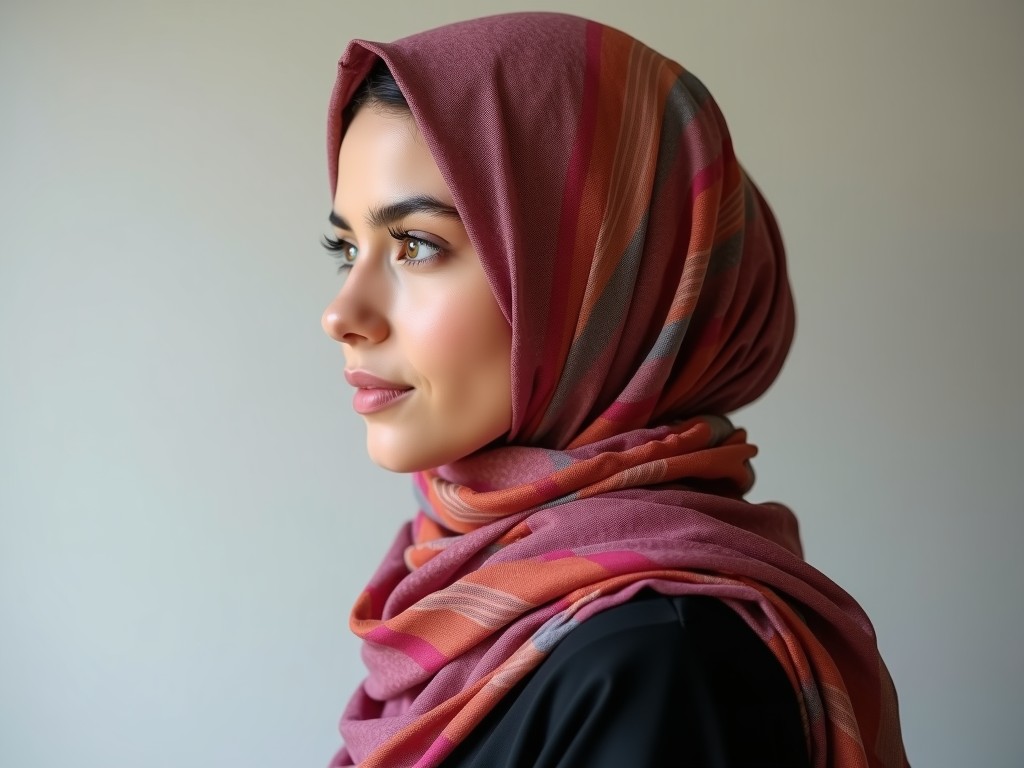
Square Chiffon Head Scarf
A square chiffon head scarf is a lightweight textile accessory constructed from finely woven chiffon fabric, typically cut into equal-length sides to form a geometric square. Its primary function is
Square Chiffon Head Scarf
A square chiffon head scarf is a lightweight textile accessory constructed from finely woven chiffon fabric, typically cut into equal-length sides to form a geometric square. Its primary function is to provide coverage, manage hair, or serve as a decorative element in industrial, medical, or cleanroom environments where loose hair containment is required. Unlike heavier fabrics, chiffon’s low mass and open weave structure allow for breathability while maintaining sufficient opacity for modest coverage.
Material Composition and Fabric Properties
The chiffon used in these scarves is commonly made from 100% polyester filament yarn, selected for its dimensional stability, resistance to shrinking, and ability to retain shape after repeated washing. Polyester chiffon exhibits a typical tensile strength of 3.5–4.5 g/denier and a low moisture regain of 0.4%, making it suitable for environments where humidity control is critical. The fabric is woven in a plain weave with tightly twisted yarns, resulting in a slight crêpe texture that enhances drape and reduces cling.
Alternative material options include silk chiffon for applications requiring natural fiber compatibility and biodegradability, though silk has lower abrasion resistance and higher cost. Some variants incorporate a 5% spandex blend to improve recovery after stretching, particularly useful in scarves designed for secure fitting over hair nets or caps. Fabric weight typically ranges from 18 to 25 GSM (grams per square meter), balancing transparency with durability.
Dimensional Specifications and Tolerances
Standard square chiffon head scarves are produced in nominal sizes of 50×50 cm, 60×60 cm, or 70×70 cm, measured along the cut edges before hemming. Hemming reduces the usable area by approximately 1–1.5 cm per side due to the folded and stitched border. Tolerances are maintained within ±3 mm for length and width under standard conditioning (23°C, 50% RH), verified using calibrated steel rules and optical comparators.
The hem itself is typically a 3-mm double-fold blind stitch, minimizing bulk while preventing fraying. This construction ensures the scarf lies flat when worn and resists unraveling after repeated laundering cycles. For cleanroom or sterile applications, heat-sealed edges may be specified to eliminate particulate shedding from stitching, though this option increases cost and reduces flexibility.
Functional Applications in Industrial Settings
In pharmaceutical manufacturing, square chiffon head scarves are worn under bouffant caps or hoods to contain stray hairs and prevent contamination of sterile products. Their lightweight nature reduces thermal burden during extended wear, which is critical in temperature-controlled environments. Unlike cotton or nylon alternatives, chiffon does not generate significant lint or static charge when properly grounded, minimizing electrostatic discharge (ESD) risks in sensitive electronics assembly.
Food processing facilities utilize these scarves as part of personal protective equipment (PPE) protocols to comply with FDA 21 CFR Part 110 and GMP standards. The fabric’s smooth surface resists microbial adhesion and allows for effective cleaning at temperatures up to 60°C. In laboratories handling powders or aerosols, chiffon scarves serve as a secondary barrier when worn under face shields or respirators, helping to seal gaps around the forehead and temples without compromising visibility or comfort.
Customization Options and Technical Considerations
Customization is available for dimensions, hem style, and colorfastness. Scarves can be produced in non-standard sizes ranging from 30×30 cm to 90×90 cm, with tolerances adjustable to ±1 mm for high-precision applications. Hem types include rolled, overlocked, or ultrasonic weld finishes, each selected based on fray resistance, seam bulk, and compatibility with automated donning systems.
Color options are limited to solid, dye-sublimated shades that meet ISO 105-B02 standards for lightfastness (minimum rating 6) and washfastness (minimum rating 4–5). Custom prints or logos are possible via digital printing, but ink penetration must be verified to avoid stiffness or reduced breathability. For ESD-sensitive environments, conductive yarns can be woven into the border at a density of 2–5% to achieve surface resistivity below 10⁹ Ω/sq, though this requires validation per ANSI/ESD S20.20.
Quality Control and Inspection Protocols
Incoming fabric is inspected under 6500 K daylight simulation for defects such as thick/thin spots, neps, or discoloration using a 4-point system per ASTM D5430. Roll width is verified to ensure consistent yield, and GSM is measured via random sampling with a precision scale and cutter. Final inspection includes dimensional checks, hem integrity testing (10 N pull strength minimum), and visual assessment for stains, oil spots, or melting points.
Batch testing includes pilling resistance (Martindale method, minimum 1000 cycles), color bleeding after 5 wash cycles at 40°C, and dimensional stability after 5 home laundering cycles (AATCC Test Method 135). For cleanroom-grade scarves, particle emission testing is conducted using a Helmke drum tester per IEST-RP-CC003.4, with acceptable limits typically below 100 particles >0.5 µm per cm²/min. All test results are available upon request as part of the technical data package.
Packaging and Logistics
Scarves are folded to a uniform size (typically 1/4 of the original dimensions) and packed in polyethylene bags to prevent moisture ingress and particulate contamination. Standard packaging configurations include 10, 25, or 50 units per inner box, with outer cartons sized for pallet optimization (e.g., 60×40×30 cm). Each bag is labeled with lot number, size, material, and care instructions in compliance with ISO 9001 traceability requirements.
For export shipments, desiccant packs are included to maintain relative humidity below 50% during transit. Cartons are sealed with pressure-sensitive tape and stretch-wrapped to prevent shifting. Lead time for stock items is typically 3–5 business days; custom orders require 10–15 days depending on material sourcing and print complexity. Samples are available for evaluation, with specifications and swatches provided upon request to support qualification testing.
Typical Technical Specifications
| Property | Typical Value | Test Method / Standard |
|---|---|---|
| Fabric Weight | 18–25 GSM | ASTM D3776 |
| Tensile Strength (Warp) | 3.5–4.5 g/denier | ASTM D2256 |
| Moisture Regain | 0.4% | ASTM D2495 |
| Dimensional Stability (5 washes) | ≤2% shrinkage | AATCC 135 |
| Particle Emission (>0.5 µm) | < 100 particles/cm²/min | IEST-RP-CC003.4 |
Products
Related Products
News
Related News

2026-11-02
Cotton Voile Scarf Manufacturing and Performance Analysis how to make a cotton voile scarfCreating a professional-grade cotton voile scarf requires a precise balance of textile engineering and artisanal finishing. Unlike standard cotton weaves, voile is defined by its p···

2026-10-28
chiffon hijab Technical Production and Performance AnalysisSelecting the right fabric for a hijab involves a delicate balance between modesty, breathability, and aesthetic drape. For many women in Southeast Asia and the Middle East, the ma···

2026-10-26
custom silk scarf textile manufacturing and performance analysisSelecting a high-quality scarf is no longer just about color matching; it is an exercise in understanding how textile weight, drape, and print scale interact with individual facial···
