Soft Solid Chiffon Scarf






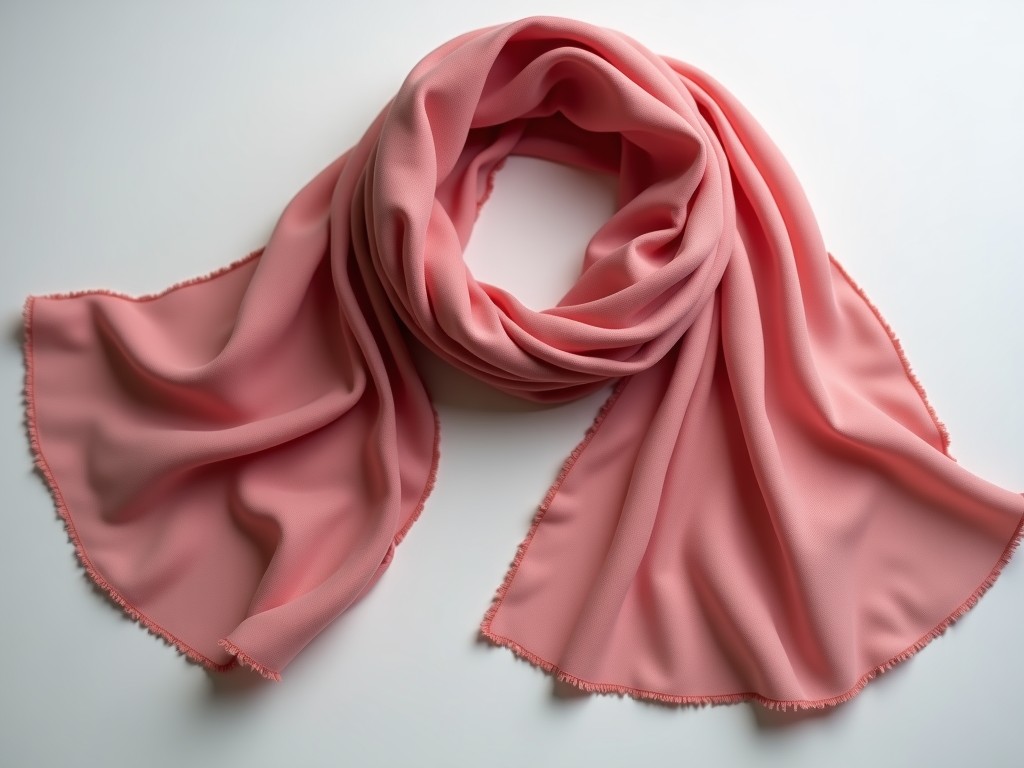
Soft Solid Chiffon Scarf
A soft solid chiffon scarf is a lightweight textile accessory engineered for consistent drape, uniform coloration, and controlled breathability. Constructed from fine polyester or silk-blend
Soft Solid Chiffon Scarf
A soft solid chiffon scarf is a lightweight textile accessory engineered for consistent drape, uniform coloration, and controlled breathability. Constructed from fine polyester or silk-blend filaments, it delivers predictable performance in apparel layering, promotional branding, and uniform complement applications. This page details the material specifications, structural properties, and functional considerations relevant to industrial procurement.
Material Composition and Filament Structure
The base fabric uses 100% polyester filament yarn with a denier range of 15D to 30D, selected for its balance of tensile strength and flexibility. Yarns are processed through false-twist texturing to create a soft hand feel while maintaining dimensional stability. The plain weave construction achieves a thread count of 80x60 ends per inch, resulting in a fabric weight of 15–25 gsm. This structure ensures minimal pilling and resistance to snagging under normal handling.
Coloration is achieved through disperse dyeing at 130–135°C, ensuring deep penetration and wash fastness of grade 4–5 on the grey scale. The process avoids surface coating, preserving the fabric’s inherent breathability and lightweight characteristics. No chemical finishes are applied unless specified for anti-static or UV protection, which are available as custom options.
Dimensional Stability and Drape Performance
The scarf exhibits a drape coefficient of 0.45–0.55 under ASTM D1388 testing, indicating fluid conformability to body contours without excessive cling. Length and width tolerances are held to ±3% after relaxation, achieved through heat-setting at 180–200°C for 90 seconds. This prevents skew and torquing during cutting and sewing operations in garment assembly.
Dimensional change after five home laundering cycles (40°C, mild detergent) remains under 2% in both warp and weft directions. This stability is critical for maintaining consistent appearance in bulk-ordered uniforms or promotional kits where visual uniformity is required.
Breathability and Moisture Management
The fabric’s open plain weave structure provides an air permeability of 180–220 cm³/cm²/s under ASTM D737, allowing efficient vapor transmission. Moisture regain is rated at 0.4% for polyester, ensuring minimal absorption and quick drying. These properties make the scarf suitable for extended wear in moderate climates without heat retention discomfort.
Unlike coated or laminated alternatives, the untreated chiffon maintains consistent moisture vapor transfer across multiple wash cycles. This is verified through repeated sweating guarded hotplate tests (ISO 11092), showing less than 5% variation in Ret value after 10 cycles.
Color Consistency and Batch Control
Solid coloration is achieved through lot-controlled dyeing with spectrophotometer verification against Pantone or RAL standards. Delta-E values are maintained below 1.5 between lots, ensuring visual continuity in large orders. Each batch includes a dyed swatch for archival reference and future matching.
UV stability is monitored via Xenon arc testing (ISO 105-B02), with color retention rated at 4–5 after 40 hours exposure. This supports outdoor use in seasonal uniforms or event staff apparel where prolonged sunlight exposure is expected.
Applications in Industrial and Commercial Settings
The soft solid chiffon scarf serves as a functional layer in hospitality uniforms, providing a lightweight accent that does not interfere with movement or equipment access. In healthcare support roles, it offers a non-scratching, low-lint option for staff identification where sterility is not required but presentation matters. Its low bulk allows easy storage in centralized distribution systems.
For corporate branding, the scarf functions as a neutral canvas for embroidered or heat-transfer logos, with surface energy suitable for adhesion without pretreatment. Its consistent drape ensures logos remain aligned and visible during movement. It is also used in airline cabin crew kits as a removable, washable accessory that complements standardized attire.
Customization Parameters
Standard dimensions range from 70x180 cm to 90x200 cm, with custom lengths available upon request. Width adjustments are limited to multiples of 5 cm due to loom constraints. Hemming options include narrow rolled hem (2–3 mm) or broad flat hem (5–7 mm), selected based on fray resistance and aesthetic requirements.
Custom finishes such as anti-static treatment (surface resistivity <10¹¹ Ω/sq) or UV inhibitor coating can be applied post-weaving. These are recommended for environments with sensitive electronics or prolonged outdoor exposure. Minimum order quantities for custom treatments typically start at 500 units.
Quality Inspection and Testing Protocol
Incoming yarn is tested for tenacity (minimum 4.5 g/d), elongation at break (15–25%), and evenness (U% <12%). Fabric inspection follows a 4-point system under 300 lux lighting, with defects categorized by size and length. Acceptable quality level (AQL) is set at 2.5 for major defects and 4.0 for minor.
Colorfastness to washing, rubbing, and light is verified per AATCC standards. Dimensional stability is assessed after three relaxation cycles. All test reports are available upon request. Final inspection includes a 100% visual check for shading, handling defects, and packaging integrity before shipment.
Packaging and Logistics Considerations
Scarves are folded to a uniform size of 25x25 cm and packed in polybags of 10, 25, or 50 units. Cartons are standardized at 40x30x20 cm, holding approximately 200 units depending on thickness. Each carton includes a desiccant pack to mitigate moisture during transit. Pallet configuration is 40 cartons per layer, 4 layers high (1600 units).
For export, cartons are marked with country of origin, fabric content, and care instructions in compliance with textile labeling regulations. Barcode labeling (UPC or EAN) is available for retail distribution. Lead time from approved sample to production start is typically 14–21 days, subject to dye lot availability and finishing requirements.
| Property | Typical Value | Test Standard |
|---|---|---|
| Fabric Weight | 15–25 gsm | ASTM D3776 |
| Air Permeability | 180–220 cm³/cm²/s | ASTM D737 |
| Drape Coefficient | 0.45–0.55 | ASTM D1388 |
| Colorfastness to Washing | Grade 4–5 | AATCC 61 |
| Dimensional Change (Wash) | <2% | ISO 6330 |
| Tensile Strength (Warp) | ≥18 N/tex | ISO 13937-2 |
All values represent typical ranges based on standard production. Custom specifications can be accommodated upon formal request with engineering consultation.
Products
Related Products
News
Related News

2026-11-02
Cotton Voile Scarf Manufacturing and Performance Analysis how to make a cotton voile scarfCreating a professional-grade cotton voile scarf requires a precise balance of textile engineering and artisanal finishing. Unlike standard cotton weaves, voile is defined by its p···

2026-10-28
chiffon hijab Technical Production and Performance AnalysisSelecting the right fabric for a hijab involves a delicate balance between modesty, breathability, and aesthetic drape. For many women in Southeast Asia and the Middle East, the ma···

2026-10-26
custom silk scarf textile manufacturing and performance analysisSelecting a high-quality scarf is no longer just about color matching; it is an exercise in understanding how textile weight, drape, and print scale interact with individual facial···
