Silk Chiffon Hijab Scarf






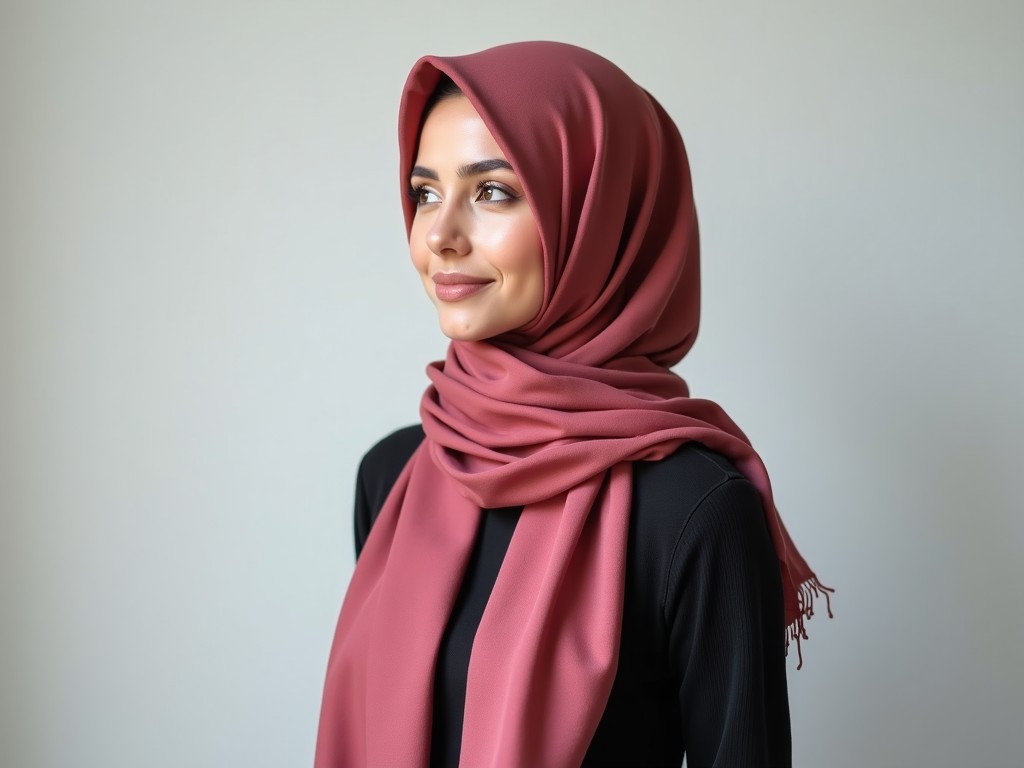
Silk Chiffon Hijab Scarf
This product page details the technical specifications, material properties, and application considerations for silk chiffon hijab scarves intended for industrial and commercial procurement. The
Silk Chiffon Hijab Scarf
This product page details the technical specifications, material properties, and application considerations for silk chiffon hijab scarves intended for industrial and commercial procurement. The information is structured to support informed purchasing decisions by focusing on measurable characteristics, manufacturing constraints, and performance factors relevant to bulk sourcing.
Material Composition and Fiber Properties
Silk chiffon used in hijab scarves is a plain-weave fabric made from 100% mulberry silk filament yarns, typically ranging from 20 to 30 denier per filament. The yarns are tightly twisted (Z-twist, 800–1200 TPM) to create the characteristic sheer, lightweight drape and slight roughness (handle) associated with chiffon. The fabric weight typically falls between 15–25 gsm (grams per square meter), providing translucency without compromising tensile strength. Silk’s natural protein structure (fibroin) contributes to moisture regain of approximately 11% at standard conditions, enhancing comfort in varying humidity levels.
Dimensional Stability and Construction Parameters
Standard dimensions for hijab scarves range from 180 cm × 70 cm to 200 cm × 90 cm, with tolerances of ±2% in length and width due to the fabric’s inherent elasticity and cutting processes. The plain weave construction results in balanced warp and weft density, typically 80–100 ends per inch (epi) and 60–80 picks per inch (ppi), which minimizes skewing during use. Hemming is performed using a 3-thread overlock stitch with a stitch density of 8–10 stitches per cm to prevent fraying while maintaining flexibility at the edges. Dimensional stability after washing is evaluated per AATCC Test Method 135, with typical shrinkage under 3% when processed under controlled conditions (30°C, neutral pH detergent).
Colorfastness and Dyeing Characteristics
Coloration is achieved through acid dyeing, which bonds effectively with silk’s amphoteric protein fibers. Key fastness properties include: wash fastness (ISO 105-C06) typically rated 4–5, light fastness (ISO 105-B02) 3–4 (dependent on dye selection), and rub fastness (ISO 105-X12) dry/wet 4–5. Darker shades (e.g., navy, black, deep red) may exhibit slightly lower light fastness due to higher dye concentration. Sublimation printing is not suitable for silk chiffon; all coloration requires wet processing. Color matching is performed under D65 lighting using spectrophotometer tolerances of ΔE < 1.5 for commercial acceptability.
Mechanical Performance and Durability Indicators
Tensile strength of silk chiffon ranges from 300–500 MPa in the warp direction and 250–400 MPa in the weft, reflecting the anisotropy of the plain weave. Elongation at break averages 15–25%, providing recovery after light stretching. Abrasion resistance (Martindale test) typically achieves 10,000–15,000 cycles before noticeable wear, which is sufficient for ceremonial or occasional use but indicates limited suitability for high-friction environments. Pilling resistance is generally low due to the fine filament structure; anti-pilling finishes are not commonly applied as they alter the fabric’s hand and drape.
Care Instructions and Processing Limitations
Silk chiffon requires gentle handling: hand washing in water not exceeding 30°C with pH-neutral detergent is recommended; machine washing is not advised due to risk of snagging and distortion. Tumble drying is prohibited; flat drying away from direct sunlight prevents UV degradation and yellowing. Ironing should be performed on the reverse side at temperatures below 110°C (silk setting) with a pressing cloth to avoid shine or scorching. Chlorine bleach must be avoided as it causes protein hydrolysis and irreversible weakening. Dry cleaning using perchloroethylene or hydrocarbon solvents is acceptable but may reduce softness over multiple cycles.
Applications in Commercial and Institutional Settings
Silk chiffon hijab scarves are selected in contexts where lightweight drape, breathability, and a premium aesthetic are prioritized over extreme durability. Common applications include corporate uniform programs for airlines, hospitality, and healthcare institutions requiring modest attire with a refined appearance. They are also used in ceremonial attire, cultural events, and retail boutiques offering modest fashion lines. The fabric’s translucency allows for layering over opaque under-scarves or underscarves to achieve desired coverage while maintaining comfort in warm climates. Industrial buyers specify this material when the end-use emphasizes sensory qualities (hand, flow, visual luster) rather than mechanical endurance.
Customization Options and Production Constraints
Customization is available for dimensions (±5 cm increments), hem finishes (rolled, blind stitch, or decorative trim), and color matching to Pantone or textile swatch references. Minimum order quantities typically start at 300 pieces per colorway due to dye batch constraints and loom setup efficiency. Lead times range from 4–6 weeks for standard colors and 6–8 weeks for custom shades, inclusive of dyeing, cutting, and quality inspection. Custom packaging (e.g., individual polybagging, boxed sets) is available upon request but adds to unit cost and lead time. Embroidery or printing is generally avoided on chiffon due to risk of puckering; if required, stabilizers and lightweight techniques must be evaluated via sample approval.
Quality Control and Inspection Parameters
Incoming fabric is inspected per 4-point system (ASTM D5430) for defects such as holes, tears, thick/thin places, and staining, with acceptance criteria of ≤40 points per 100 square yards. Finished scarves undergo 100% visual inspection for hem integrity, color uniformity, and dimensions. AQL standards are applied: critical defects (0%), major (2.5%), minor (4.0%). Testing includes pH verification (4.5–7.5), formaldehyde content (<75 ppm), and azo dye absence (per OEKO-TEX® Standard 100 guidelines). All test reports are available upon request; certifications are not held in-house but can be arranged for specific orders.
| Property | Typical Range | Test Method |
|---|---|---|
| Fabric Weight | 15–25 gsm | ASTM D3776 |
| Tensile Strength (Warp) | 300–500 MPa | ASTM D5034 |
| Elongation at Break | 15–25% | ASTM D5034 |
| Shrinkage (Wash) | <3% | AATCC 135 |
| Colorfastness to Light | 3–4 (ISO Blue Wool) | ISO 105-B02 |
| Colorfastness to Wash | 4–5 | ISO 105-C06 |
Packaging and Logistics Considerations
Standard packaging involves folding scarves to uniform dimensions (typically 30 cm × 10 cm) and placing them in polyethylene bags (50 µm thickness) to prevent moisture and particulate contamination during transit. Carton dimensions are optimized for palletization (e.g., 40 cm × 30 cm × 25 cm holding 50–100 units depending on weight). Humidity indicators may be included upon request for long-haul shipments. Marking includes PO number, SKU, quantity, and country of origin. Silk chiffon is sensitive to compression set; therefore, cartons should not be double-stacked or subjected to excessive pressure during storage. All packaging materials are recyclable where facilities exist.
Environmental and Regulatory Notes
Silk is a biodegradable, renewable protein fiber produced through sericulture. The manufacturing process does not involve synthetic polymer extrusion. However, conventional silk production may involve water-intensive dyeing and chemical auxiliaries; buyers seeking reduced environmental impact should inquire about low-impact dyes, wastewater treatment compliance, or Oeko-Tex® certification options. No flame retardants, formaldehyde-based finishes, or antimicrobial treatments are applied by default. Compliance with REACH and Proposition 65 is achievable through material selection and process control; documentation is available per order.
Products
Related Products
News
Related News

2026-11-02
Cotton Voile Scarf Manufacturing and Performance Analysis how to make a cotton voile scarfCreating a professional-grade cotton voile scarf requires a precise balance of textile engineering and artisanal finishing. Unlike standard cotton weaves, voile is defined by its p···

2026-10-28
chiffon hijab Technical Production and Performance AnalysisSelecting the right fabric for a hijab involves a delicate balance between modesty, breathability, and aesthetic drape. For many women in Southeast Asia and the Middle East, the ma···

2026-10-26
custom silk scarf textile manufacturing and performance analysisSelecting a high-quality scarf is no longer just about color matching; it is an exercise in understanding how textile weight, drape, and print scale interact with individual facial···
