Royal Blue Chiffon Hijab






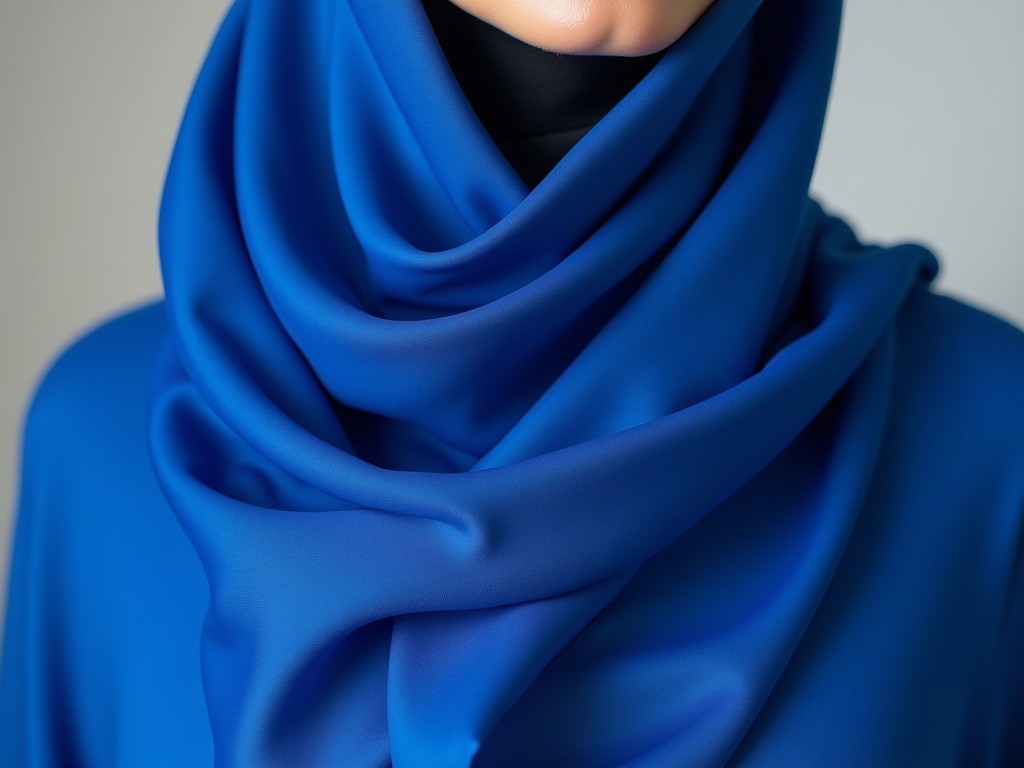
Royal Blue Chiffon Hijab
This product page details the technical specifications, material properties, and application considerations for a royal blue chiffon hijab designed for industrial and commercial textile procurement.
Royal Blue Chiffon Hijab
This product page details the technical specifications, material properties, and application considerations for a royal blue chiffon hijab designed for industrial and commercial textile procurement. The hijab is constructed from 100% polyester chiffon with a plain weave structure, selected for its lightweight drape, colorfastness, and suitability for high-volume apparel manufacturing.
Material Composition and Construction
The hijab is manufactured using 100% polyester filament yarn with a denier of 30D, providing a balance between sheerness and tensile strength. The plain weave construction yields a fabric weight of approximately 45 gsm, measured under standard atmospheric conditions (20°C, 65% RH). This construction minimizes snagging while allowing fluid drape, critical for garment assembly lines requiring consistent fabric behavior.
The royal blue color is achieved through disperse dyeing at 130°C, ensuring penetration into the polyester molecular structure for wash fastness ratings of 4–5 on the grey scale (ISO 105-B02). Lightfastness is rated at 6–8 (ISO 105-B02), suitable for indoor retail display and limited outdoor exposure. Dye lot variation is controlled within ΔE < 2.0 under D65 lighting to maintain batch consistency for large-volume orders.
Dimensional Specifications
Standard dimensions are 180 cm in length and 70 cm in width, with a tolerance of ±2 cm in both axes. These dimensions are optimized for standard hijab styling patterns used in mass production, minimizing fabric waste during cutting. The edges are finished with a 3mm narrow hem using a 40wt polyester thread, providing fray resistance without adding stiffness.
Custom dimensions are available upon request, subject to minimum order quantities and pattern efficiency assessments. Length adjustments beyond ±5 cm may require reevaluation of dye batch yield and cutting layout optimization. Width modifications are limited to the loom’s fixed width unless custom weaving is commissioned, which impacts lead time and tooling costs.
Performance Characteristics
The chiffon exhibits a tensile strength of 2.8–3.2 N/tex in the warp direction and 2.1–2.5 N/tex in the weft, tested per ISO 13937-2. Elongation at break ranges from 15–20%, allowing for ease of movement during wear while maintaining shape retention. These values indicate suitability for sewn products subjected to moderate stress, such as folded or draped apparel.
Air permeability measures approximately 180–220 mm/s (ISO 9237), contributing to breathability in layered wear. The fabric’s opacity is rated at 40–50% on the ISO 105-A02 scale, necessitating lining or layering for applications requiring full coverage. Shrinkage after five home laundering cycles (40°C, mild detergent) is less than 3% in both directions, confirming dimensional stability for repeat-use garments.
Quality Control and Inspection
Each roll undergoes 100% visual inspection under 500 lux daylight simulation for color uniformity, defects (thick/thin places, neps, holes), and finish consistency. AQL levels are set at 2.5% for major defects and 4.0% for minor defects, aligned with ISO 2859-1. Roll length is verified via laser meter, and weight is checked per 10 linear meters to detect density variations.
Colorfastness to washing, rubbing, and perspiration is tested per batch using AATCC standards. Results are documented and available upon request. Chemical residue testing (pH, azo dyes, formaldehyde) complies with OEKO-TEX® Standard 100 Class II requirements, ensuring safety for skin-contact applications. All test reports are retained for traceability.
Applications in Industrial Textile Manufacturing
This hijab is commonly sourced by apparel manufacturers producing modest wear collections, particularly those supplying to Middle Eastern, Southeast Asian, and North African markets. Its lightweight nature allows for efficient stacking and bundling in secondary packaging, reducing volumetric shipping costs. The plain weave minimizes sewing machine tension fluctuations, supporting high-speed production lines.
Distributors and private label brands select this product for its color consistency across large orders, critical for maintaining brand identity in e-commerce catalogs. The polyester base resists wrinkling better than natural fiber alternatives, reducing the need for ironing in finished goods. It is also used in uniform programs where institutional color matching is required over extended procurement cycles.
Customization and Ordering Information
Customization options include alternative dimensions, custom dye matching (Pantone or physical sample), and embellishment readiness (e.g., pre-treated for printing or embroidery). Minimum order quantity for standard specifications is 500 pieces. Custom colors require a lab dip approval process, adding 5–7 days to lead time. Packaging is typically flat-folded in polybags of 10–25 units, with cartonization optimized for pallet efficiency.
Lead time for standard orders is 14–18 working days after approval of samples and receipt of deposit. Express options are available with prior coordination. Shipping terms are typically FOB factory or CIF port, with insurance and documentation handled per incoterms 2020. Samples are provided upon request, with costs credited against the first order.
| Property | Typical Value | Test Method |
|---|---|---|
| Fabric Weight | 45 gsm | ISO 3801 |
| Tensile Strength (Warp) | 2.8–3.2 N/tex | ISO 13937-2 |
| Tensile Strength (Weft) | 2.1–2.5 N/tex | ISO 13937-2 |
| Elongation at Break | 15–20% | ISO 13937-2 |
| Air Permeability | 180–220 mm/s | ISO 9237 |
| Wash Fastness | 4–5 (grey scale) | ISO 105-B02 |
| Lightfastness | 6–8 (blue scale) | ISO 105-B02 |
| Shrinkage (5x wash) | <3% | ISO 6330 |
For technical inquiries, sample requests, or quotation details, contact our textile engineering team. Provide your required dimensions, quantity, dye reference, and intended end-use to receive a tailored response including lead time, pricing, and compliance documentation.
Products
Related Products
News
Related News

2026-11-02
Cotton Voile Scarf Manufacturing and Performance Analysis how to make a cotton voile scarfCreating a professional-grade cotton voile scarf requires a precise balance of textile engineering and artisanal finishing. Unlike standard cotton weaves, voile is defined by its p···

2026-10-28
chiffon hijab Technical Production and Performance AnalysisSelecting the right fabric for a hijab involves a delicate balance between modesty, breathability, and aesthetic drape. For many women in Southeast Asia and the Middle East, the ma···

2026-10-26
custom silk scarf textile manufacturing and performance analysisSelecting a high-quality scarf is no longer just about color matching; it is an exercise in understanding how textile weight, drape, and print scale interact with individual facial···
