Rose Gold Chiffon Scarf






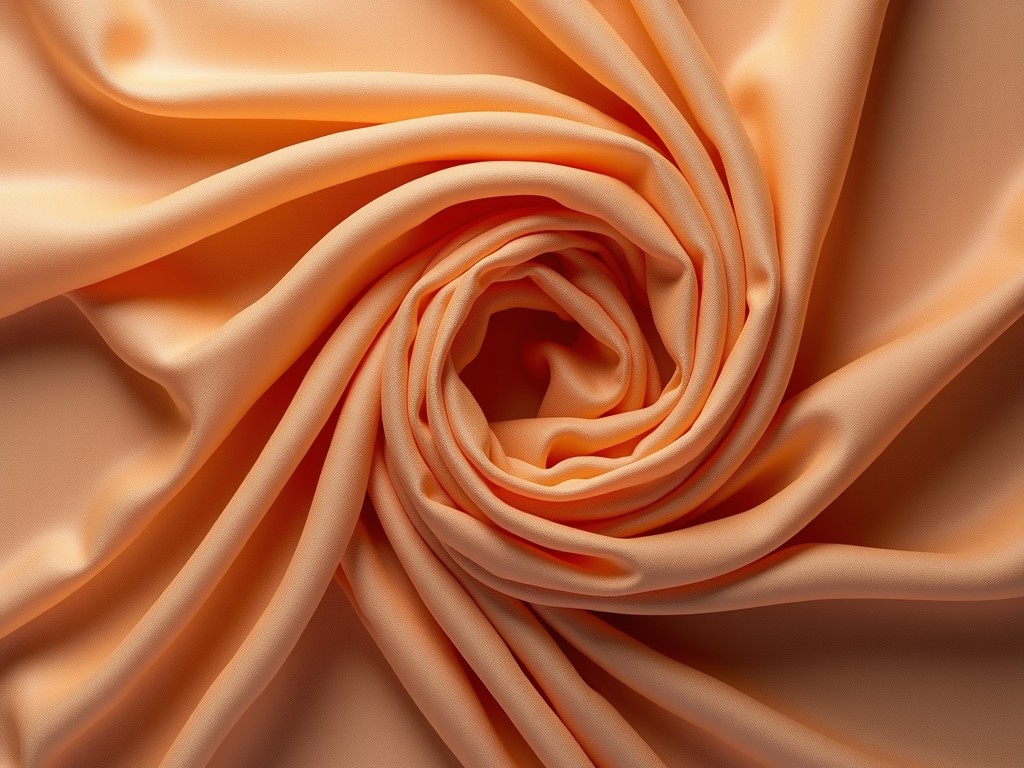
Rose Gold Chiffon Scarf
This product page details the technical specifications, material characteristics, and industrial applications of a rose gold chiffon scarf designed for B2B buyers in fashion accessories, textile
Rose Gold Chiffon Scarf
This product page details the technical specifications, material characteristics, and industrial applications of a rose gold chiffon scarf designed for B2B buyers in fashion accessories, textile manufacturing, and apparel production. The information provided focuses on measurable engineering properties, manufacturing considerations, and quality control parameters to support informed procurement decisions.
Material Composition and Fiber Properties
The scarf is constructed from 100% polyester chiffon with a denier range of 15-18D per filament, providing a balance between sheerness and tensile strength. The base fiber undergoes solution dyeing with rose gold pigment dispersed at 0.8-1.2% by weight to achieve consistent coloration without surface coating that could degrade during washing or abrasion. This method ensures colorfastness ratings of 4-5 on the grey scale for both light and washing exposure according to ISO 105-B02 and ISO 105-C06 standards.
The fabric structure employs a plain weave with 68 ends per inch (EPI) and 52 picks per inch (PPI), resulting in a nominal weight of 18-22 gsm. This construction yields a tear strength of 1.8-2.2 N (warp) and 1.5-1.8 N (weft) as measured by ASTM D1424, sufficient for typical handling in garment assembly while maintaining drape characteristics essential for scarf applications.
Dimensional Stability and Finishing Parameters
Post-weaving, the fabric undergoes a heat-setting process at 180-200°C for 90 seconds to stabilize dimensions and reduce residual shrinkage to less than 2% after five wash cycles at 40°C. The finishing sequence includes a softener application at 0.5-0.7% owf (on weight of fabric) to achieve a handle score of 4.0-4.5 on the Kawabata evaluation system, ensuring smoothness against skin without compromising fabric integrity.
Edge finishing is performed using ultrasonic sealing at 20 kHz frequency with 0.8-1.2 mm overlap, creating a bond strength of 3.5-4.0 N/mm that prevents fraying during cutting and sewing operations. This method avoids thread consumption and eliminates the need for hemming, reducing production time by approximately 15-20% compared to traditional folded-edge techniques in high-volume scarf manufacturing.
Standard Dimensions and Tolerances
The scarf is produced in a rectangular format with nominal dimensions of 180 cm length × 90 cm width. Manufacturing tolerances are maintained at ±1.5% for length and ±2.0% for width, measured under standard conditions (20°C, 65% RH) using calibrated laser gauges. These tolerances ensure consistent panel alignment when used in multi-scarf assemblies or as lining components in apparel.
Thickness is controlled to 0.18-0.22 mm as measured by ASTM D1777 using a pressure of 10 g/cm², providing sufficient opacity for layering applications while maintaining the lightweight drape required for fashion accessories. The length-to-width ratio of 2:1 is optimized for common styling techniques such as looping, knotting, and shoulder draping.
Color Consistency and Spectral Properties
The rose gold shade is defined by CIE L*a*b* values of L*=68.5±1.5, a*=18.0±1.0, b*=12.0±1.0 under D65 illumination, measured with a spectrophotometer featuring 8° viewing angle and 10 nm bandwidth. Delta-E tolerances are held to ≤1.5 between production lots to ensure visual uniformity across bulk orders, critical for applications requiring color matching in coordinated collections.
The pigment dispersion achieves a reflectance peak at 580-590 nm with a full width at half maximum (FWHM) of 70-80 nm, creating the characteristic warm metallic appearance without relying on metallic flakes that could cause skin irritation or complicate recycling. UV stabilizers are added at 0.03-0.05% owf to prevent yellowing, maintaining ΔE<2 after 200 hours of xenon arc exposure per ISO 105-B02.
Industrial Applications and Integration Logic
This scarf functions as a semi-finished textile component in cut-and-sew operations for apparel manufacturers, particularly in the production of layered tops, dresses, and evening wear where chiffon provides lightweight coverage without bulk. Its dimensional stability allows for precise pattern nesting, reducing fabric waste by 3-5% compared to less stable sheers in automated cutting systems.
In textile printing applications, the fabric’s low porosity (air permeability of 8-12 mm/s) accepts disperse inks at 180-200°C with minimal bleed, enabling sublimation printing of patterns or logos directly onto the scarf surface for private labeling. The smooth surface reduces snagging during rotary screen printing, supporting print speeds of 30-40 m/min with defect rates below 2%.
Distributors and OEMs utilize this product as a base for value-added services such as embroidery, beadwork, or fringe attachment, where the consistent width and straight grain facilitate alignment in automated embellishment equipment. The tear strength and seam efficiency (measured via ASTM D1683) support reliable performance in downstream assembly without requiring reinforcement tapes or interfacings.
Quality Control and Inspection Protocol
Each batch undergoes 100% visual inspection under 500 lux illumination for defects such as stains, yarn defects, and color streaks, classified according to the 4-point system with acceptance quality limit (AQL) of 1.0 for major defects. Width and length are verified on every fifth piece using inline laser sensors, with feedback loops to adjust tension on the stenter frame if deviations exceed 0.5%.
Color consistency is checked via spectrophotometer on the first, middle, and last roll of each batch, with batch rejection if any point exceeds ΔE=2.0. Shrinkage testing is performed on three random samples per batch after washing per AATCC 135, with results recorded for traceability. All test data is retained for 36 months to support audit trails and continuous improvement initiatives.
Customization Options and Parameter Ranges
Length can be customized between 150 cm and 220 cm in 5 cm increments, while width ranges from 70 cm to 110 cm, subject to loom constraints and minimum order quantities. These adjustments maintain the same weave density and finishing protocol to preserve dimensional stability and handle characteristics across sizes.
Color customization is available through solution dyeing with Pantone or CIE L*a*b* target submission, requiring lab dip approval before bulk production. Minimum dye batch size is typically 50 kg, with lead times extending by 3-5 days for color development. Alternative finishes such as anti-static treatment (0.3% owf) or water repellency (fluorocarbon-based, 1.5% owf) can be applied upon request, each adding specific functional properties without altering base fabric weight by more than 0.5 gsm.
| Property | Typical Value | Test Method |
|---|---|---|
| Fabric Weight | 18-22 gsm | ASTM D3776 |
| Tear Strength (Warp) | 1.8-2.2 N | ASTM D1424 |
| Tear Strength (Weft) | 1.5-1.8 N | ASTM D1424 |
| Thickness | 0.18-0.22 mm | ASTM D1777 |
| Shrinkage (5 washes) | <2% | AATCC 135 |
| Colorfastness to Light | 4-5 (grey scale) | ISO 105-B02 |
| Colorfastness to Washing | 4-5 (grey scale) | ISO 105-C06 |
For technical inquiries, sample requests, or to discuss specific application requirements including custom dimensions, color matching, or finishing options, please contact our technical sales team. Provide detailed specifications such as intended use, required quantities, and any regulatory constraints to receive accurate quotations and lead time estimates.
Products
Related Products
News
Related News

2026-11-02
Cotton Voile Scarf Manufacturing and Performance Analysis how to make a cotton voile scarfCreating a professional-grade cotton voile scarf requires a precise balance of textile engineering and artisanal finishing. Unlike standard cotton weaves, voile is defined by its p···

2026-10-28
chiffon hijab Technical Production and Performance AnalysisSelecting the right fabric for a hijab involves a delicate balance between modesty, breathability, and aesthetic drape. For many women in Southeast Asia and the Middle East, the ma···

2026-10-26
custom silk scarf textile manufacturing and performance analysisSelecting a high-quality scarf is no longer just about color matching; it is an exercise in understanding how textile weight, drape, and print scale interact with individual facial···
