Red And Black Chiffon Scarf






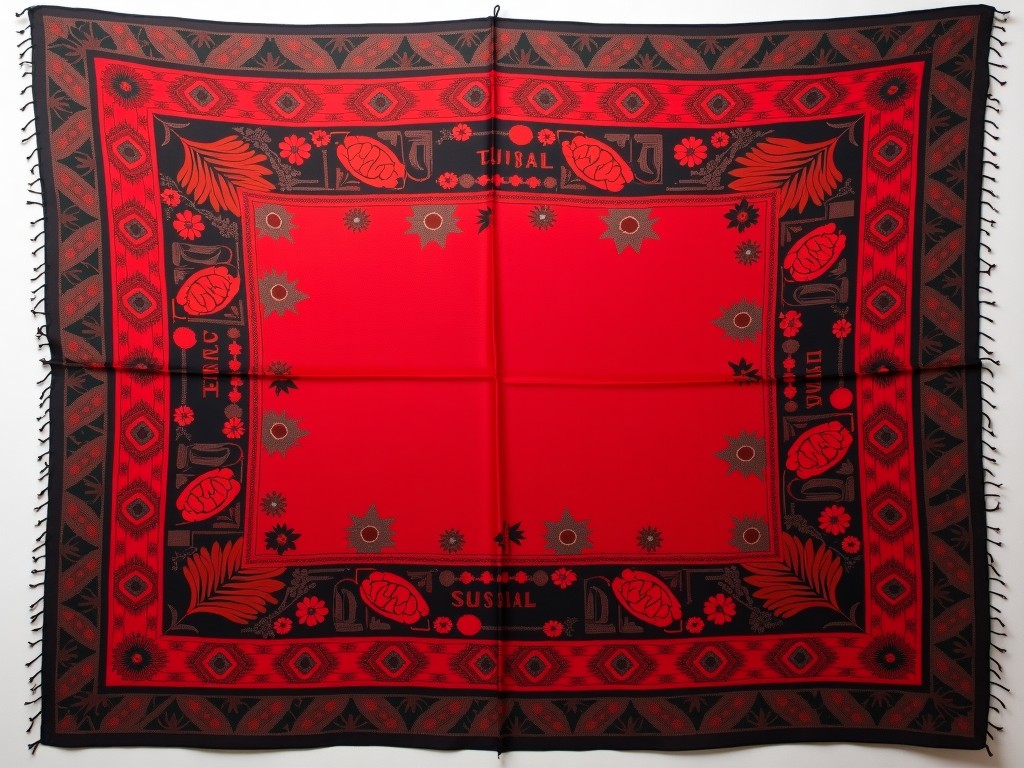
Red And Black Chiffon Scarf
This product page details the technical specifications, material properties, and application considerations for a red and black chiffon scarf designed for industrial and commercial textile use.
Red and Black Chiffon Scarf
This product page details the technical specifications, material properties, and application considerations for a red and black chiffon scarf designed for industrial and commercial textile use. Information is provided to support informed procurement decisions based on material behavior, dimensional stability, and finishing quality.
Material Composition and Construction
The scarf is constructed from 100% polyester chiffon, a plain-weave fabric characterized by its lightweight, semi-sheer appearance and balanced tensile strength in both warp and weft directions. The base yarn typically ranges from 50D to 75D filament polyester, providing a denier that supports drape without excessive fragility. The red and black coloration is achieved through disperse dyeing, which bonds chemically with polyester fibers at elevated temperatures, ensuring colorfastness under standard indoor lighting and mild washing conditions.
Chiffon’s open weave structure results in a typical weight of 15–25 g/m², contributing to its lightness and fluid drape. The fabric exhibits a tear strength of approximately 1.5–2.5 N in the warp direction and 1.2–2.0 N in the weft, measured per ASTM D2261. These values reflect the inherent delicacy of chiffon while confirming suitability for low-stress decorative applications. The yarn twist is low (typically 2–4 turns per inch), enhancing softness but requiring careful handling during cutting and sewing to prevent fraying.
Dimensional Specifications and Tolerances
Standard dimensions for the red and black chiffon scarf are 180 cm in length and 90 cm in width, with a tolerance of ±2% in both dimensions due to the fabric’s hygroscopic nature and potential for slight relaxation after dyeing and finishing. The hem is typically folded 3 mm and stitched with a 2-thread overlock or narrow rolled hem, adding approximately 6 mm to the overall width and 12 mm to the length when measured flat. These tolerances are critical for applications requiring precise layering or stacking, such as in theatrical costume design or uniform detailing.
When deployed in environments with fluctuating humidity (e.g., 30–70% RH), dimensional changes of up to 1.5% may occur due to moisture absorption in the polyester matrix, though this is minimal compared to natural fibers. Buyers should account for this in designs where tight tolerances are required, particularly when combining chiffon with less hygroscopic materials like satin or brocade.
Colorfastness and Performance Characteristics
Disperse-dyed polyester chiffon demonstrates good resistance to fading under indirect sunlight, with a typical lightfastness rating of 4–5 on the Blue Wool Scale (ISO 105-B02) for both red and black shades. The black dye, often anthraquinone-based, shows slightly better UV stability than certain red dyes, which may be prone to gradual bleaching if exposed to prolonged direct sunlight. For indoor decorative use, color retention is expected to remain acceptable for 12–24 months under normal conditions.
Washfastness is rated at 3–4 for both colors when tested per ISO 105-C06 (30°C, mild detergent), indicating minimal bleeding or staining of adjacent fabrics. However, due to the delicate nature of chiffon, machine washing is not recommended; hand washing in cold water with neutral pH detergent is advised to preserve fiber integrity and prevent snagging. The fabric exhibits low pilling tendency (ISO 12945-2 rating of 4–5) due to the continuous filament yarn and tight twist, though surface abrasion from rough surfaces may cause fuzzing over time.
Applications in Industrial and Commercial Contexts
The red and black chiffon scarf is commonly used in theatrical productions, dance costumes, and ceremonial attire where lightweight, translucent layers are required to create visual depth or movement effects. Its shear properties allow underlying fabrics or lighting to show through, making it suitable for backlit installations or gradient overlays in stage design. In retail environments, it may be used as a decorative element in visual merchandising, such as draping over mannequins or display fixtures to add color contrast without adding bulk.
In industrial settings, the scarf finds limited but specific use as a protective interlayer during the handling of delicate components—such as optical lenses or polished metal parts—where a non-abrasive, lint-free barrier is needed. The polyester base generates minimal particulate shedding compared to natural fibers, and its smooth surface reduces the risk of marring sensitive surfaces. However, due to low tensile strength, it is not suitable for load-bearing or high-friction applications.
Manufacturing and Quality Considerations
Production involves knitting or weaving the base chiffon greige fabric, followed by pretreatment (scouring), disperse dyeing at 180–210°C, reduction clearing, and final finishing (including softening and heat setting). The dyeing process must be tightly controlled to ensure even penetration, especially in black shades, which require higher dye concentrations and are more prone to streaking if flow or temperature is inconsistent. Post-dyeing inspection includes visual assessment under standardized lighting (D65 or TL84) and measurement of color difference (ΔE) using a spectrophotometer, with acceptable tolerances typically set at ΔE < 1.5 for solids and < 2.0 for tonal variations.
Edge quality is critical; ultrasonic or heat sealing may be used to prevent fraying in high-volume production, though traditional rolled hems remain common for softer hand feel. Each batch undergoes dimensional verification using calibrated tension-controlled measuring tables to account for fabric relaxation. Suppliers should provide roll-to-roll consistency data, including width variation and shade matching, upon request for large orders.
Comparison with Alternative Materials
Compared to silk chiffon, polyester chiffon offers superior dimensional stability under humidity changes, lower cost, and better resistance to abrasion, though it lacks the natural protein fiber’s lustre and breathability. Silk chiffon typically weighs 12–18 g/m² and has a softer hand but requires dry cleaning and is more susceptible to UV degradation. For applications where washability and long-term color consistency are priorities, polyester is the preferred choice.
When contrasted with voile or organza (both often polyester-based), chiffon distinguishes itself through its balanced sheerness and drape. Voile is generally tighter woven (higher weight, 25–35 g/m²) and less fluid, while organza is stiffer due to higher twist and often a crisp finish from starch or resin. The red and black chiffon scarf’s combination of light weight, soft drape, and moderate opacity makes it uniquely suited for applications requiring fluid movement and subtle translucency.
Customization Options
Width and length can be customized within the loom’s physical constraints, typically ranging from 50 cm to 150 cm in width and 100 cm to 300 cm in length, subject to minimum order quantities. Color matching to specific Pantone or RAL references is available via lab dip approval, though exact replication may vary slightly due to the translucent nature of chiffon affecting perceived hue. Hem styles include narrow rolled, blind stitch, or fused edge, with the latter recommended for high-volume applications where fraying control is paramount.
Custom printing (e.g., logos, patterns) is possible using disperse transfer or digital inkjet methods, though design complexity is limited by the fabric’s openness and potential for ink bleed. Flame-retardant treatments can be applied upon request for use in regulated environments (e.g., public auditoriums), adding approximately 5–10 g/m² to the weight and slightly reducing flexibility. All customizations require technical consultation to assess impact on drape, weight, and performance.
Packaging and Handling
The scarf is typically folded to dimensions of approximately 30 cm × 15 cm × 2 cm and packaged in polyethylene bags to protect against moisture and particulate contamination during transit. For bulk orders, multiple units are packed in cartons with internal dividers or tissue paper to prevent color transfer and abrasion. Each carton is labeled with product code, color batch, quantity, and care instructions. Humidity indicators may be included in shipments to regions with high ambient moisture to monitor exposure.
Handling during storage and distribution should avoid direct sunlight, sharp edges, and high-pressure stacking, which can cause permanent creasing or fiber damage. Ideal storage conditions are 18–22°C and 40–50% RH. When issued for use, personnel should wear clean gloves to prevent oil transfer from skin, which can attract dust and degrade appearance over time. These practices help maintain aesthetic quality and extend service life in reusable applications.
For technical inquiries, custom specifications, or sample requests, contact our engineering team to discuss your project requirements.
Request Technical ConsultationProducts
Related Products
News
Related News

2026-11-02
Cotton Voile Scarf Manufacturing and Performance Analysis how to make a cotton voile scarfCreating a professional-grade cotton voile scarf requires a precise balance of textile engineering and artisanal finishing. Unlike standard cotton weaves, voile is defined by its p···

2026-10-28
chiffon hijab Technical Production and Performance AnalysisSelecting the right fabric for a hijab involves a delicate balance between modesty, breathability, and aesthetic drape. For many women in Southeast Asia and the Middle East, the ma···

2026-10-26
custom silk scarf textile manufacturing and performance analysisSelecting a high-quality scarf is no longer just about color matching; it is an exercise in understanding how textile weight, drape, and print scale interact with individual facial···
