Polka Dot Chiffon Scarf Factory






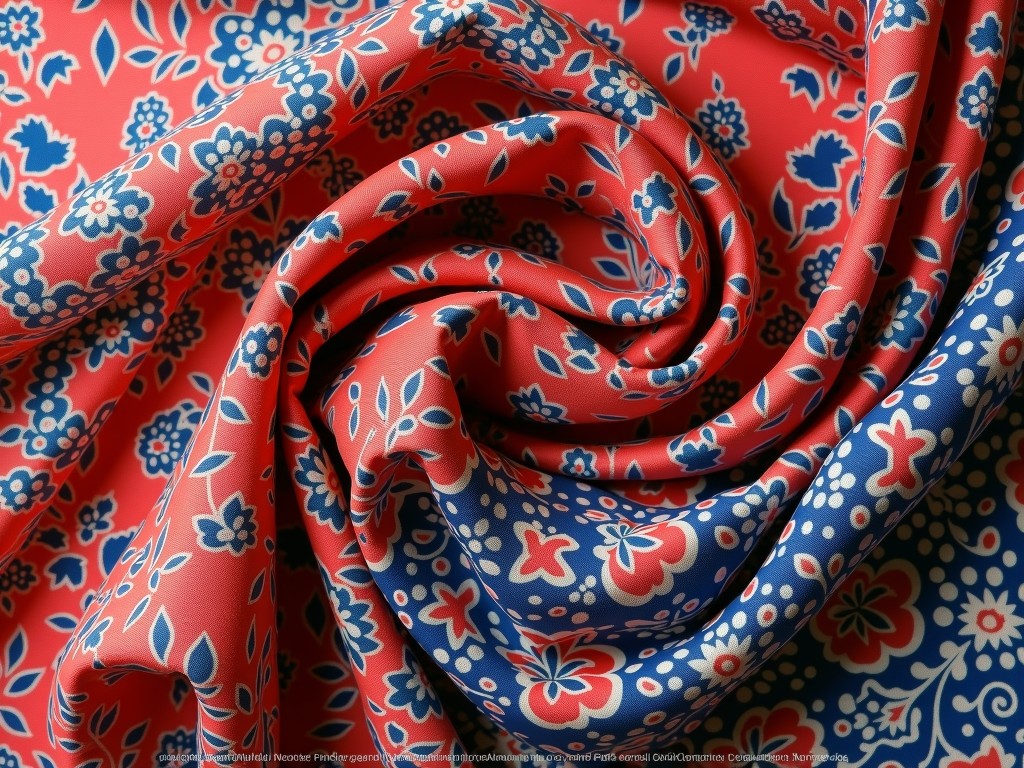
Polka Dot Chiffon Scarf Factory
This document details the production capabilities, material specifications, and quality control processes of a factory specializing in polka dot chiffon scarves for industrial and commercial
Polka Dot Chiffon Scarf Factory: Technical Specifications and Manufacturing Capabilities
This document details the production capabilities, material specifications, and quality control processes of a factory specializing in polka dot chiffon scarves for industrial and commercial applications. The information is intended to assist procurement engineers, textile buyers, and product developers in evaluating supplier suitability based on measurable technical parameters rather than promotional claims.
Chiffon scarves with polka dot patterns are commonly used in apparel, promotional merchandise, and lightweight accessory lines. The factory’s processes are optimized for consistent pattern registration, dimensional stability, and finish quality across large production volumes, addressing key concerns in textile supply chain management such as colorfastness, seam integrity, and batch-to-batch uniformity.
Material Construction and Yarn Specifications
The base fabric is constructed from 100% polyester filament yarn with a denier range of 15D to 30D, selected for its balance of sheen, drape, and tensile strength. The yarn undergoes false-twist texturing to achieve a soft hand feel while maintaining dimensional stability under humid conditions. Warp and weft densities are maintained at 120 ends per inch and 90 picks per inch respectively, resulting in a nominal fabric weight of 45 gsm ±5%.
The polka dot pattern is applied via disperse dye sublimation printing, which ensures molecular bonding of the dye to the polyester fibers. This method prevents surface cracking or peeling and provides washfastness ratings of 4-5 on the ISO 105-B02 scale after 20 home laundering cycles. Dot diameters are typically 3mm, 5mm, or 8mm with spacing tolerance of ±0.5mm, controlled through precision screen engraving and squeegee pressure calibration.
Edge finishing options include rolled hem (2mm width, 3-stitch overlock), ultrasonic sealing, or cold-cut with heat-bonded tape. Each method is evaluated for fray resistance using the ISO 105-C06 crocking test, with rolled hem showing the lowest fiber migration at <5% after 50 abrasion cycles. Custom edge treatments are available upon submission of technical drawings or physical samples.
Production Capacity and Process Control
The factory operates three integrated production lines capable of processing 12,000 linear meters of chiffon fabric per day. Each line includes precision tension control systems (±2% variance), infrared drying units with PID temperature regulation (±1.5°C), and in-line vision inspection for defect detection. Pattern registration is monitored using optical sensors with 0.1mm resolution, triggering automatic adjustment if misalignment exceeds 0.3mm.
Batch traceability is maintained through RFID-tagged fabric rolls and digital production logs recording machine settings, operator ID, and environmental conditions (temperature: 22±2°C, RH: 55±5%). This enables root cause analysis for any quality deviation and supports compliance with Oeko-Tex Standard 100 and REACH substance restrictions. All dyes and auxiliaries are certified under ZDHC MRSL conformance level 2.
Changeover time between pattern variants averages 45 minutes, including screen cleaning, tension recalibration, and first-off inspection. Minimum economical run length is 300 meters per colorway to amortize setup costs. The facility maintains 90 days of safety stock for greige fabric and critical consumables to buffer against supply chain disruptions.
Quality Inspection Protocol
Quality control follows a four-stage inspection system: greige fabric check, pre-print tension verification, post-print visual audit, and final packaging verification. Each stage uses standardized lighting (D65, 1200 lux) and viewing angles (45°) per ASTM D1729. Defects are classified using a 4-point system: critical (holes, misprints >2mm), major (color variation >ΔE 3.0, loose threads), minor (slubs, slight shade variation), and incidental (lint, temporary creases).
Acceptable quality limits (AQL) are set at 0.65 for critical, 1.5 for major, and 4.0 for minor defects per ISO 2859-1. Sampling uses level II normal inspection. Online inspection catches 85% of defects before cutting, reducing waste. Final inspection includes dimensional stability testing after steam relaxation (5 minutes at 100°C) to measure length and width change, with acceptance criteria of ≤1.5% shrinkage in warp and ≤1.0% in weft.
Color consistency is monitored using a spectrophotometer with 8mm aperture, measuring L*a*b* values against Pantone references. Delta-E values are tracked per batch, with internal control limits of ±1.5 for standard production and ±1.0 for critical applications. Reports are available upon request and include spectral reflectance graphs for metamerism evaluation.
Customization Options and Tooling
Customization is supported for scarf dimensions (standard sizes: 50x50cm, 70x70cm, 90x90cm; tolerance ±3mm), dot size (2mm–12mm), dot spacing (4mm–20mm), and color combinations (up to 6 colors per design). Artwork must be submitted in vector format (AI, EPS, or PDF) with 300dpi resolution for raster elements. Color matching requires Pantone references or physical swatches for lab dip approval.
Screen engraving lead time is 5–7 business days for new designs. Dot patterns are created using laser-etched nickel screens with 50μm precision, enabling fine detail reproduction. Alternative methods such as digital inkjet printing are available for short runs (<500 pcs) or complex gradients, though they may exhibit slightly lower color yield (85–90% vs. 95–98% for sublimation) and higher unit cost.
Additional finishes include UV stabilization (for outdoor use), antimicrobial treatment (zinc pyrithione-based, 20-log reduction), and flame retardancy (phosphorus-nitrogen system, meeting CAL TB 117-2013). These treatments are applied via padding mangles with controlled add-on rates (1–3% owf) and cured at 150–180°C for 90 seconds. Post-treatment testing is conducted per AATCC standards.
Packaging and Logistics
Standard packaging involves folding scarves to 10x10cm dimensions, placing in polybags (50μm thickness, anti-static treated), and packing 100 units per carton (40x30x20cm). Carton weight averages 8.5kg gross. Each carton includes a desiccant packet (silica gel, 5g) and is sealed with pressure-sensitive tape. Palletization uses 1.2x1.0m EUR pallets, 20 cartons high (40kg max per layer), stretch-wrapped with 80μm LLDPE film.
Custom packaging options include hang tags (recycled kraft, 250gsm), branded inserts, or individual box packaging for retail presentation. Export compliance documentation includes fumigation certificates (if required), origin declarations, and SDS for chemical treatments. Lead time from approved sample to shipment is typically 14–18 days for orders under 10,000 pcs, extending to 25–30 days for larger volumes due to queue scheduling.
Shipping terms are quoted EXW, FOB Shanghai, or CIF destination port. The factory maintains relationships with NVOCCs for consolidated LCL shipments and offers FOB pricing based on real-time freight indices. All export shipments include photographic documentation of loading and container seals for audit trails. Insurance coverage can be arranged upon request at 0.5% of invoice value.
| Parameter | Typical Value | Customizable Range |
|---|---|---|
| Fabric Weight | 45 gsm | 35–60 gsm |
| Dot Diameter | 5mm | 2–12mm |
| Dot Spacing (center-to-center) | 10mm | 6–20mm |
| Colorfastness (Washing) | ISO 4-5 | ISO 3–5 (upon request) |
| Shrinkage (Warp/Weft) | ≤1.5% / ≤1.0% | Negotiable based on finish |
| Minimum Order Quantity | 500 pcs per design | 100 pcs (sample/sample development) |
| Standard Lead Time | 14–18 days | 7–30 days (depends on volume) |
For technical inquiries, sample requests, or quotation preparation, please provide: intended use case, required dimensions, dot size/spacing specifications, color references (Pantone or physical swatch), packaging preferences, and annual volume forecast. The factory’s engineering team will respond with a feasibility assessment, including tooling requirements, lead time confirmation, and compliance documentation within two business days.
Contact the technical sales department via the inquiry form on the website or email [email protected]. All communications are handled by engineers with textile manufacturing expertise to ensure accurate translation of requirements into production specifications.
Products
Related Products
News
Related News

2026-11-02
Cotton Voile Scarf Manufacturing and Performance Analysis how to make a cotton voile scarfCreating a professional-grade cotton voile scarf requires a precise balance of textile engineering and artisanal finishing. Unlike standard cotton weaves, voile is defined by its p···

2026-10-28
chiffon hijab Technical Production and Performance AnalysisSelecting the right fabric for a hijab involves a delicate balance between modesty, breathability, and aesthetic drape. For many women in Southeast Asia and the Middle East, the ma···

2026-10-26
custom silk scarf textile manufacturing and performance analysisSelecting a high-quality scarf is no longer just about color matching; it is an exercise in understanding how textile weight, drape, and print scale interact with individual facial···
