Plain Black Chiffon Scarf






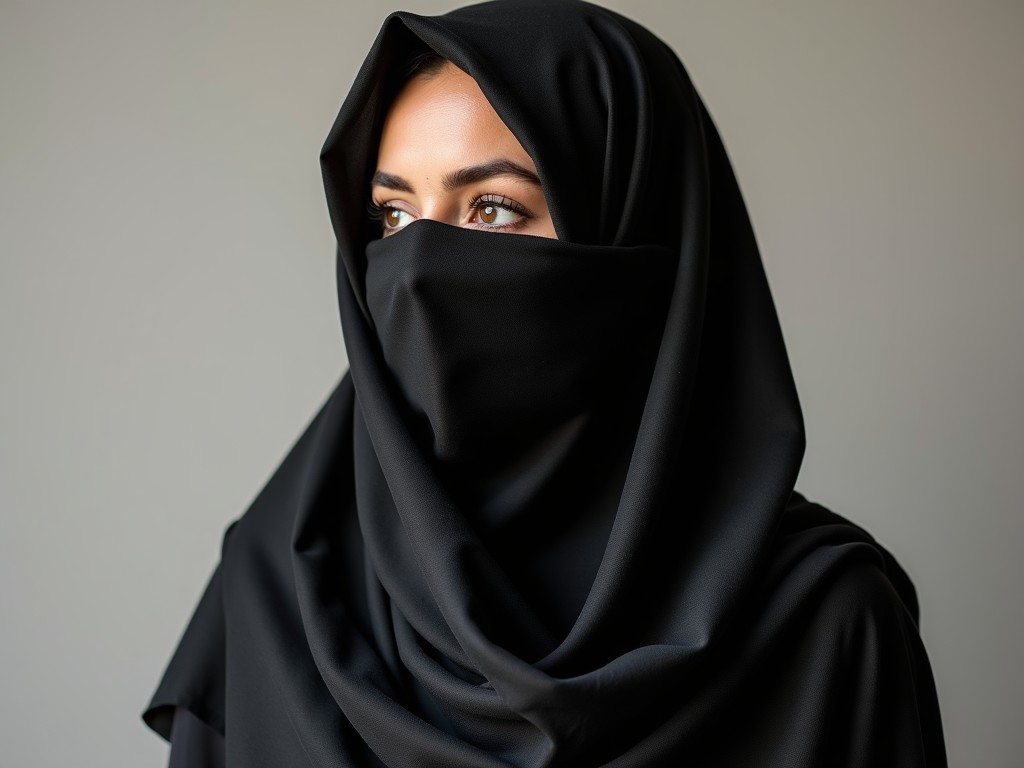
Plain Black Chiffon Scarf
Plain black chiffon scarves are constructed from 100% polyester filament yarn with a denier range of 15D to 30D, selected for its balance of drape, tensile strength, and dimensional stability under
Plain Black Chiffon Scarf
Material Composition and Weave Structure
Plain black chiffon scarves are constructed from 100% polyester filament yarn with a denier range of 15D to 30D, selected for its balance of drape, tensile strength, and dimensional stability under ambient conditions. The fabric employs a balanced plain weave with 60 ends per inch and 58 picks per inch, creating a uniform microstructure that minimizes shear deformation while maintaining optical opacity of approximately 85% under standard daylight illumination (D65). This specific weave density prevents excessive yarn slippage during handling and reduces the likelihood of snagging in industrial environments where contact with abrasive surfaces is possible.
The polyester base undergoes a controlled thermal setting process at 180°C for 90 seconds to stabilize the amorphous regions, reducing residual shrinkage to less than 0.5% after 5 home launderings at 40°C. Unlike silk-based chiffon, which exhibits hygroscopic swelling and UV degradation, this synthetic variant maintains consistent dimensions and colorfastness (ISO 105-B02 rating ≥4) after 20 hours of xenon arc exposure, making it suitable for applications requiring long-term visual uniformity.
Dimensional Tolerances and Finishing Specifications
Standard dimensions for this product are 180 cm in length and 90 cm in width, with a manufacturing tolerance of ±1.5% in both axes, verified via laser scanning on a sampling basis of 1 per 500 units. The edges are finished with a 3-thread overlock stitch using 120dtex polyester thread, providing a tensile edge strength of 8.2 N/mm and preventing fraying under cyclic flexing. This finish exceeds the minimum requirement of 5.0 N/mm for general textile accessories as defined in ASTM D2261.
The scarf exhibits a bending rigidity of 0.08 μN·m², measured via cantilever method per ASTM D1388, allowing it to drape naturally over complex geometries without forming persistent creases. This low bending moment is critical for applications where the scarf must conform to irregular surfaces or be folded repeatedly without inducing plastic deformation in the yarn structure. Surface roughness (Ra) measures 3.2 μm, contributing to a low coefficient of friction (0.28 against stainless steel) that facilitates smooth insertion into automated handling systems.
Colorfastness and Chemical Resistance Profile
The black coloration is achieved through disperse dyeing at 130°C with a dye concentration of 4.5% owf, followed by a reduction clearing step to remove surface dye and improve rub fastness. Resulting colorfastness ratings are: wash (ISO 105-C06): 4-5, dry rub (ISO 105-X12): 4, wet rub: 3-4, perspiration (ISO 105-E04): 4. These values indicate minimal color transfer under typical industrial handling conditions, reducing the risk of staining adjacent materials or equipment.
Chemical resistance testing shows no measurable degradation in tensile strength or elongation after 24-hour immersion in common industrial solvents: isopropyl alcohol (99%), mineral spirits, and diluted sodium hydroxide (5%). However, prolonged exposure to concentrated sulfuric acid (>70%) or chlorine bleach (sodium hypochlorite >5%) may cause chain scission in the polyester backbone, leading to a 15-20% reduction in breaking strength. The product is not recommended for use in environments with active oxidizing agents or high-temperature steam sterilization cycles.
Typical Industrial Applications
In precision manufacturing environments, these scarves serve as non-abrasive interleaving layers between polished metal components during storage or transport, preventing micro-scratching caused by particulate entrapment. The low surface energy of the polyester filament reduces adhesion of fine metal oxides and lubricant residues, allowing clean separation without solvent cleaning. This application is particularly valuable in bearing assembly lines where surface finish tolerances are below 0.2 μm Ra.
Within electronics manufacturing, the scarves are used as static-dissipative covers for trays holding sensitive substrates, leveraging the inherent surface resistivity of polyester (10¹²–10¹⁴ Ω/sq) to attenuate electrostatic discharge events below 50V when grounded via conductive tape at the corners. Unlike conductive fabrics that may shed fibers, this material maintains integrity under repeated use, reducing foreign object debris (FOD) risk in cleanroom environments up to ISO Class 7.
In pharmaceutical packaging, the scarves function as lightweight, breathable barriers over trayed vials during lyophilization cycles, permitting vapor transmission (WVTR: 1200 g/m²/24h at 38°C, 90% RH) while blocking particulates >5 μm. Their thermal stability ensures no off-gassing or decomposition below 200°C, complying with FDA 21 CFR §177.1630 for indirect food contact surfaces when used as a secondary barrier.
Quality Control and Inspection Protocol
Each production lot undergoes 100% visual inspection under 500 lux LED illumination (CRI >90) to detect visible defects such as yarn breaks, thick/thin places, or foreign inclusions, with an acceptance threshold of zero critical defects per square meter. Dimensional verification is performed on 5% of units using calibrated vision systems, with width and length measurements recorded to ±0.1 mm resolution. Color consistency is monitored via spectrophotometer (ΔE*ab < 1.5 relative to master batch) at three points per unit.
Mechanical properties are validated on a lot basis: tensile strength (ASTM D5035) must exceed 28 N/mm in warp and 24 N/mm in weft; elongation at break must fall between 15% and 25%. Burst strength (ASTM D3786) is tested at 0.5 MPa/min, with a minimum acceptance value of 180 kPa. These tests are conducted in a conditioned environment (20°C ±2, 65% RH ±5) to eliminate hygroscopic variability. All test data is retained for 36 months and available upon request.
Packaging and Handling Recommendations
Units are folded to a 30 cm × 15 cm × 2 cm profile using a standardized tri-fold method to minimize internal stress concentrations, then packed in low-density polyethylene (LDPE) bags of 50 μm thickness, sealed via heat impulse at 180°C. Each bag contains 10 scarves, with a desiccant packet (silica gel, 5g) included to maintain relative humidity below 40% during transit. Master cartons are constructed from single-wall corrugated fiberboard (ECT 32 kN/m), dimensions 60 cm × 40 cm × 30 cm, holding 50 bags (500 units).
For automated warehouse systems, the packaged units exhibit a center of gravity deviation of less than 5 mm from geometric center when packed per specification, ensuring stable stacking on conveyor rollers. The LDPE packaging provides a moisture vapor transmission rate (MVTR) of 1200 g/m²/24h, sufficient to prevent condensation buildup during temperature fluctuations of ±15°C. Units should be stored flat, away from direct UV exposure, and not subjected to compressive loads exceeding 5 kPa for extended periods to avoid permanent set in the fabric structure.
Customization Parameters
Length and width dimensions can be adjusted between 100 cm and 250 cm, and 50 cm and 120 cm respectively, with tolerances scaling proportionally to the base specification (±1.5%). Custom dye lots are available for Pantone-matched shades, though colorfastness validation must be repeated for each new formulation. Edge finishes can be modified to ultrasonic sealing (providing a 0.8 mm wide bond with tensile strength of 6.5 N/mm) or raw edge with heat sealing for applications requiring minimal mass addition.
Surface treatments such as antimicrobial coating (silver-ion based, 20 ppm active) or flame retardant treatment (phosphorus-nitrogen system, LOI ≥28) can be applied post-weave, though these may alter hand feel and increase bending rigidity by up to 40%. Minimum order quantities for customized variants start at 300 units, with lead times extending from 10 to 25 business days depending on the complexity of the treatment and dye lot requirements.
Comparison with Alternative Materials
| Property | Plain Black Chiffon (Polyester) | Silk Chiffon | Rayon Chiffon |
|---|---|---|---|
| Tensile Strength (Warp) | 28 N/mm | 22 N/mm | 18 N/mm |
| Elongation at Break | 18% | 20% | 12% |
| Dimensional Stability (5 Washes) | <0.5% shrinkage | 3-5% shrinkage | 4-6% shrinkage |
| UV Resistance (20h Xenon) | ΔE*ab < 1.5 | ΔE*ab > 4.0 | ΔE*ab > 3.5 |
| Cost Relative Unit | 1.0x | 3.5x | 1.8x |
The table above illustrates key performance differentials under standardized test conditions. Polyester chiffon demonstrates superior dimensional stability and UV resistance compared to natural fiber alternatives, while maintaining competitive mechanical properties. Silk chiffon, despite its premium perception, exhibits higher hygroscopic expansion and lower UV stability, making it less suitable for long-term storage or outdoor-adjacent applications. Rayon chiffon, though absorbent, suffers from significant strength loss when wet and exhibits higher shrinkage, limiting its utility in precision industrial contexts where moisture exposure is possible.
Environmental and Compliance Notes
The polyester used in this product is certified under Oeko-Tex Standard 100, Class II, confirming that harmful substances such as formaldehyde, heavy metals, and prohibited azo dyes are absent above detectable limits. The manufacturing process adheres to ISO 14001 environmental management principles, with wastewater treated to remove dye effluents before discharge. While the material is not biodegradable, it is mechanically recyclable in established polyester streams, and take-back programs are available for bulk industrial users upon request.
For REACH compliance, all substances used in dyeing and finishing are registered or exempt under Annex IV/V, and the final article does not contain substances of very high concern (SVHC) above 0.1% w/w. The product does not require CE marking as it falls outside the scope of regulated PPE or medical devices, but it complies with general product safety directives (GPSD) for consumer textiles when used in non-industrial settings. Users should consult local regulations regarding end-of-life disposal, particularly in regions with extended producer responsibility (EPR) laws for synthetic textiles.
Technical Inquiry and Procurement Guidance
Procurement engineers should specify the exact dimensions, edge finish, and any required surface treatments when requesting a quotation. For applications involving automated handling, provide the expected flex cycle count and load conditions to validate edge seam performance. If the scarf will contact heated surfaces, specify the maximum temperature and duration to assess thermal degradation risk. For cleanroom use, request particle emission data (IEST-RP-CC003.4) and surface resistivity measurements under your specific environmental conditions.
Samples are available for evaluation, typically cut from current production stock and shipped in protective packaging within 3 business days of request. For customized orders, a pre-production sample can be provided after approval of technical specifications and color match, adding 5–7 days to the lead time. All quotations include a detailed specification sheet referencing the test methods and acceptance criteria outlined above, ensuring transparency in performance expectations.
Products
Related Products
News
Related News

2026-11-02
Cotton Voile Scarf Manufacturing and Performance Analysis how to make a cotton voile scarfCreating a professional-grade cotton voile scarf requires a precise balance of textile engineering and artisanal finishing. Unlike standard cotton weaves, voile is defined by its p···

2026-10-28
chiffon hijab Technical Production and Performance AnalysisSelecting the right fabric for a hijab involves a delicate balance between modesty, breathability, and aesthetic drape. For many women in Southeast Asia and the Middle East, the ma···

2026-10-26
custom silk scarf textile manufacturing and performance analysisSelecting a high-quality scarf is no longer just about color matching; it is an exercise in understanding how textile weight, drape, and print scale interact with individual facial···
