Oem White Chiffon Neck Scarf






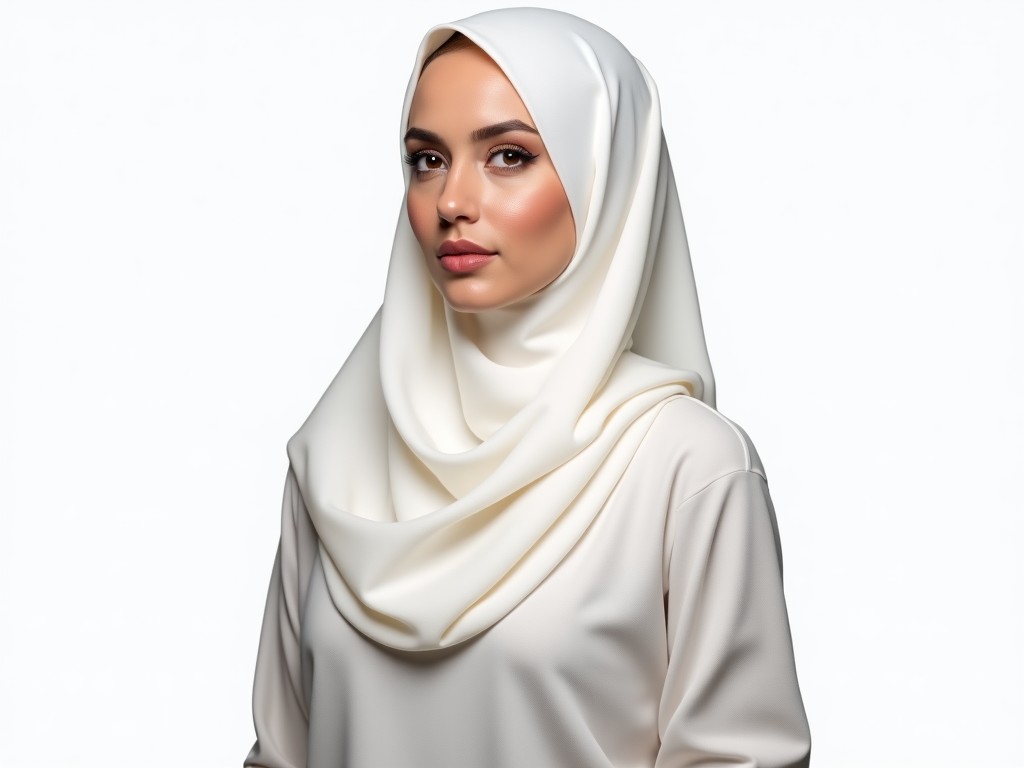
Oem White Chiffon Neck Scarf
An OEM white chiffon neck scarf is a lightweight, sheer textile accessory constructed from fine synthetic or natural filaments woven into a plain or leno weave structure. Its primary function in
OEM White Chiffon Neck Scarf
An OEM white chiffon neck scarf is a lightweight, sheer textile accessory constructed from fine synthetic or natural filaments woven into a plain or leno weave structure. Its primary function in industrial and commercial applications is to provide a decorative, breathable layer that enhances visual presentation without adding significant mass or thermal retention. Chiffon’s characteristic drape and translucency arise from its high twist yarns and low thread density, typically ranging from 20 to 40 ends per inch in warp and weft. Unlike opaque fabrics, chiffon allows controlled light diffusion, making it suitable for applications where subtlety and layering are critical. The material’s dimensional stability under low tension and resistance to pilling are key considerations for repeated handling in assembly or packaging lines.
Material Composition and Construction
The base material for OEM white chiffon neck scarves is predominantly 100% polyester filament yarn, selected for its consistent whiteness, tensile strength, and resistance to yellowing under UV exposure. Alternative constructions may use nylon or silk filaments, though polyester dominates due to its cost-effectiveness and dimensional stability in humid environments. Yarn denier typically falls between 15 and 30 denier per filament, with a twist multiplier of 3.5 to 4.5 to achieve the desired sheerness and drape. The fabric is woven using a plain weave with a thread count of 60x60 to 80x80 threads per square inch, resulting in a nominal weight of 15 to 25 grams per square meter. Finishing processes include heat setting to stabilize dimensions and optical brightening agents to maintain a neutral white point under D65 illumination.
Dimensional Specifications and Tolerances
Standard dimensions for OEM white chiffon neck scarves are defined by finished length and width, with common sizes ranging from 140 cm to 180 cm in length and 15 cm to 25 cm in width. These dimensions are measured after relaxation under standard atmospheric conditions (20°C, 65% RH) to account for fabric recovery. Width tolerance is typically ±3 mm due to selvage variation and weft draw-off during cutting. Length tolerance is ±5 mm, influenced by cutting precision and fabric feed consistency. Hemming, when applied, adds 2 to 4 mm to the overall width and is executed with a 3-thread overlock stitch to prevent fraying without adding bulk. Scarves intended for automated insertion systems may feature laser-cut edges to eliminate fraying risk entirely.
Performance Characteristics
Key performance indicators include air permeability, measured in cm³/cm²/s under a 100 Pa pressure differential, typically ranging from 150 to 300 for standard polyester chiffon. This high permeability ensures minimal thermal insulation, making the scarf suitable for warm environments or layered wear without discomfort. Tensile strength in the warp direction averages 8 to 12 N/tex, with elongation at break between 15% and 25%, allowing for manual handling without permanent deformation. Opacity, measured as % transmission of visible light, falls between 30% and 50%, providing sufficient coverage while retaining the signature sheer appearance. Colorfastness to washing and light is rated at least 4 on the grey scale after 5 cycles at 40°C, ensuring the white shade remains consistent through repeated use.
Applications in Industrial and Commercial Settings
OEM white chiffon neck scarves are commonly integrated into uniform systems for hospitality, retail, and ceremonial staff where a lightweight, non-insulating accessory is required to maintain professional appearance without thermal burden. In healthcare support roles, they serve as a low-lint barrier under protective gowns, minimizing particulate shedding while allowing skin breathability. In theatrical and performance costume departments, the fabric’s drape and light-scattering properties enable subtle layering under lighting rigs without creating visual bulk. Additionally, they are used in product presentation as a disposable or reusable wrap for high-end goods, where the sheer layer adds perceived value without obscuring the item. The material’s low electrostatic charge generation makes it suitable for environments sensitive to static attraction, such as electronics assembly cleanrooms.
Customization Options
OEM customization includes adjustments to yarn denier, twist level, and weave density to alter drape, sheerness, and durability for specific handling conditions. Width and length can be tailored to match garment patterns or packaging dimensions, with minimum order quantities typically starting at 500 units per size variant. Hemming styles range from raw edge (for laser-cut applications) to rolled hem, narrow double-fold, or decorative picot stitch, each affecting the final width and hand feel. Color matching to specific white standards (e.g., WC, W2, or custom Pantone equivalents) is available through controlled dyeing or optical brightener dosing. Additional finishes such as anti-static treatment, fluorocarbon repellency, or UV stabilization can be applied post-weaving based on end-use requirements.
Quality Control and Inspection
Inspection protocols focus on dimensional consistency, surface integrity, and color uniformity. Each batch undergoes 100% width measurement using optical scanners at 10-meter intervals during rolling. Visual inspection under D65 lighting identifies defects such as thick ends, thin places, neps, or oil spots, with acceptance criteria limiting Class B defects to no more than 4 per 100 square meters. Color variation is monitored via spectrophotometer, with ΔE*ab < 1.5 required for batch approval. Tensile strength and elongation are tested on five random samples per lot using a tensile tester at 50 mm/min strain rate. Packaging integrity is verified by checking for moisture content (<0.5%) and absence of contaminants before sealing.
Packaging and Logistics
Standard packaging involves folding scarves to a uniform size and placing them in polyethylene bags with low static discharge properties, typically 50 microns thick. Bags are sealed with heat seals or adhesive flaps to prevent moisture ingress during transit. Cartons are constructed from single-wall corrugated fiberboard with a burst strength of at least 200 kPa, designed to hold 100 to 200 units depending on scarf dimensions. Each carton is labeled with batch number, size, quantity, and country of origin. For export shipments, cartons are stacked on fumigated pallets and secured with PET strapping, with corner boards added to prevent edge damage. Desiccant packets (silica gel, 5g per carton) are included to maintain humidity below 60% RH during sea freight.
| Parameter | Typical Value | Unit |
|---|---|---|
| Fabric Weight | 15–25 | gsm |
| Width Tolerance | ±3 | mm |
| Length Tolerance | ±5 | mm |
| Air Permeability | 150–300 | cm³/cm²/s |
| Tensile Strength (Warp) | 8–12 | N/tex |
| Opacity | 30–50 | % |
| Colorfastness to Light | ≥4 | Grey Scale |
For technical inquiries, sample requests, or to discuss specific dimensional, material, or finishing requirements for your OEM application, please contact our engineering team. We provide detailed specification sheets, test reports, and material safety data upon request to support your evaluation and procurement process.
Products
Related Products
News
Related News

2026-11-02
Cotton Voile Scarf Manufacturing and Performance Analysis how to make a cotton voile scarfCreating a professional-grade cotton voile scarf requires a precise balance of textile engineering and artisanal finishing. Unlike standard cotton weaves, voile is defined by its p···

2026-10-28
chiffon hijab Technical Production and Performance AnalysisSelecting the right fabric for a hijab involves a delicate balance between modesty, breathability, and aesthetic drape. For many women in Southeast Asia and the Middle East, the ma···

2026-10-26
custom silk scarf textile manufacturing and performance analysisSelecting a high-quality scarf is no longer just about color matching; it is an exercise in understanding how textile weight, drape, and print scale interact with individual facial···
