Oem Chiffon Scarf Hijab Shawl Malaysia






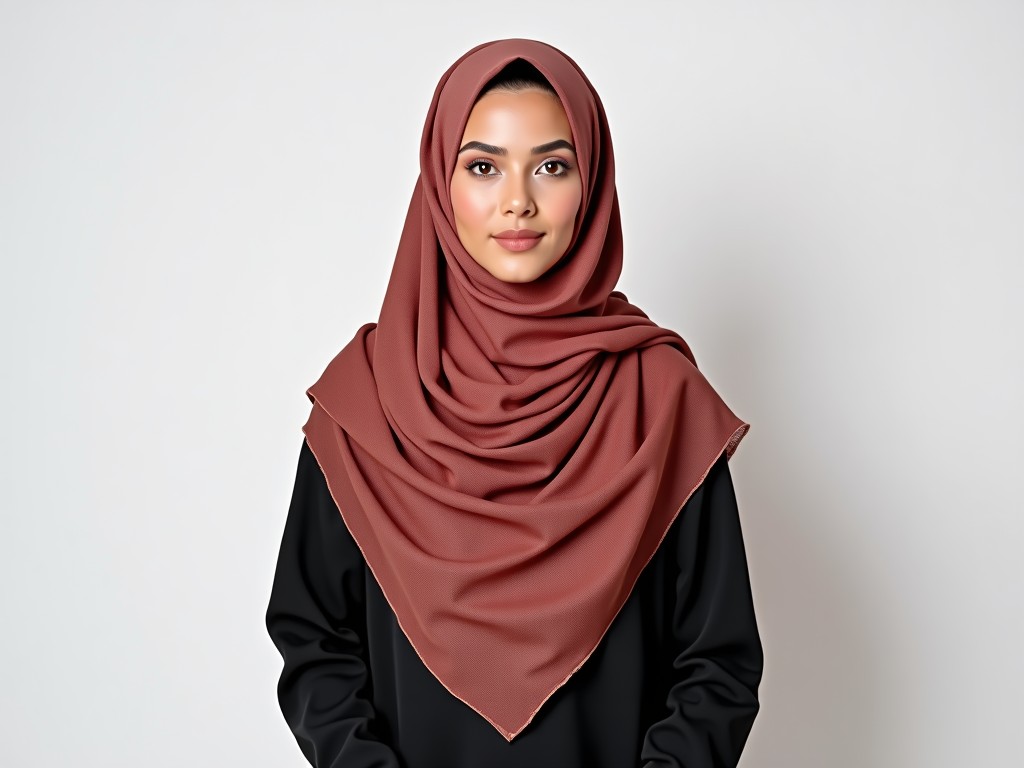
Oem Chiffon Scarf Hijab Shawl Malaysia
Chiffon hijabs are widely used in Malaysia for daily wear and formal occasions due to their lightweight drape and breathability. The fabric’s performance depends on fiber composition, weave density,
OEM Chiffon Scarf Hijab Shawl Malaysia
Chiffon hijabs are widely used in Malaysia for daily wear and formal occasions due to their lightweight drape and breathability. The fabric’s performance depends on fiber composition, weave density, and finishing treatments that affect opacity, wrinkle resistance, and colorfastness. Understanding these technical factors helps buyers select materials suited to specific end-use conditions.
Polyester chiffon is the most common base material for hijabs in tropical climates because it resists moisture absorption and dries quickly after washing. Typical filament denier ranges from 15D to 30D, with tighter weaves (80–120 threads per inch) providing better opacity without adding weight. Surface treatments such as silicone softening improve hand feel while maintaining dimensional stability.
Color consistency is critical for hijabs sold as part of coordinated ensembles. Dye lots are controlled using spectrophotometer readings with Delta E < 1.5 for batch-to-batch uniformity. Reactive dyes are preferred for polyester blends due to their covalent bond formation, which reduces fading from UV exposure and repeated washing cycles.
Edge finishing affects both durability and appearance. Common techniques include rolled hems (2–3mm width), ultrasonic sealing, and cold-cut laser edges. Rolled hems provide flexibility and resist fraying, while laser edges eliminate fraying entirely but may stiffen the edge if not properly calibrated.
Dimensions are standardized to accommodate various wrapping styles. Typical sizes range from 70cm x 180cm to 90cm x 200cm, with tolerance ±2cm. Custom lengths are available upon request, though non-standard widths may increase cutting waste and affect pricing.
Opacity is measured using a luminance contrast ratio under standardized lighting (D65, 45/0 geometry). For modest wear applications, a minimum opacity of 85% is generally required. Sheer variants (60–70% opacity) are used for layering but require liner fabrics for full coverage.
Care instructions influence long-term value. Polyester chiffon retains shape after 30+ wash cycles at 40°C when washed in mild detergent and air-dried. Tumble drying is discouraged as it can cause pilling or melting at high temperatures. Ironing should be done at ≤110°C with a pressing cloth to avoid scorching.
Applications in Malaysian Market
In Malaysia, chiffon hijabs are purchased for daily wear, workplace uniforms, and event-specific attire such as weddings or religious ceremonies. The choice of fabric weight and finish depends on the expected duration of wear, exposure to outdoor elements, and layering requirements with inner caps or underscarves.
Retail distributors prioritize consistent color matching across bulk orders to maintain brand integrity. Industrial buyers sourcing for corporate uniforms or government contracts require traceable dye lots and batch documentation to comply with procurement audits. Custom packaging options, such as individual polybagging with barcode labels, support inventory management systems.
For export markets, compliance with OEKO-TEX® Standard 100 or similar textile safety certifications is often requested. While certification is not applied directly to the product, raw materials can be sourced from certified suppliers upon request, with test reports available for review.
Technical Specifications
| Parameter | Typical Value | Notes |
|---|---|---|
| Base Material | 100% Polyester Filament | Available in recycled PET options |
| Filament Denier | 15D–30D | Lower denier = lighter weight |
| Weave Density | 80–120 TPI | Threads per inch (warp x weft) |
| Width Tolerance | ±2cm | Measured at relaxed state |
| Length Tolerance | ±2cm | Cut to specification |
| Opacity (Luminance Contrast) | ≥85% (standard) | Customizable per requirement |
| Colorfastness (Washing) | Grade 4+ (ISO 105-C06) | After 20 cycles |
| Colorfastness (Light) | Grade 4 (ISO 105-B02) | After 20 AFU |
| Dimensional Stability | ≤3% shrinkage | After washing at 40°C |
| Finish Options | Rolled hem, Laser edge, Ultrasonic seal | Custom upon request |
Customization Options
OEM production allows adjustments to fabric construction, dimensions, and finishing based on specific application needs. Buyers can specify filament denier to balance weight and opacity, or request blended fibers (e.g., polyester-viscose) for improved moisture absorption in humid environments.
Color matching is supported via Pantone or physical swatch submission. Lab dips are provided for approval before bulk production, with Delta E tolerance confirmed during strike-off evaluation. Custom prints, such as subtle motifs or border patterns, are available using digital or screen printing methods.
Packaging can be tailored to distribution channels—individual hanging tags for retail, bulk polybags for wholesale, or custom boxes with branding for corporate orders. Labeling includes care instructions, fiber content, and country of origin as required by destination market regulations.
Quality Control Process
Inspection occurs at multiple stages: raw material verification, in-process monitoring, and final random sampling. Fabric width and weight are checked per roll using calibrated gauges. Color consistency is evaluated under controlled lighting (D65, 2° observer) with comparative assessment against approved standards.
Defect classification follows a 4-point system: critical (holes, stains, misprints), major (severe creasing, incorrect dimensions), minor (slight shade variation, loose threads). Acceptable quality limits (AQL) are typically set at 2.5% for major defects and 4.0% for minor, adjusted per customer agreement.
Finished goods undergo dimensional stability testing after simulated wash cycles. Edge integrity is assessed for fraying or stiffness. All inspection records are retained for traceability and made available upon request.
Products
Related Products
News
Related News

2026-11-02
Cotton Voile Scarf Manufacturing and Performance Analysis how to make a cotton voile scarfCreating a professional-grade cotton voile scarf requires a precise balance of textile engineering and artisanal finishing. Unlike standard cotton weaves, voile is defined by its p···

2026-10-28
chiffon hijab Technical Production and Performance AnalysisSelecting the right fabric for a hijab involves a delicate balance between modesty, breathability, and aesthetic drape. For many women in Southeast Asia and the Middle East, the ma···

2026-10-26
custom silk scarf textile manufacturing and performance analysisSelecting a high-quality scarf is no longer just about color matching; it is an exercise in understanding how textile weight, drape, and print scale interact with individual facial···
