How To Make And Sew Chiffon Neck Scarf






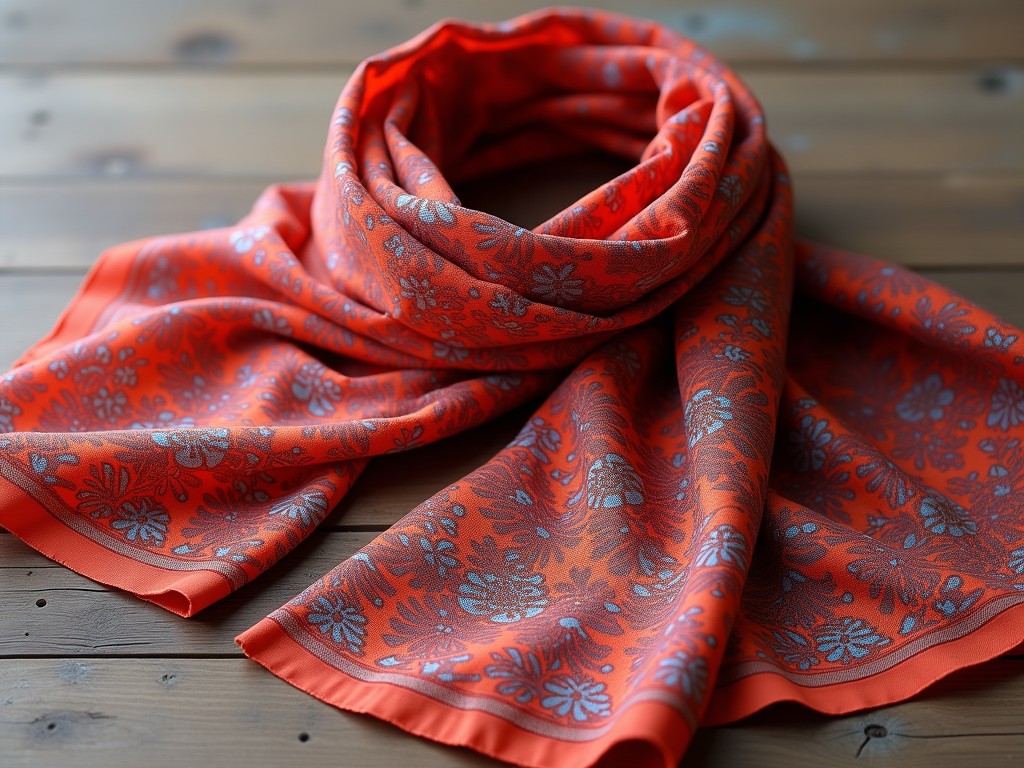
How To Make And Sew Chiffon Neck Scarf
Creating a chiffon neck scarf involves precise material handling, controlled cutting techniques, and specialized sewing methods to preserve the fabric’s delicate structure while achieving a
How to Make and Sew a Chiffon Neck Scarf
Creating a chiffon neck scarf involves precise material handling, controlled cutting techniques, and specialized sewing methods to preserve the fabric’s delicate structure while achieving a professional finish. This guide outlines the technical process for industrial or small-batch production, focusing on repeatability, material efficiency, and seam integrity.
Material Selection and Preparation
Chiffon is a lightweight, plain-weave fabric typically made from silk, polyester, or nylon filaments, with a standard weight range of 20–40 g/m². For scarf production, polyester chiffon is often selected for its dimensional stability, resistance to shrinkage, and consistent dye uptake. Prior to cutting, the fabric must be relaxed for 24 hours in a controlled environment (20–25°C, 40–50% RH) to eliminate residual tension from rolling.
Use a 60–80 micron rotary cutter with a self-healing mat to prevent fiber distortion. A 45 mm blade is optimal for clean edges without snagging. Always cut with the grain direction marked on the selvage; cutting on bias increases stretch and complicates seam alignment. For a standard neck scarf, cut two identical rectangles measuring 180 cm in length and 25 cm in width, allowing 1 cm seam allowance on all sides.
Edge Finishing Techniques
Chiffon’s tendency to fray requires immediate edge stabilization. A 3-thread overlock stitch with a stitch length of 2.0–2.5 mm and differential feed set to 0.7–0.8 prevents puckering while enclosing the raw edge. Thread tension must be balanced: needle thread at 3.5–4.0, looper threads at 4.0–4.5. Use polyester core-spun thread (120 wt) for strength and low lint.
Alternatively, a rolled hem foot on a lockstitch machine can produce a narrow 2–3 mm hem. Set stitch length to 1.8–2.0 mm, needle size to 60/8 or 70/10 sharp, and reduce presser foot pressure to 50–60% to avoid marking the fabric. Test on scrap first; excessive tension causes tunneling, while insufficient tension leads to loose loops.
Assembly and Seam Construction
Place the two chiffon pieces with right sides together, aligning selvages and ends. Secure with fine pins (0.4 mm diameter) or water-soluble basting tape spaced 5 cm apart to avoid hole formation. Sew a 1 cm seam allowance using a lockstitch machine with a straight stitch, length 2.0–2.2 mm, needle size 60/8. Reduce top tension to 2.5–3.0 to prevent puckering on the lightweight fabric.
After sewing, trim seam allowance to 0.5 cm to reduce bulk. Press the seam open using a low-heat iron (110°C max) with a pressing cloth and no steam. Steam can cause water spotting or permanent distortion in synthetic chiffon. Allow the scarf to cool completely before handling to avoid stretching the warm seam.
Quality Control and Finishing
Inspect each scarf under 500 lux daylight-simulating lighting for seam consistency, edge integrity, and dimensional accuracy. Acceptable seam deviation is ±3 mm over the full length. Check for snags, runs, or uneven tension using a 10x magnifier. Any defect affecting appearance or structural integrity must be reworked or rejected.
Final dimensions should measure 178–182 cm in length and 23–24 cm in width after pressing. Fold the scarf in thirds lengthwise, then in half widthwise, and place in a polybag with anti-static properties. Store flat in a cool, dry area away from direct sunlight to prevent UV degradation and yellowing over time.
Technical Considerations for Batch Production
For volumes exceeding 50 units, implement a cutting layout plan to maximize yield. A 150 cm wide bolt of chiffon yields six scarfs per length (180 cm each) with 10–15% waste when optimized. Use a computerized marker system to minimize offcuts. Batch-sew similar colors together to reduce thread changes and machine setup time.
Maintain a dedicated sewing station for lightweight fabrics to avoid contamination from heavier materials. Regularly clean needle plates, bobbin cases, and tension discs with isopropyl alcohol to prevent lint buildup. Replace needles every 4–6 hours of runtime to ensure clean penetration and reduce fabric damage.
| Parameter | Typical Value | Adjustment Notes |
|---|---|---|
| Fabric Weight | 20–40 g/m² | Lighter weights require lower tension and smaller needles |
| Stitch Length (Seam) | 2.0–2.2 mm | Shorter for silk, longer for polyester |
| Overlock Stitch Length | 2.0–2.5 mm | Shorter for finer control on delicate edges |
| Iron Temperature | ≤110°C | Always use pressing cloth; avoid steam on synthetics |
| Seam Allowance | 1 cm (sewn), 0.5 cm (trimmed) | Reduced after sewing to minimize bulk |
The process emphasizes material preservation and repeatable outcomes over speed. Each step is designed to mitigate common failure modes in chiffon processing: fraying, puckering, distortion, and thermal damage. By following these technical parameters, producers can achieve consistent results suitable for apparel lines, promotional items, or custom textile offerings.
Products
Related Products
News
Related News

2026-11-02
Cotton Voile Scarf Manufacturing and Performance Analysis how to make a cotton voile scarfCreating a professional-grade cotton voile scarf requires a precise balance of textile engineering and artisanal finishing. Unlike standard cotton weaves, voile is defined by its p···

2026-10-28
chiffon hijab Technical Production and Performance AnalysisSelecting the right fabric for a hijab involves a delicate balance between modesty, breathability, and aesthetic drape. For many women in Southeast Asia and the Middle East, the ma···

2026-10-26
custom silk scarf textile manufacturing and performance analysisSelecting a high-quality scarf is no longer just about color matching; it is an exercise in understanding how textile weight, drape, and print scale interact with individual facial···
