China White Chiffon Wrap Shawl






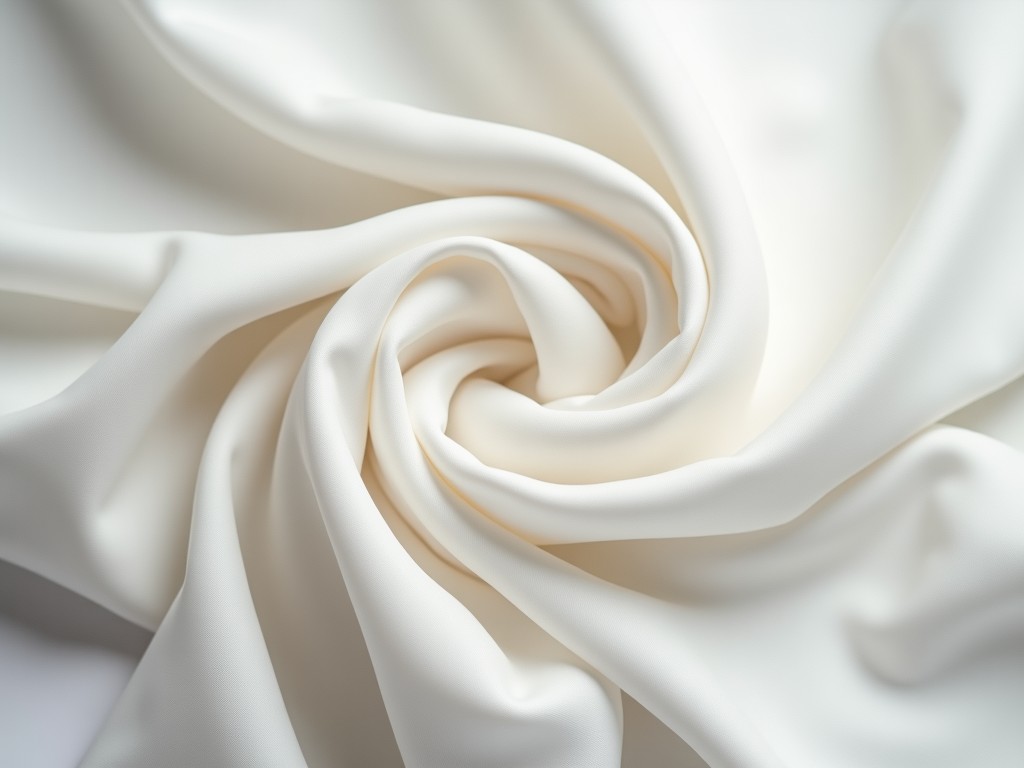
China White Chiffon Wrap Shawl
This section details the technical specifications, material behavior, and application considerations for white chiffon wrap shawls manufactured in China. Information is structured to support
China White Chiffon Wrap Shawl
This section details the technical specifications, material behavior, and application considerations for white chiffon wrap shawls manufactured in China. Information is structured to support procurement decisions based on measurable properties rather than subjective claims.
Chiffon is a plain-woven fabric characterized by its sheer appearance, lightweight drape, and slight texture from highly twisted yarns. The white variant discussed here uses bleached or naturally white fibers to achieve consistent color without dye lot variation.
Industrial buyers should evaluate chiffon shawls based on fiber composition, yarn twist, weave density, edge finish, and dimensional stability—factors that directly influence performance in end-use scenarios such as apparel layering, theatrical costuming, or hospitality uniform components.
Material Composition and Fiber Properties
The primary fibers used in white chiffon wrap shawls are polyester, silk, or rayon, each selected based on cost, durability, and aesthetic requirements. Polyester chiffon offers the highest dimensional stability and resistance to shrinkage, with typical tensile strength ranging from 3.5 to 5.0 g/denier.
Silk chiffon provides superior drape and a natural luster but exhibits lower abrasion resistance and requires careful handling; its tenacity averages 2.8–3.5 g/denier. Rayon chiffon delivers a silk-like feel at lower cost but loses up to 50% of its strength when wet, necessitating dry cleaning or gentle washing.
Yarn twist in chiffon typically ranges from 800 to 1,200 twists per meter (TPM) in both warp and weft directions. This high twist creates the fabric’s characteristic slight puckerness and enhances shear resistance, reducing snagging during handling.
Weave Structure and Physical Dimensions
Chiffon employs a balanced plain weave where warp and weft yarns interlace alternately. The standard thread count for industrial-grade chiffon ranges from 80 to 120 ends per inch (EPI) and 60 to 100 picks per inch (PPI), resulting in a lightweight fabric with typical areal density between 15 and 30 GSM (grams per square meter).
Standard wrap shawl dimensions are 70 cm in width by 180 cm in length, though tolerances of ±2 cm are common due to the fabric’s elasticity and cutting method. The bias-cut orientation (45° to warp) is frequently used to enhance drape and conformity to body contours.
Edge finishing options include rolled hems (2–3 mm width), overlock stitching, or ultrasonic bonding. Rolled hems preserve the sheer edge profile and add minimal weight, while overlock provides greater fray resistance at the cost of slight stiffness.
Performance Characteristics and Testing
Key performance indicators for chiffon shawls include tear resistance, colorfastness to light and washing, and pilling resistance. Polyester chiffon typically achieves a tear strength of 1.2–1.8 N (warp) and 1.0–1.5 N (weft) under ASTM D2261 standards.
Colorfastness to light is rated using the Blue Wool Scale; bleached white polyester chiffon generally scores 4–5 (good to excellent) after 20 hours of xenon arc exposure. Washing fastness depends on finish: heat-set polyester retains whiteness after 5+ cycles at 40°C, while untreated rayon may yellow.
Pilling resistance is evaluated via Martindale tester; chiffon’s long filament structure reduces pilling compared to spun yarn fabrics, with typical ratings of 3–4 (moderate to resistance) after 5,000 cycles.
Applications in Industrial and Commercial Settings
White chiffon wrap shawls are selected in industries where lightweight layering, visual softness, and quick donning/doffing are required. In hospitality, they serve as modular uniform components for event staff, allowing temperature adaptation without compromising appearance.
In theatrical and performance contexts, the fabric’s translucency enables layered lighting effects; multiple shawls can be worn simultaneously to create depth while maintaining breathability under hot stage lights. The low mass (typically 25–40 g per shawl) minimizes performer fatigue.
Healthcare and wellness facilities use white chiffon shawls as patient modesty garments during transitions between rooms or procedures. Their compact foldability (under 10 cm³ when rolled) and low lint generation support hygiene protocols in sensitive environments.
Customization Parameters
Manufacturers in China offer customization across fiber type, dimensions, edge treatment, and packaging. Fiber blends (e.g., 85% polyester/15% silk) can be adjusted to balance cost, drape, and durability based on end-use fatigue expectations.
Width and length can be tailored within loom constraints—typically 50–90 cm width and 150–220 cm length—without requiring new tooling. Custom packaging options include individual polybags, bulk flat packs, or hanger-ready configurations with barcode labels.
Additional finishes such as optical brightening agents (OBAs) or anti-static treatments are available upon request. OBA levels are controlled to prevent yellowing over time, while anti-static finishes reduce surface resistivity to below 10¹¹ ohms/square.
Quality Control and Inspection
Quality assurance for chiffon shawls involves roll-to-roll inspection during weaving and final audit post-cutting. Key checkpoints include ends-per-inch uniformity (target variation <±5%), pick density consistency, and defect classification under 2x magnification.
Common defects tracked are broken ends, loose picks, slubs, and incorrect edge width. Acceptable quality limits (AQL) are typically set at 2.5 for major defects (e.g., holes, mispick) and 4.0 for minor defects (e.g., slight shade variation) per ANSI/ASQ Z1.4.
Dimensional stability is verified after relaxation conditioning (24 hrs at 20°C/65% RH). Length and width shrinkage should not exceed 2% after washing or steaming, measured via AATCC Test Method 135. Whiteness index is monitored using spectrophotometry (WI D65/10 >80 acceptable).
Packaging and Logistics Considerations
Chiffon shawls are lightweight but bulky; efficient packaging reduces shipping volume and creasing. Standard methods include folding to 30×40 cm dimensions and placing in polyethylene bags (50–70 micron thickness) with desiccant packs for moisture control during transit.
For bulk orders, shawls are stacked in cartons (typically 30×40×50 cm) holding 50–100 units depending on GSM. Carton strength is specified at 200-lb burst test or equivalent Edge Crush Test (ECT) 32 to withstand pallet stacking.
Export shipments require fumigation-compliant packaging (ISPM 15) for wooden pallets. Clear labeling includes fiber content, country of origin (China), care instructions, and batch traceability codes. Lead times average 14–21 days for standard orders, extending to 28–35 days for custom finishes or certified packaging.
| Parameter | Typical Range (Polyester Chiffon) | Test Method / Standard |
|---|---|---|
| Areal Density (GSM) | 15–30 | ASTM D3776 |
| Tensile Strength (g/denier) | 3.5–5.0 | ASTM D2256 |
| Tear Resistance (N) | 1.0–1.8 | ASTM D2261 |
| Whiteness Index (WI D65/10) | >80 | AATCC 110 |
| Colorfastness to Light | 4–5 (Blue Wool) | ISO 105-B02 |
| Dimensional Change (Wash) | <±2% | AATCC 135 |
For technical inquiries, custom specifications, or sample requests regarding China-made white chiffon wrap shawls, contact the manufacturer’s engineering team. Provide details on intended use, required dimensions, fiber preferences, and any regulatory compliance needs (e.g., OEKO-TEX, REACH) to receive accurate quotations and lead time estimates.
Products
Related Products
News
Related News

2026-11-02
Cotton Voile Scarf Manufacturing and Performance Analysis how to make a cotton voile scarfCreating a professional-grade cotton voile scarf requires a precise balance of textile engineering and artisanal finishing. Unlike standard cotton weaves, voile is defined by its p···

2026-10-28
chiffon hijab Technical Production and Performance AnalysisSelecting the right fabric for a hijab involves a delicate balance between modesty, breathability, and aesthetic drape. For many women in Southeast Asia and the Middle East, the ma···

2026-10-26
custom silk scarf textile manufacturing and performance analysisSelecting a high-quality scarf is no longer just about color matching; it is an exercise in understanding how textile weight, drape, and print scale interact with individual facial···
