China Layered Chiffon Scarf Hijab






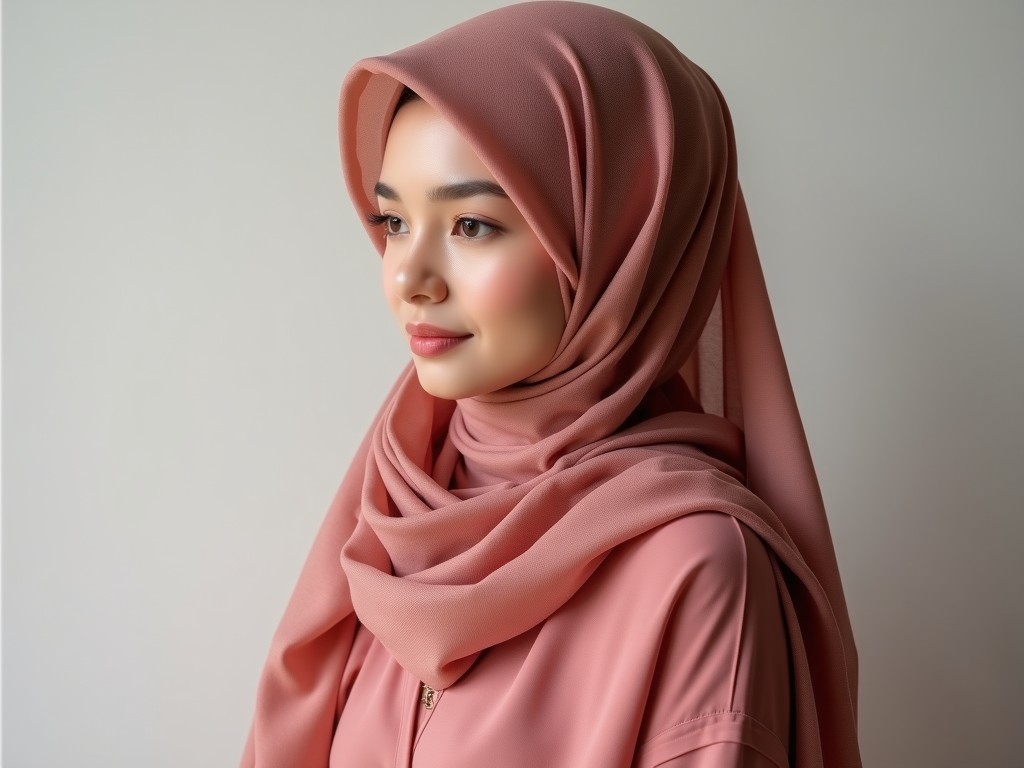
China Layered Chiffon Scarf Hijab
A layered chiffon scarf hijab is a lightweight, multi-layer textile product designed for modular wear, combining breathability with dimensional coverage. Manufactured primarily in China using
China Layered Chiffon Scarf Hijab
A layered chiffon scarf hijab is a lightweight, multi-layer textile product designed for modular wear, combining breathability with dimensional coverage. Manufactured primarily in China using synthetic or blended fibers, it serves applications requiring adaptable draping, moisture management, and ease of maintenance. Each layer functions independently to allow customized volume, opacity, and thermal response based on user configuration.
The construction typically involves two to four layers of chiffon fabric, each cut to specific dimensions and joined at select points—such as corners or edges—to permit relative movement while maintaining structural cohesion. Fabric weight ranges from 15 to 30 gsm per layer, with tensile strength between 8 and 18 N/50mm depending on fiber composition and weave density. These parameters directly influence how the scarf behaves under tension, drape, and environmental exposure.
Material selection focuses on polyester, nylon, or polyester-viscose blends due to their resistance to shrinking, wrinkling, and UV degradation. Polyester-based chiffon retains dimensional stability after repeated washing, with shrinkage typically under 2% at 40°C. Viscose blends improve moisture absorption (up to 11% regain) but require careful handling to avoid weakening when wet. Buyers should specify fiber type based on end-use conditions such as climate, frequency of use, and care infrastructure.
Edge finishing is critical to prevent fraying and ensure longevity. Common methods include ultrasonic sealing, narrow hem stitching (1–2 mm), or thermal bonding, each affecting flex resistance and hand feel. Ultrasonic sealing creates a bond strength of approximately 4–6 N/mm without adding bulk, while stitched hems offer higher peel resistance but may stiffen the edge. The choice impacts both durability and the scarf’s ability to layer smoothly without bulk accumulation.
Technical Specifications
| Parameter | Typical Value | Notes |
|---|---|---|
| Fabric Weight (per layer) | 15–30 gsm | Measured per ISO 3801; affects drape and opacity |
| Tensile Strength (warp/weft) | 8–18 N/50mm | ASTM D5034; varies with fiber type and density |
| Elongation at Break | 15–35% | Indicates flexibility and recovery under strain |
| Air Permeability | 150–300 mm/s | ISO 9237; higher values improve breathability |
| Shrinkage (after wash) | <2% (polyester), 3–5% (viscose blend) | ISO 6330; 40°C wash, tumble dry low |
| Standard Dimensions | 70×180 cm (base layer), +10–20 cm per additional layer | Custom lengths and widths available per project |
| Layer Attachment Points | Corners, mid-edges, or intermittent stitching | Determines layer mobility and bulk distribution |
Material Options and Performance
Polyester chiffon dominates production due to its strength-to-weight ratio, chemical resistance, and low moisture regain (<0.4%). It maintains dimensional stability across temperature fluctuations from -20°C to 80°C, making it suitable for varied climates. UV stabilizers can be added during extrusion to retard yellowing, with typical retention of 70% tensile strength after 500 hours of UV exposure (ASTM G154).
Nylon chiffon offers superior abrasion resistance and elasticity, with elongation at break exceeding 30% and recovery rates above 90% after 5% strain. However, it absorbs more moisture (up to 4.5%) and is prone to yellowing without UV inhibitors. Its higher cost limits use to premium or performance-oriented variants where flex endurance is prioritized.
Viscose blends improve hand feel and moisture wicking but reduce wet strength by up to 40%. They require gentler washing cycles and are best suited for infrequent use or controlled environments. Anti-pilling treatments can extend surface integrity, though pilling remains a concern in high-friction zones. Blends are typically labeled as 80/20 or 65/35 polyester-viscose to balance cost and comfort.
Manufacturing Considerations
Cutting precision is essential to maintain layer alignment and prevent skewing during use. Laser or ultrasonic cutting ensures clean edges without fraying, especially important for lightweight fabrics. Die cutting is used for high-volume runs but requires sharp dies to avoid tearing. Tolerance on cut dimensions is typically ±2 mm for consumer-grade and ±0.5 mm for precision applications.
Layer joining methods affect both aesthetics and functionality. Intermittent stitching (every 5–10 cm) allows layers to shift independently, reducing bunching when draped. Spot bonding with adhesive film provides discreet attachment but may delaminate after repeated washing. Thermal bonding creates a permanent bond but alters hand feel at the joint. The method must be selected based on expected care cycles and desired drape behavior.
Dyeing occurs at the yarn or fabric stage using disperse dyes for synthetics. Colorfastness to washing (ISO 105 C06) and light (ISO 105 B02) must meet grade 4 or higher for commercial acceptability. Batch-to-batch variation is controlled via spectrophotometric monitoring, with ΔE < 1.5 considered acceptable for solid shades. Metallic or pearl finishes require additional coating steps and may reduce breathability.
Applications
The layered structure enables users to adjust coverage, volume, and insulation dynamically—beneficial in environments with fluctuating temperatures or activity levels. For example, an outer layer can be lifted for ventilation while inner layers retain modesty, a function not achievable with single-layer designs. This adaptability reduces the need for multiple garments, simplifying inventory and logistics for institutional buyers such as hospitals, hotels, or uniform suppliers.
In healthcare or food service settings, the smooth, non-porous surface of polyester chiffon resists particle adhesion and permits easy cleaning. The absence of thick seams or embellishments minimizes snagging hazards and facilitates disinfection. Quick-dry properties (moisture transport rate >1500 g/m²/hr) support hygiene protocols requiring frequent washing.
For corporate or hospitality uniforms, the scarf’s lightweight nature reduces wearer fatigue during extended shifts. Its resistance to wrinkling minimizes maintenance needs, and the ability to layer without bulk allows compatibility with collared shirts or jackets. Custom colors and logo printing (via sublimation) enable brand integration without compromising fabric integrity.
Customization and Ordering
Buyers can specify layer count (typically 2–4), attachment pattern, dimensions per layer, fiber composition, finish (matte, soft-touch, antimicrobial), and edge treatment. Color matching to Pantone or RAL standards is available for orders exceeding 500 units. Sample development takes 5–7 days after receipt of technical package, including swatches for fabric, color, and construction details.
Minimum order quantities vary: 300 units for standard designs, 1000 for fully customized construction. Lead time ranges from 14 to 28 days depending on complexity and factory capacity. Packaging options include flat polybags (25–50 pcs), rolled bundles, or individual boxes with inserts. Export packaging adheres to ISTA 1A standards to resist moisture and compression during transit.
Quotations require detailed specifications: target weight per layer, desired opacity (measured via ISO 2471), care instructions, and intended use environment. Providing a physical sample or clear sketch reduces misinterpretation. Tooling or setup fees may apply for unique layer attachment patterns but are often waived at higher volumes.
For technical inquiries, sample requests, or quotation support, contact our engineering team to discuss your specific requirements.
Request Technical Specification SheetProducts
Related Products
News
Related News

2026-11-02
Cotton Voile Scarf Manufacturing and Performance Analysis how to make a cotton voile scarfCreating a professional-grade cotton voile scarf requires a precise balance of textile engineering and artisanal finishing. Unlike standard cotton weaves, voile is defined by its p···

2026-10-28
chiffon hijab Technical Production and Performance AnalysisSelecting the right fabric for a hijab involves a delicate balance between modesty, breathability, and aesthetic drape. For many women in Southeast Asia and the Middle East, the ma···

2026-10-26
custom silk scarf textile manufacturing and performance analysisSelecting a high-quality scarf is no longer just about color matching; it is an exercise in understanding how textile weight, drape, and print scale interact with individual facial···
