Chiffon Square Stole Head Scarf Supplier






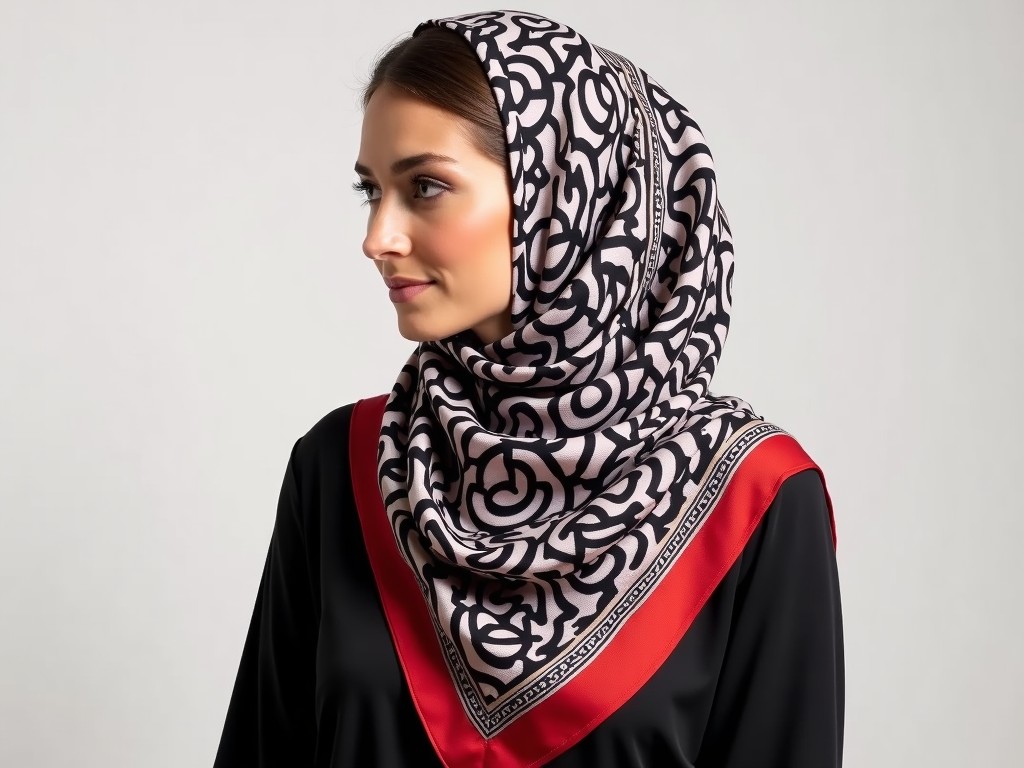
Chiffon Square Stole Head Scarf Supplier
Industrial procurement of chiffon square stole head scarves requires precise material control, dimensional consistency, and finish durability to meet end-use performance in high-volume textile
Chiffon Square Stole Head Scarf Supplier: Technical Specifications and Industrial Applications
Industrial procurement of chiffon square stole head scarves requires precise material control, dimensional consistency, and finish durability to meet end-use performance in high-volume textile applications. This document details the technical parameters, manufacturing considerations, and application-specific requirements for chiffon-based square stoles used as head scarves in commercial, institutional, and uniform supply chains.
Material Composition and Fiber Characteristics
The base fabric is constructed from 100% polyester filament yarn with a denier range of 15D to 30D, selected for its low moisture regain (<0.4%), high tensile strength (3.5–5.0 g/denier), and dimensional stability under repeated washing cycles. Unlike natural silk chiffon, which exhibits hygroscopic variability and UV degradation, polyester chiffon maintains consistent drape and hand feel across environmental conditions, critical for institutional laundering protocols.
Yarn twist is controlled between 80–120 TPM (turns per meter) to balance sheen, opacity, and resistance to snagging during cutting and sewing. The fabric undergoes a heat-setting process at 180–200°C for 60–90 seconds to stabilize the crystalline structure, reducing residual shrinkage to <1.5% after 5 ISO 6330 wash cycles at 40°C. This thermal treatment is non-negotiable for applications requiring dimensional fidelity in folded or pleated configurations.
Weave Structure and Surface Properties
The chiffon weave employs a plain weave construction with a thread count of 60–80 ends per inch (EPI) and 60–80 picks per inch (PPI), creating a balanced, open structure responsible for the characteristic translucency and lightweight drape (typically 15–25 gsm). This low mass per unit area ensures minimal bulk when layered or folded, essential for head scarf applications where comfort and breathability are performance requirements.
Surface finish is achieved through a controlled calendaring process using heated rollers at 120–140°C under 2–3 bar pressure, producing a uniform luster without compromising air permeability. Anti-static treatment is applied via topical quaternary ammonium compound deposition (0.5–1.0% add-on) to reduce cling and dust attraction during handling and storage — a critical factor in high-throughput distribution environments.
Dimensional Tolerances and Cutting Precision
Square stoles are manufactured to nominal dimensions of 60 cm × 60 cm, 70 cm × 70 cm, or 90 cm × 90 cm, with a tolerance of ±3 mm on all sides. This tolerance is maintained through computer-controlled rotary die cutting with laser-guided alignment, preventing skewing or parallelogram distortion that can occur with manual or guillotine methods. Edge fidelity is critical for subsequent hemming or rolling operations.
Raw edge integrity is preserved through hot-knife sealing or ultrasonic cutting, which melts and fuses the polyester filaments to prevent fraying. This eliminates the need for overlocking or binding in applications where a clean, unfinished edge is specified — common in uniform accessories where minimal seam profile is required for under-helmet or under-headgear wear.
Colorfastness and Dyeing Process
Dyeing is performed using disperse dyes at 130–135°C under pressure (2–3 bar) for 45–60 minutes, ensuring molecular diffusion into the amorphous regions of the polyester fiber. Post-dye reduction clearing removes surface dye to prevent crocking. Colorfastness ratings meet or exceed ISO 105-B02 (light fastness: ≥4), ISO 105-C06 (washing: ≥4–5), and ISO 105-X12 (perspiration: ≥4), suitable for industrial laundering and outdoor exposure.
Color matching is conducted under D65 daylight simulation (6500K) using spectrophotometric analysis (ΔE < 1.5) to ensure batch-to-batch consistency. Custom Pantone or RAL color matching is available upon submission of a physical standard or digital spectral data, with lab dip approval required before bulk production. This level of color control is essential for branded uniform programs and institutional dress codes.
Quality Control and Inspection Protocol
In-line inspection occurs at three stages: greige fabric (for defects like broken ends, double picks, or neps), dyed fabric (for shade variation, oil spots, or crease marks), and finished product (for dimensions, edge integrity, and labeling). Each 100-linear-meter roll is inspected under 500 lux illumination at a 45° angle using trained personnel following AATCC EP1 standards. Defect classification follows the 4-point system, with acceptance quality limit (AQL) set at 2.5 for major defects and 4.0 for minor.
Dimensional stability is verified via AATCC 135 (dimensional changes after home laundering), with test specimens conditioned at 21°C ±1°C and 65% ±2% RH for 4 hours prior to measurement. Colorfastness to washing, light, and perspiration is tested per ISO 105 standards on a lot basis. All test reports are available upon request and form part of the technical documentation package for OEM and distributor clients.
Packaging and Logistics Considerations
Finished square stoles are folded to a uniform size (typically 10 cm × 10 cm) using automated folding boards with vacuum-assisted alignment to prevent shifting. Each unit is placed in a low-density polyethylene (LDPE) bag (40 µm thickness) with optional desiccant packet (silica gel, 2g) for moisture control during transit. Bulk packaging uses 5-ply corrugated cartons (ECT 32+) with dimensions optimized for palletization (1200 mm × 1000 mm × 1400 mm).
Carton markings include barcoded labels (Code 128) for SKU, lot number, quantity, and country of origin. For international shipments, fumigation-compliant ISPM 15-treated pallets are used, and humidity indicators are placed inside cartons for long-haul containerized transport. These measures mitigate risks of mildew, yellowing, or dimensional change during extended storage or transit through high-humidity climates.
Industrial Applications and End-Use Performance
Chiffon square stoles function as head scarves in environments requiring lightweight, breathable, and non-irritating textile layers — such as healthcare worker uniforms under surgical caps, hospitality staff attire in hot climates, and industrial cleanroom personnel requiring particulate containment without thermal buildup. The low air permeability resistance (<50 Pa·m²/g) allows for comfort during extended wear, while the fabric’s opacity (≥80% at 1 mm thickness) ensures adequate coverage without bulk.
In food processing and pharmaceutical environments, the fabric’s low lint generation (tested via IEST-RP-CC003.4) and resistance to chemical degradation from alcohol-based sanitizers make it suitable for controlled areas. Unlike cotton or rayon alternatives, polyester chiffon does not shed fibers or retain moisture, reducing contamination risk and maintaining consistent performance after repeated exposure to disinfectants.
Customization and Technical Support
Customization options include dimension adjustment (±5 cm increments), edge finishing (rolled, hemmed, or sealed), color matching to corporate standards, and addition of woven or printed labels (satchel or tear-away). Technical support includes provision of fabric swatches with full test data, sample production under actual production conditions, and guidance on laundering compatibility with client-specific wash formulas.
Minimum order quantities typically start at 500 units per SKU, with lead times of 14–21 days for standard colors and 21–30 days for custom shades, subject to fabric approval. All inquiries should include required dimensions, end-use environment, laundering specifications, and any regulatory compliance needs (e.g., OEKO-TEX®, REACH) to enable accurate quotation and sample development.
For technical inquiries, sample requests, or specification sheets, contact our engineering team via the inquiry form.
Request Technical Specification SheetProducts
Related Products
News
Related News

2026-11-02
Cotton Voile Scarf Manufacturing and Performance Analysis how to make a cotton voile scarfCreating a professional-grade cotton voile scarf requires a precise balance of textile engineering and artisanal finishing. Unlike standard cotton weaves, voile is defined by its p···

2026-10-28
chiffon hijab Technical Production and Performance AnalysisSelecting the right fabric for a hijab involves a delicate balance between modesty, breathability, and aesthetic drape. For many women in Southeast Asia and the Middle East, the ma···

2026-10-26
custom silk scarf textile manufacturing and performance analysisSelecting a high-quality scarf is no longer just about color matching; it is an exercise in understanding how textile weight, drape, and print scale interact with individual facial···
