Buy Silk Chiffon Square Scarf






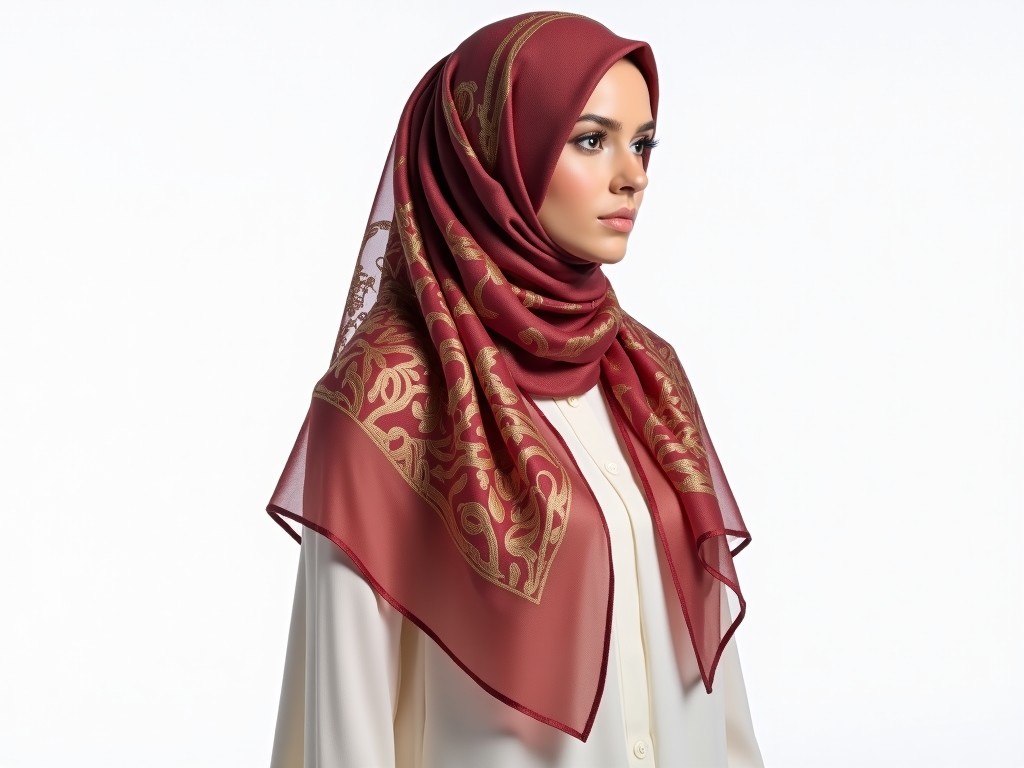
Buy Silk Chiffon Square Scarf
This page details the engineering characteristics of square silk chiffon scarves designed for technical textile applications. Industrial buyers evaluating fabric performance, dimensional stability,
Square Silk Chiffon Scarf: Technical Specifications for Industrial Applications
This page details the engineering characteristics of square silk chiffon scarves designed for technical textile applications. Industrial buyers evaluating fabric performance, dimensional stability, and material behavior will find measurable specifications to support procurement decisions. All data presented reflects typical values for standard constructions; custom configurations are available upon request.
Material Composition and Fiber Properties
The scarf uses 100% mulberry silk fibroin, classified as Type A grade according to ISO 2076:2013. Average filament length ranges from 800 to 1200 meters, with a linear density of 1.1 to 1.3 dtex. The protein-based polymer exhibits a tensile strength of 3.5–5.0 GPa and elongation at break of 15–25% under standard atmospheric conditions (20°C, 65% RH). Moisture regain is approximately 11%, influencing dimensional behavior in humid environments.
Silk fibroin’s triangular cross-section contributes to light refraction properties, affecting perceived luster and color consistency across production batches. Thermal degradation begins above 140°C, limiting exposure during finishing processes. Chemical resistance is moderate; alkaline solutions (pH >9) cause hydrolysis, while acidic conditions (pH <4) may lead to chain scission over extended exposure.
Weave Structure and Dimensional Stability
The chiffon construction employs a balanced plain weave with alternating S- and Z-twist filaments in warp and weft directions. Typical thread density is 80–100 ends per inch (epi) warp and 70–90 picks per inch (ppi) weft, resulting in a fabric weight of 12–18 g/m². The open weave structure creates intentional porosity, yielding an air permeability of 150–250 mm/s under ISO 9237 testing.
Dimensional change after relaxation follows ANSI/ASQC Z1.4 standards: warp shrinkage averages 2–4%, weft shrinkage 1–3% after first wash cycle at 30°C. Skewness is controlled to less than 2% through precise tension regulation during weaving. Bias stretch characteristics show 18–22% elongation at 50 cN load, critical for draping behavior in garment applications.
Surface Finish and Treatment Options
Scarves receive a cold-water rinse post-weaving to remove sericin residues, typically reducing fiber weight by 20–25%. No mechanical calendaring is applied to preserve the intrinsic crinkle texture of chiffon. Optional treatments include enzymatic bio-polishing (cellulase-based) to reduce surface fuzziness, decreasing pilling tendency by approximately 30% after 50 Martindale cycles.
Coloration uses acid dyes with metallcomplex fixation, achieving wash fastness ratings of 4–5 (ISO 105-C06) and light fastness of 3–4 (ISO 105-B02) for standard shades. Deep hues (e.g., navy, black) may exhibit slightly lower light fastness due to higher dye concentration. Dye lot variation is controlled to ΔE < 1.5 under CIELAB measurement for bulk orders exceeding 500 units.
Edge Finishing and Tolerance Control
All edges undergo automated hemmer folding to 3mm width, followed by lockstitch sealing using 60wt polyester-covered core thread. Stitch density maintains 8–10 stitches per cm to prevent fraying without adding measurable stiffness. Edge width tolerance is held to ±0.5mm through servo-regulated folder mechanisms.
Finished dimensions are inspected at 22°C after 24-hour conditioning. Standard square sizes include 45×45cm, 50×50cm, and 55×55cm, with length/width tolerance of ±1.5mm. Diagonal deviation is verified to ensure true squareness, with maximum allowable difference of 2mm between opposing corners. Flatness is assessed via deviation from a reference plane, limited to 3mm peak-to-valley over the full dimension.
Packaging and Handling Considerations
Each scarf is folded using a standardized tri-fold method to minimize crease formation, then placed in individual polypropylene sleeves with anti-static treatment (surface resistivity <10¹² Ω/sq). Sleeve dimensions are 160×160mm for 50×50cm units, providing 5mm clearance on all sides. Master cartons use single-wall corrugated fiberboard (150gsm) with dimensions optimized for palletization (600×400×200mm).
Unit weight averages 8–12g depending on size and finish, allowing approximately 500 pieces per carton. Storage recommendations advise keeping relative humidity between 40–60% to prevent fiber weakening or mildew growth. Direct UV exposure should be limited to <8 hours cumulative to avoid yellowing; temperature excursions above 35°C may accelerate oxidative degradation.
Quality Inspection Protocol
Incoming raw silk undergoes filament count and tenacity testing via vibratory spectrometer (ASTM D2256). In-process monitoring includes pick count verification every 50 meters using automated vision systems. Final inspection follows AQL 2.5 for major defects (holes, breaks, mispick) and AQL 4.0 for minor defects (slubs, stains, shade variation) per ISO 2859-1.
Color consistency is checked under D65 lighting using spectrophotometer with 8mm aperture. Dimensional checks occur at three points per side using calibrated optical comparators. Mechanical properties are validated on a 10% sample basis via grab tensile test (ASTM D5034). All test data is retained for 36 months and available for audit upon request.
Typical Applications in Technical Textiles
Beyond apparel, silk chiffon finds use in filtration media where controlled porosity and smooth surface reduce particle adhesion. The fabric’s low proton affinity minimizes electrostatic attraction in cleanroom environments (ISO Class 5–7). In composite manufacturing, it serves as a release layer due to its low surface energy (≈35 mN/m) and thermal stability below 120°C.
Medical textile researchers utilize silk chiffon as a substrate for biocompatible coatings, leveraging its FDA-recognized status for non-implantable devices. The material’s high moisture vapor transmission rate (>1500 g/m²/24h) supports wound dressing prototypes requiring breathability. Acoustic testing shows sound absorption coefficients of 0.15–0.25 at 2000–4000 Hz, relevant for noise mitigation in lightweight panels.
| Property | Typical Value | Test Method |
|---|---|---|
| Filament Density | 1.1–1.3 dtex | ISO 2060 |
| Tensile Strength | 3.5–5.0 GPa | ASTM D2256 |
| Fabric Weight | 12–18 g/m² | ISO 3801 |
| Air Permeability | 150–250 mm/s | ISO 9237 |
| Wash Fastness | 4–5 rating | ISO 105-C06 |
| Light Fastness | 3–4 rating | ISO 105-B02 |
| Dimensional Tolerance | ±1.5mm | Internal |
| Edge Width | 3mm ±0.5mm | Internal |
Engineers evaluating silk chiffon for technical applications should consider the interplay between filament geometry, weave openness, and post-processing treatments. The material’s unique combination of tensile strength, moisture responsiveness, and surface characteristics enables niche uses where synthetics may lack biocompatibility or where natural fiber degradation profiles are preferred. Customization options include adjustable twist levels, alternative hem widths, and specialized dye formulations for UV stability or antimicrobial properties.
For detailed specifications, sample requests, or to discuss custom construction parameters, contact our technical team via the inquiry form. Provide target dimensions, intended use case, and any required certifications to receive a tailored quotation and lead time estimate.
Products
Related Products
News
Related News

2026-11-02
Cotton Voile Scarf Manufacturing and Performance Analysis how to make a cotton voile scarfCreating a professional-grade cotton voile scarf requires a precise balance of textile engineering and artisanal finishing. Unlike standard cotton weaves, voile is defined by its p···

2026-10-28
chiffon hijab Technical Production and Performance AnalysisSelecting the right fabric for a hijab involves a delicate balance between modesty, breathability, and aesthetic drape. For many women in Southeast Asia and the Middle East, the ma···

2026-10-26
custom silk scarf textile manufacturing and performance analysisSelecting a high-quality scarf is no longer just about color matching; it is an exercise in understanding how textile weight, drape, and print scale interact with individual facial···
