Buy Red Silk Chiffon Scarf






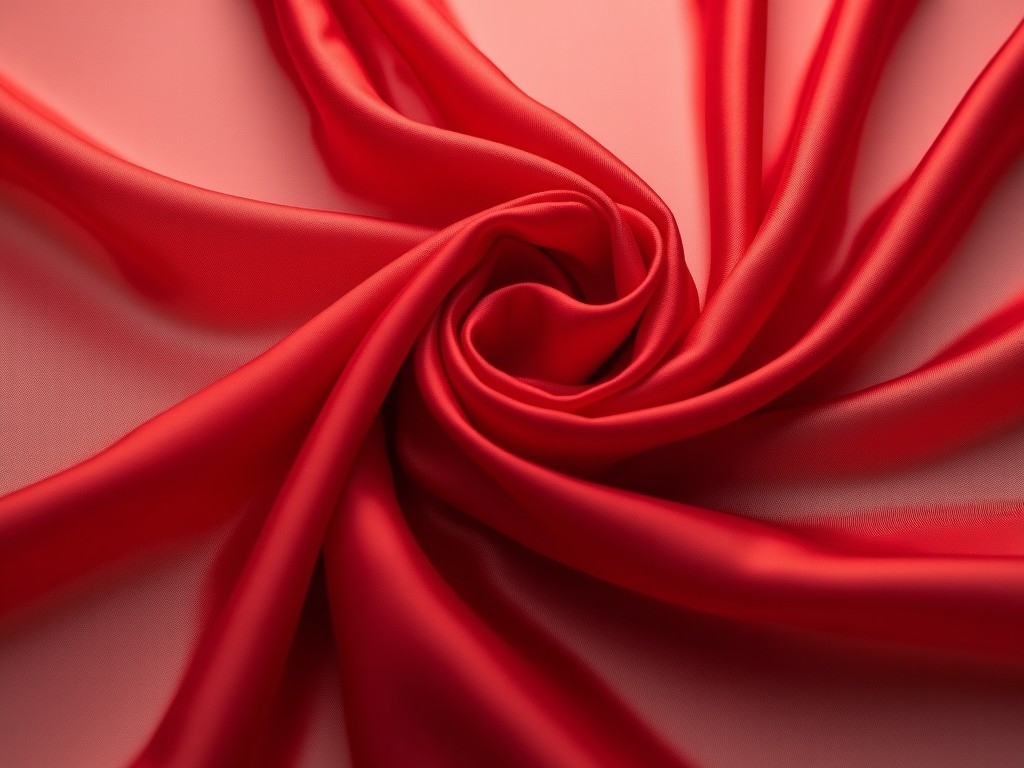
Buy Red Silk Chiffon Scarf
This product page details the technical specifications, material characteristics, and industrial applications of red silk chiffon scarves suitable for B2B procurement in fashion, textile
Red Silk Chiffon Scarf
This product page details the technical specifications, material characteristics, and industrial applications of red silk chiffon scarves suitable for B2B procurement in fashion, textile manufacturing, and specialty accessory sectors.
Material Composition and Fiber Properties
The scarf is constructed from 100% mulberry silk fibroin, processed into a plain weave chiffon structure. Silk fibroin has a tensile strength of approximately 3.5–5.0 GPa and a modulus of elasticity around 5–10 GPa, providing high strength-to-weight ratio. The fiber diameter averages 10–15 μm, contributing to the fabric’s lightweight drape and translucency. Natural sericin is partially removed during degumming to balance softness with residual protein adhesion for dimensional stability.
Fabric Construction and Physical Parameters
Chiffon construction uses highly twisted yarns in both warp and weft directions, typically 20–30 denier per filament with S- and Z-twist alternating at 800–1200 turns per meter. This creates the characteristic slightly rough texture and balanced instability that gives chiffon its drape and slight stretch. The fabric count ranges from 80–100 ends per inch (EPI) and 60–80 picks per inch (PPI), resulting in a nominal weight of 15–25 g/m². Openness of the weave allows approximately 40–60% light transmission, depending on twist level and finish.
Colorfastness and Dyeing Characteristics
The red coloration is achieved using acid or metal-complex dyes applied under controlled pH (4–5) and temperature (80–98°C) conditions to ensure molecular bonding with silk’s amine groups. Typical wash fastness (ISO 105 C06) ranges from 3–4, light fastness (ISO 105 B02) from 4–5, and rub fastness (ISO 105 X12) from 3–4 for dry/wet crocking. Post-dyeing, the fabric undergoes mild acidification and rinsing to remove hydrolyzed dye and prevent bleeding during end-use. Color consistency is monitored via spectrophotometer with ΔE < 1.5 acceptable for commercial batches.
Dimensional Specifications and Tolerances
Standard dimensions are 180 cm in length and 90 cm in width, with a tolerance of ±2% in both axes due to hygroscopic nature of silk and finishing processes. Hemming is performed using a 3mm rolled edge with 2–3 stitches per cm, minimizing fraying while maintaining edge flexibility. Diagonal skew is controlled to less than 1.5% through balanced tension during weaving and finishing. Thickness, measured under 0.02 kPa pressure, averages 0.08–0.12 mm.
Performance in Environmental Conditions
Silk chiffon exhibits hygroscopic equilibrium moisture content of 8–12% at 65% RH and 20°C, contributing to breathability and comfort in apparel applications. Prolonged UV exposure (>50 kJ/m²) may cause yellowing and tensile degradation; UV stabilizers can be applied upon request for outdoor-use variants. The fabric is resistant to mild alkalis but degrades under strong acids or prolonged chlorine exposure. Thermal degradation begins above 180°C, with significant weight loss occurring at 250°C+.
Industrial Applications and Use Cases
These scarves are sourced by high-end fashion houses for seasonal collections, theatrical costume designers requiring lightweight drape and dye receptivity, and manufacturers of luxury linings or interfacings where minimal bulk is essential. The fabric’s transparency allows layering over opaque substrates without visual bulk, while its absorbency enables use as a carrier medium for fragrance or micro-encapsulated actives in specialty textile applications. Distributors procure these for private-label scarf lines targeting premium retail channels.
Quality Control and Inspection Protocol
Incoming yarn is tested for denier uniformity (±10% CV), twist balance, and tensile strength. Greige fabric undergoes inspection for ends/picks, warp/weft bariness, and foreign inclusions under 10x magnification. Dyed lots are evaluated for color match (ΔE), shade consistency across roll length, and hand feel via standardized panel testing. Final inspection includes dimensional verification, hem integrity, and defect grading per 4-point system (acceptable: <40 points per 100 sq yd). All tests follow AATCC or ISO standards where applicable.
Customization Options and Processing Logic
Customization is available for yarn twist level (affecting drape and sheen), fabric weight (via denier or pick density), width (custom looms available from 45–150 cm), and length (cut-to-length or continuous roll). Dye recipes can be adjusted for specific red shades (e.g., crimson, scarlet, burgundy) using Pantone or RAL references, with lab-dip approval required prior to bulk production. Finishing options include softening agents, anti-static treatments, or light calendering for increased luster, each evaluated for impact on hand and dimensional stability.
Packaging and Logistics Considerations
Scarves are folded using acid-free tissue to prevent creasing and packed in polybags with humidity indicators (target: 40–50% RH) to mitigate moisture-related damage during transit. Cartons are double-walled corrugated with edge protection, sized to minimize internal movement. Each unit is labeled with SKU, lot number, care instructions (hand wash cold, pH-neutral detergent, dry flat), and country of origin. Export shipments include desiccant packs and are marked “Keep Dry” and “Handle with Care – Fragile Textile.”
Typical Values Table
| Property | Typical Value | Test Method / Reference |
|---|---|---|
| Fabric Weight | 15–25 g/m² | ASTM D3776 |
| Tensile Strength (Warp) | 18–22 N/tex | ISO 13934-1 |
| Elongation at Break | 15–25% | ISO 13934-1 |
| Thickness | 0.08–0.12 mm | ASTM D1777 |
| Light Fastness | 4–5 | ISO 105 B02 |
| Wash Fastness | 3–4 | ISO 105 C06 |
To request a technical datasheet, lab-dip sample, or formal quotation for red silk chiffon scarves, provide your required specifications including dimensions, quantity, color reference, and intended application. Our technical team will review compatibility with your production process and respond with lead time, MOQ, and pricing details. Contact us via the inquiry form to begin evaluation.
Products
Related Products
News
Related News

2026-11-02
Cotton Voile Scarf Manufacturing and Performance Analysis how to make a cotton voile scarfCreating a professional-grade cotton voile scarf requires a precise balance of textile engineering and artisanal finishing. Unlike standard cotton weaves, voile is defined by its p···

2026-10-28
chiffon hijab Technical Production and Performance AnalysisSelecting the right fabric for a hijab involves a delicate balance between modesty, breathability, and aesthetic drape. For many women in Southeast Asia and the Middle East, the ma···

2026-10-26
custom silk scarf textile manufacturing and performance analysisSelecting a high-quality scarf is no longer just about color matching; it is an exercise in understanding how textile weight, drape, and print scale interact with individual facial···
