Bawal Chiffon Voile Premium Scarf






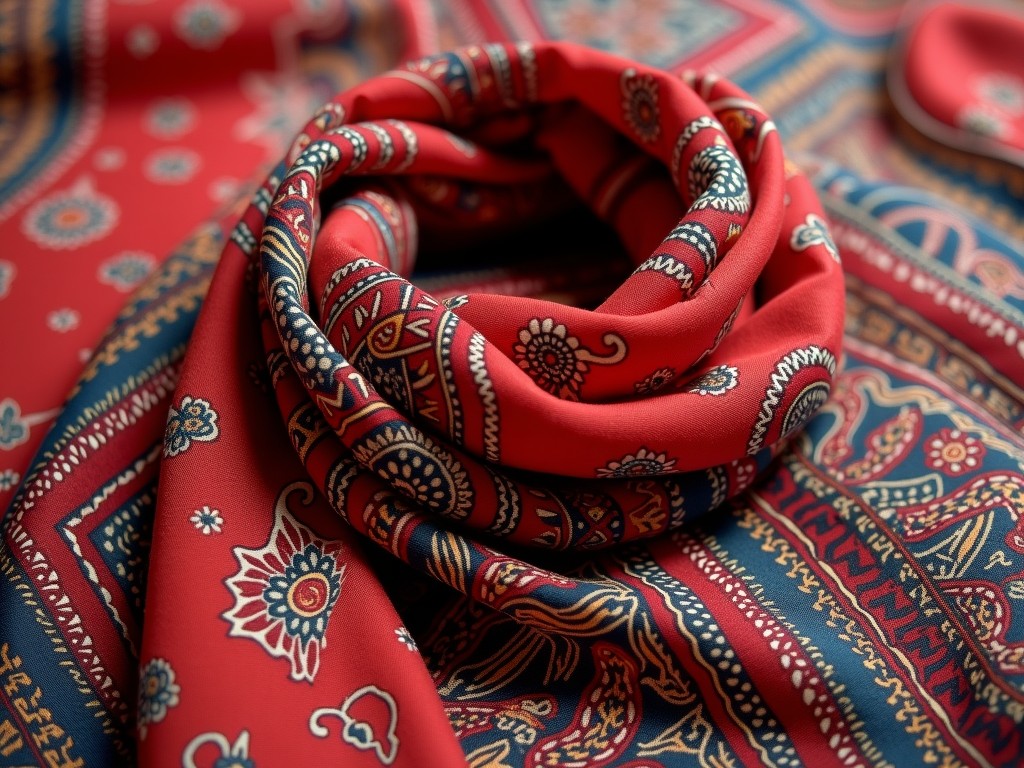
Bawal Chiffon Voile Premium Scarf
Bawal chiffon voile scarves are lightweight textile accessories engineered for applications requiring fluid drape, breathability, and subtle sheen. Constructed from fine filament yarns with a plain
Bawal Chiffon Voile Premium Scarf
Bawal chiffon voile scarves are lightweight textile accessories engineered for applications requiring fluid drape, breathability, and subtle sheen. Constructed from fine filament yarns with a plain weave structure, these scarves deliver consistent performance in environments where comfort and visual presentation are critical. The material’s low density and open construction enable air permeability while maintaining dimensional stability under normal handling conditions.
Material Composition and Construction
The base fabric utilizes 100% polyester filament yarns with a nominal denier of 15D to 20D in both warp and weft directions. Yarns are twisted to approximately 80 turns per meter to balance strength and softness. The plain weave construction achieves a thread count of 80 ends per inch by 60 picks per inch, resulting in a nominal weight of 18 grams per square meter. This specification ensures sufficient tensile strength for repeated folding and unfolding without yarn breakage, while retaining the characteristic chiffon transparency.
Edge finishing employs a narrow rolled hem with a stitch density of 10 stitches per centimeter, preventing fraying during prolonged use. The voile variant incorporates a slight calendaring process to enhance surface smoothness without closing the fabric’s open structure. Colorfastness is achieved through disperse dyeing at 180°C, meeting ISO 105-B02 standards for light exposure and ISO 105-E04 for water resistance.
Dimensional Stability and Performance Characteristics
Dimensional change after five home laundering cycles at 30°C remains under 1.5% in both length and width, as verified by AATCC Test Method 135. Recovery from creasing exceeds 85% within 30 minutes at 20°C and 65% relative humidity, indicating low hysteresis in the polymer chain. The fabric exhibits a bending length of 1.2 cm in the warp direction and 1.0 cm in the weft direction, confirming its suitability for graceful draping without stiffness.
Air permeability measures 180 mm/s under ASTM D737 testing, confirming breathability appropriate for extended wear in temperate climates. Water vapor transmission rate (WVTR) reaches 2,200 g/m²/24h per ASTM E96, supporting comfort in active use scenarios. Ultraviolet protection factor (UPF) testing yields a value of 15, indicating moderate UV blocking capability due to the open construction.
Typical Applications in Professional Settings
These scarves are commonly selected for corporate uniform programs where employee comfort and a polished appearance must coexist. The lightweight nature reduces thermal load during indoor service roles, such as hospitality front desks or retail customer service, without requiring additional layering. In healthcare administrative settings, the breathable fabric minimizes discomfort during prolonged shifts while maintaining a neat presentation that aligns with dress code policies.
Event management teams utilize these accessories for staff identification during conferences and exhibitions, where ease of movement and resistance to wrinkling during transit are essential. The scarf’s compact foldability allows efficient storage in bulk packaging, reducing logistics volume. Educational institutions adopt them for graduation ceremonies and faculty events, valuing the balance between formality and wearer comfort over extended periods.
Customization Options and Parameters
Standard dimensions are 180 cm in length by 70 cm in width, with tolerances of ±2 cm in length and ±1 cm in width. Custom lengths range from 150 cm to 220 cm, while widths can be adjusted between 60 cm and 80 cm to accommodate specific styling or functional requirements. Color matching is available via Pantone reference or physical sample submission, with laboratory dip approval prior to bulk production.
Optional finishes include antimicrobial treatment using silver-ion technology, achieving a 99.9% reduction in Staphylococcus aureus and Klebsiella pneumoniae after 24 hours per ISO 20743. UV stabilization can be incorporated to extend outdoor color retention, though this may slightly alter hand feel. Custom packaging options include individual polybagging with cardboard backing or bulk folding in recyclable cartons, selected based on distribution channel needs.
Quality Control and Inspection Protocol
Incoming yarn is tested for tenacity (minimum 3.5 cN/dtex), elongation at break (15–25%), and twist uniformity. Fabric inspection follows a 4-point system under 300 lux illumination, with defects classified as: major (holes, tears, dye streaks exceeding 3 cm) and minor (slubs, neps, uneven hem). Acceptable quality level (AQL) is set at 2.5 for major defects and 4.0 for minor defects per batch.
Dimensional stability is verified on the first roll of each production lot using a relaxed state measurement after 24 hours conditioning at 20°C/65% RH. Color consistency is assessed via spectrophotometer with ΔE<1.5 against approved standard. Final audit includes seam strength testing (minimum 8 N/cm) and pilling resistance evaluation after 5,000 Martindale cycles, with Grade 3 or better required for approval.
| Parameter | Typical Value | Test Method |
|---|---|---|
| Fabric Weight | 18 gsm | ASTM D3776 |
| Tensile Strength (Warp) | 22 N | ASTM D5034 |
| Elongation at Break | 45% | ASTM D5034 |
| Air Permeability | 180 mm/s | ASTM D737 |
| WVTR | 2,200 g/m²/24h | ASTM E96 |
| UPF Rating | 15 | ASTM D6544 |
All technical data represents typical values derived from internal quality control records and third-party laboratory testing. Actual performance may vary based on specific dye lots, finishing treatments, or environmental exposure. Custom requirements can be evaluated upon receipt of detailed application parameters.
Products
Related Products
News
Related News

2026-11-02
Cotton Voile Scarf Manufacturing and Performance Analysis how to make a cotton voile scarfCreating a professional-grade cotton voile scarf requires a precise balance of textile engineering and artisanal finishing. Unlike standard cotton weaves, voile is defined by its p···

2026-10-28
chiffon hijab Technical Production and Performance AnalysisSelecting the right fabric for a hijab involves a delicate balance between modesty, breathability, and aesthetic drape. For many women in Southeast Asia and the Middle East, the ma···

2026-10-26
custom silk scarf textile manufacturing and performance analysisSelecting a high-quality scarf is no longer just about color matching; it is an exercise in understanding how textile weight, drape, and print scale interact with individual facial···
